Which U.S. Coins Still Contained Silver After 1965 – The Last American Silver Coins
Estimated reading time: 16 minutes
In 1965 the United States introduced one of the most significant changes in its monetary history. For generations, everyday coins such as dimes and quarters had been made from real silver. These coins circulated widely and were part of daily transactions across the country. However, economic pressures forced the government to rethink how coins were produced.
The Coinage Act of 1965 removed silver from most circulating coins and introduced a new layered metal composition. Yet the transition did not happen overnight. For several years after the law was passed, a few American coins still contained reduced amounts of silver. Understanding which coins retained silver during this transition helps explain an important moment in American coinage history.
Silver Coins Before 1965
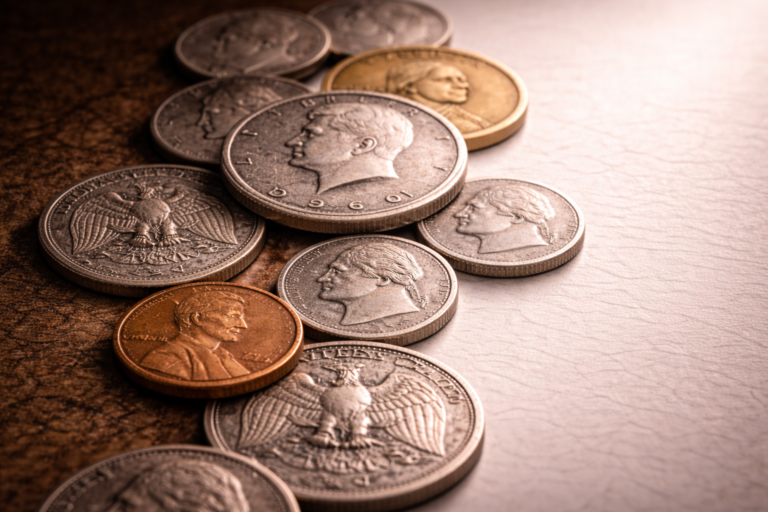
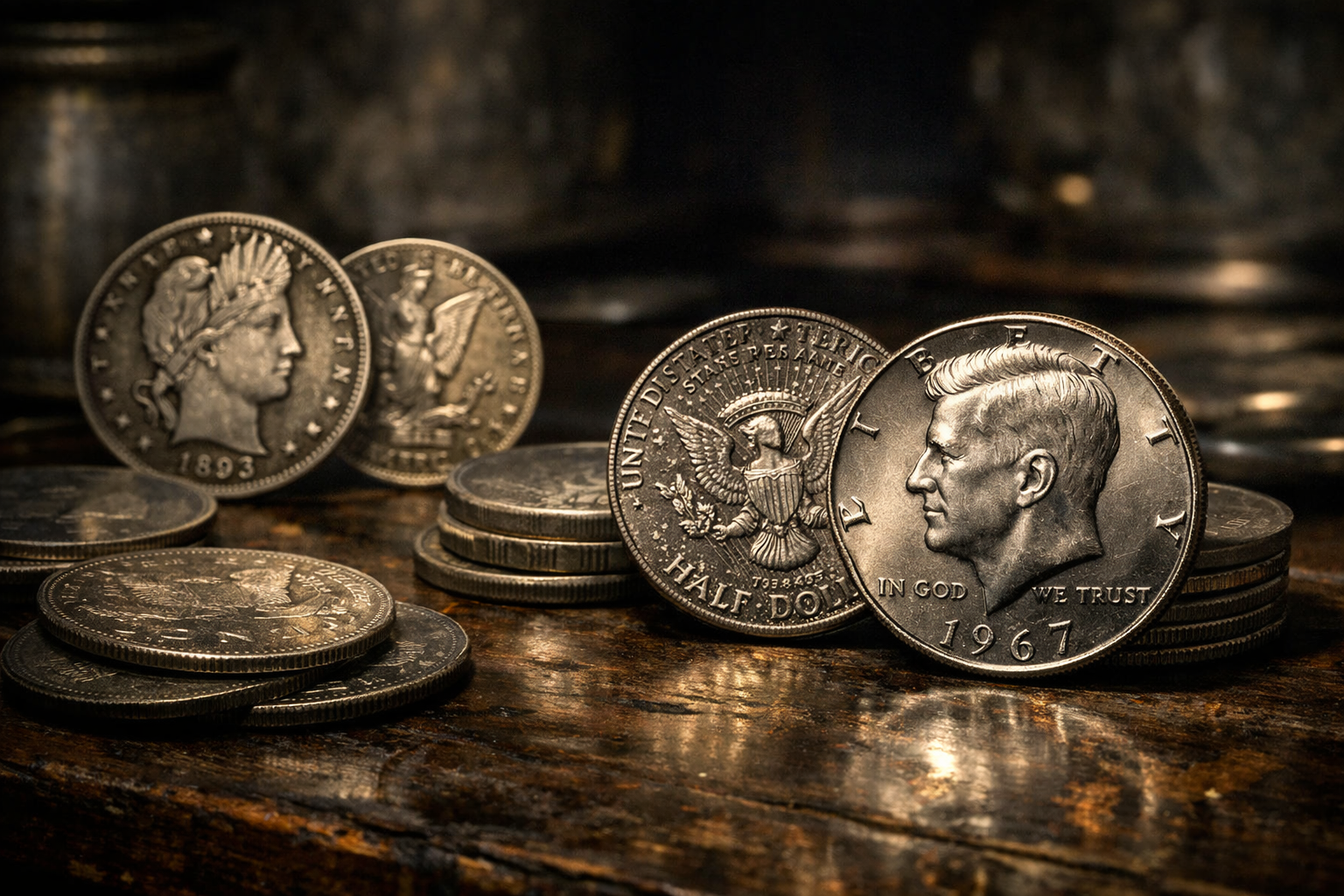
Before the mid twentieth century, many United States coins contained large amounts of silver. The dime, quarter, and half dollar were traditionally struck using an alloy composed of ninety percent silver and ten percent copper. This composition had remained largely unchanged since the nineteenth century.
Because silver coins were produced in large numbers, they circulated widely throughout American commerce. Shoppers used them daily in grocery stores, restaurants, and public transportation systems. For most people these coins were simply normal money, even though they contained precious metal.
If you want a broader historical overview of American silver coinage, you can explore our detailed guide to old U.S. coins made of silver.
The Coinage Act of 1965
By the early nineteen sixties the United States faced an unusual problem. The price of silver was rising steadily on global markets. As the value of silver increased, the metal inside coins began approaching the official face value of the coins themselves.
This created a risk that people would remove coins from circulation in order to save or melt them for their silver content. In fact many Americans had already begun storing silver coins rather than spending them.
To prevent a major disruption in the money supply, Congress passed the Coinage Act of nineteen sixty five. The new law removed silver from dimes and quarters and replaced it with a layered metal structure made from copper and nickel.
For historical context about this major legislation, see the explanation of the Coinage Act of 1965, which describes how the United States transitioned away from traditional silver coinage.
Why Some Coins Still Contained Silver
Although the Coinage Act removed silver from most circulating coins, the transition was not completely immediate. The government wanted to avoid sudden disruptions in the monetary system, so some coins continued to contain limited amounts of silver for a few additional years.
The most important example was the half dollar. Because this coin was less commonly used in everyday transactions, policymakers believed it could temporarily retain a reduced silver composition without causing shortages.
This decision created a short transitional period in which certain coins still contained silver even after the 1965 change.
The Kennedy Half Dollar
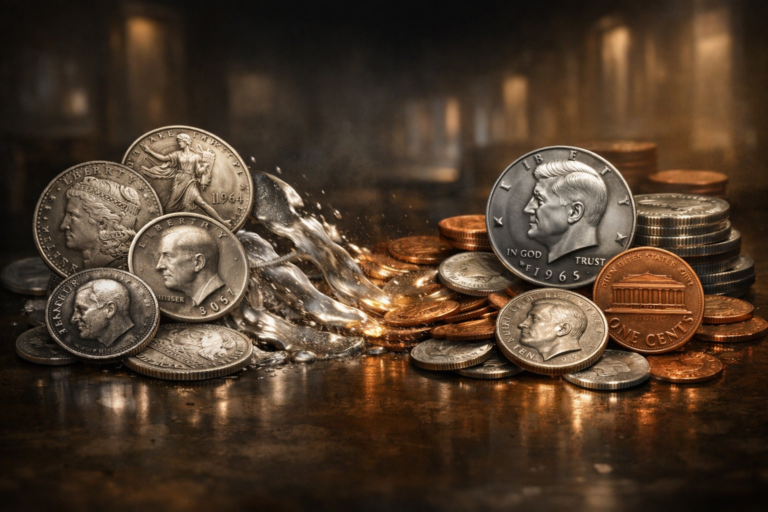
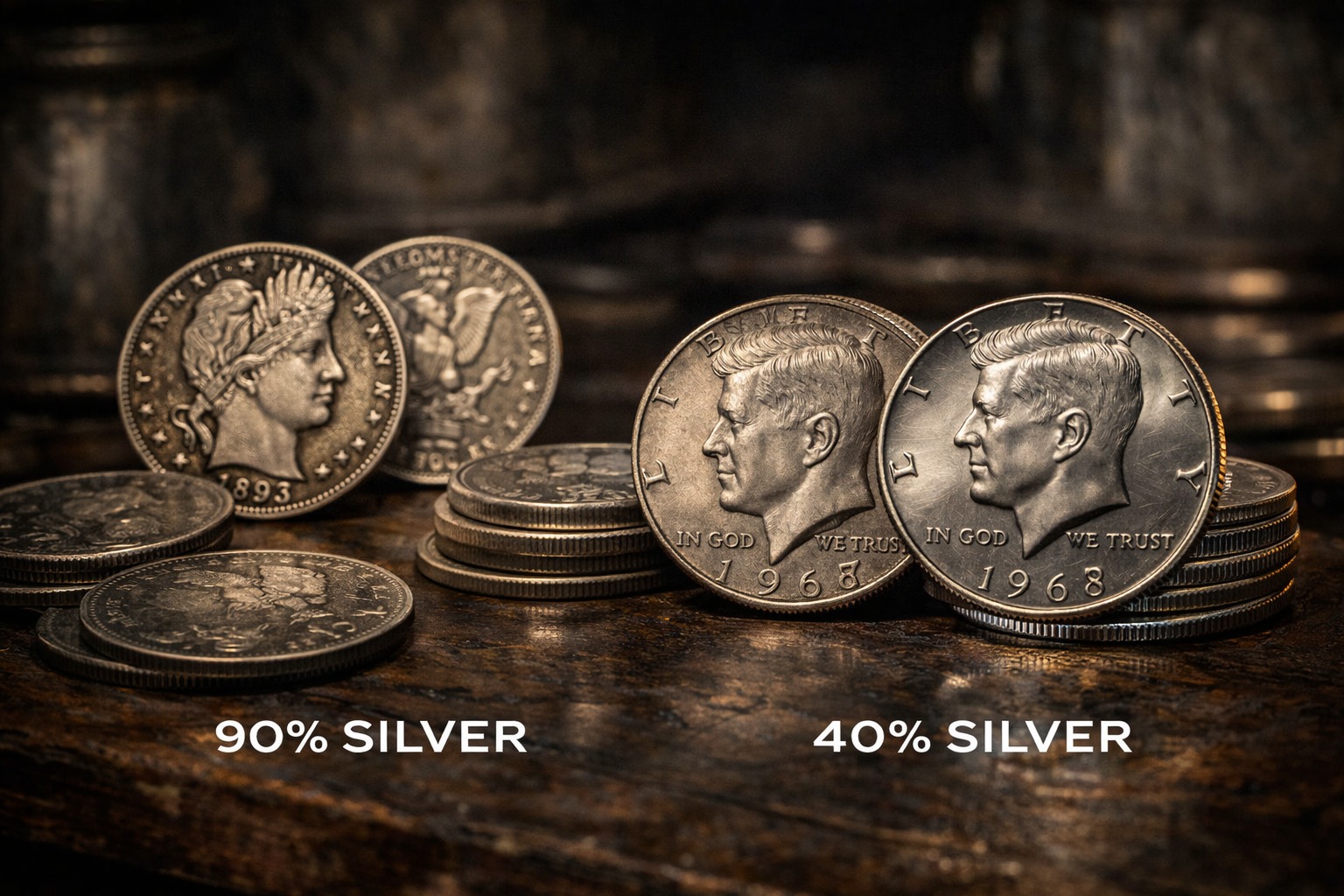
The Kennedy half dollar became the final circulating American coin to include silver. First introduced in 1964 to honor President John F. Kennedy, the coin originally contained the traditional ninety percent silver composition used in earlier half dollars.
However, when the Coinage Act of 1965 was implemented, the composition of the Kennedy half dollar was modified rather than completely replaced.
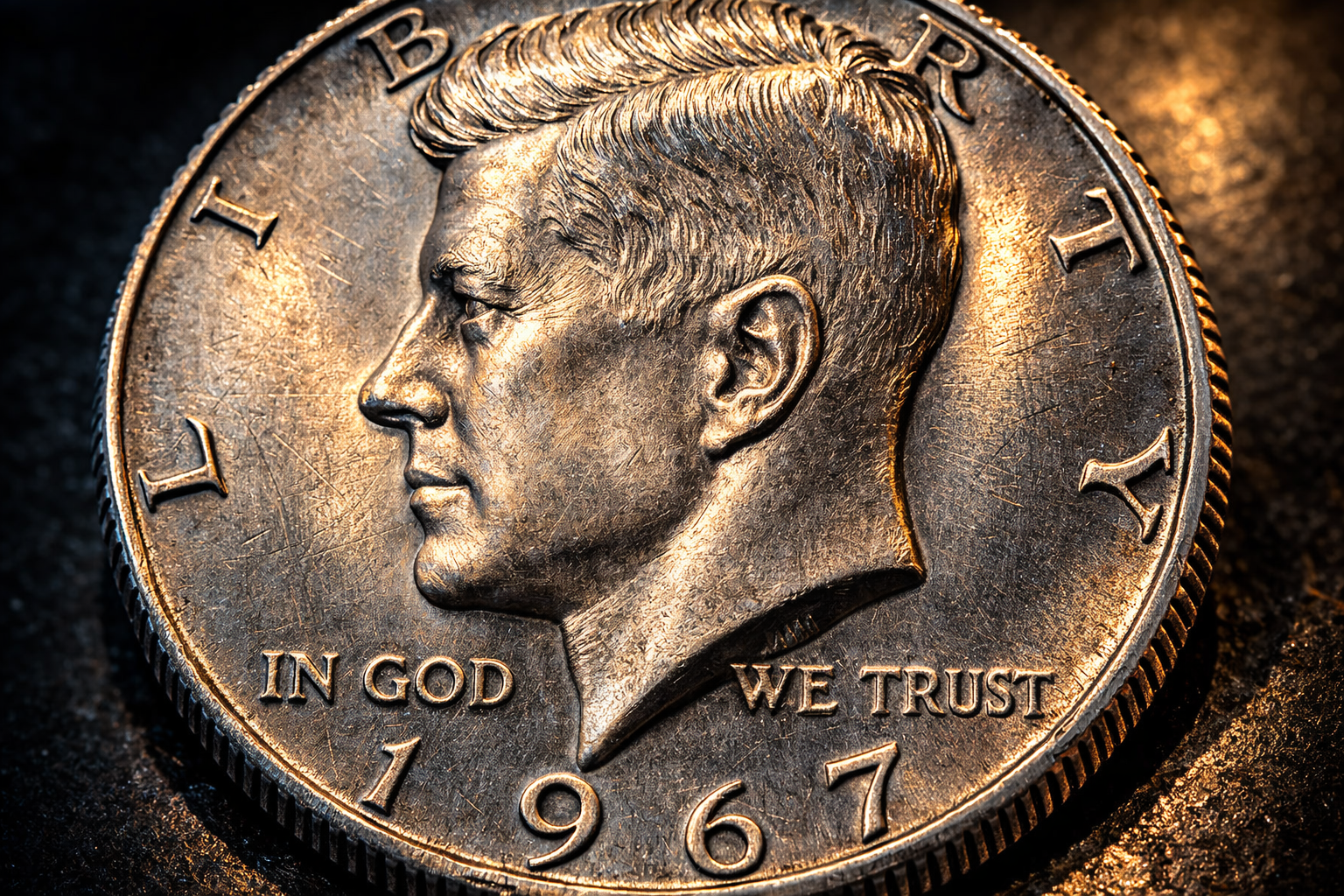
Instead of eliminating silver entirely, the Mint reduced the silver content to forty percent. This allowed the coin to maintain some connection to traditional silver coinage while reducing the cost of production.
Silver Content of the 1965–1970 Half Dollars
| Year | Coin | Silver Content |
|---|---|---|
| 1964 | Kennedy Half Dollar | 90 percent silver |
| 1965–1970 | Kennedy Half Dollar | 40 percent silver |
| After 1970 | Kennedy Half Dollar | No silver |
During this transitional period the Kennedy half dollar was the only major circulating coin that still contained silver. Other denominations had already switched to the new clad metal structure introduced in 1965.
The Final End of Silver in Circulating Coins
By nineteen seventy one even the reduced silver composition of the half dollar was removed. The coin transitioned fully to the copper and nickel clad structure used by other denominations.
From that point forward, circulating American coins no longer contained significant amounts of silver. Precious metals remained primarily in special collector coins produced by the United States Mint rather than in everyday currency.
Identifying the Last American Silver Coins
Coins from the transitional period can still be identified using several simple clues. One of the most common methods involves examining the edge of the coin. Older silver coins typically display a uniform silver colored edge rather than the copper stripe visible on modern clad coins.
Another useful clue involves checking the date on the coin. Kennedy half dollars from the late nineteen sixties belong to the final generation of circulating coins that still contained silver.
If you want to learn additional techniques for recognizing silver coins, you can read our guide on how to identify old U.S. silver coins.
Silver Coin Timeline
| Period | Coinage Composition |
|---|---|
| Before 1965 | Most dimes, quarters, and half dollars contained 90 percent silver |
| 1965–1970 | Kennedy half dollars contained 40 percent silver |
| After 1971 | Circulating coins contained no silver |
This timeline highlights how quickly American coinage evolved during the late twentieth century. Within only a few years the United States moved from widespread silver coinage to coins made entirely from industrial metals.
Related HistoraCoin Stories
FAQ
Which U.S. coin still contained silver after 1965
The Kennedy half dollar retained silver after 1965 with a reduced forty percent silver composition.
When did silver completely disappear from U.S. circulating coins
Silver was fully removed from circulating coins by 1971 when the half dollar transitioned to clad composition.
Why did the United States stop using silver in coins
Rising silver prices and coin shortages made it impractical to continue producing coins with high precious metal content.
Are silver coins still produced today
Yes, but primarily for collectors rather than everyday circulation.