who was on the 1793 penny
Estimated reading time. About 14 to 17 minutes.
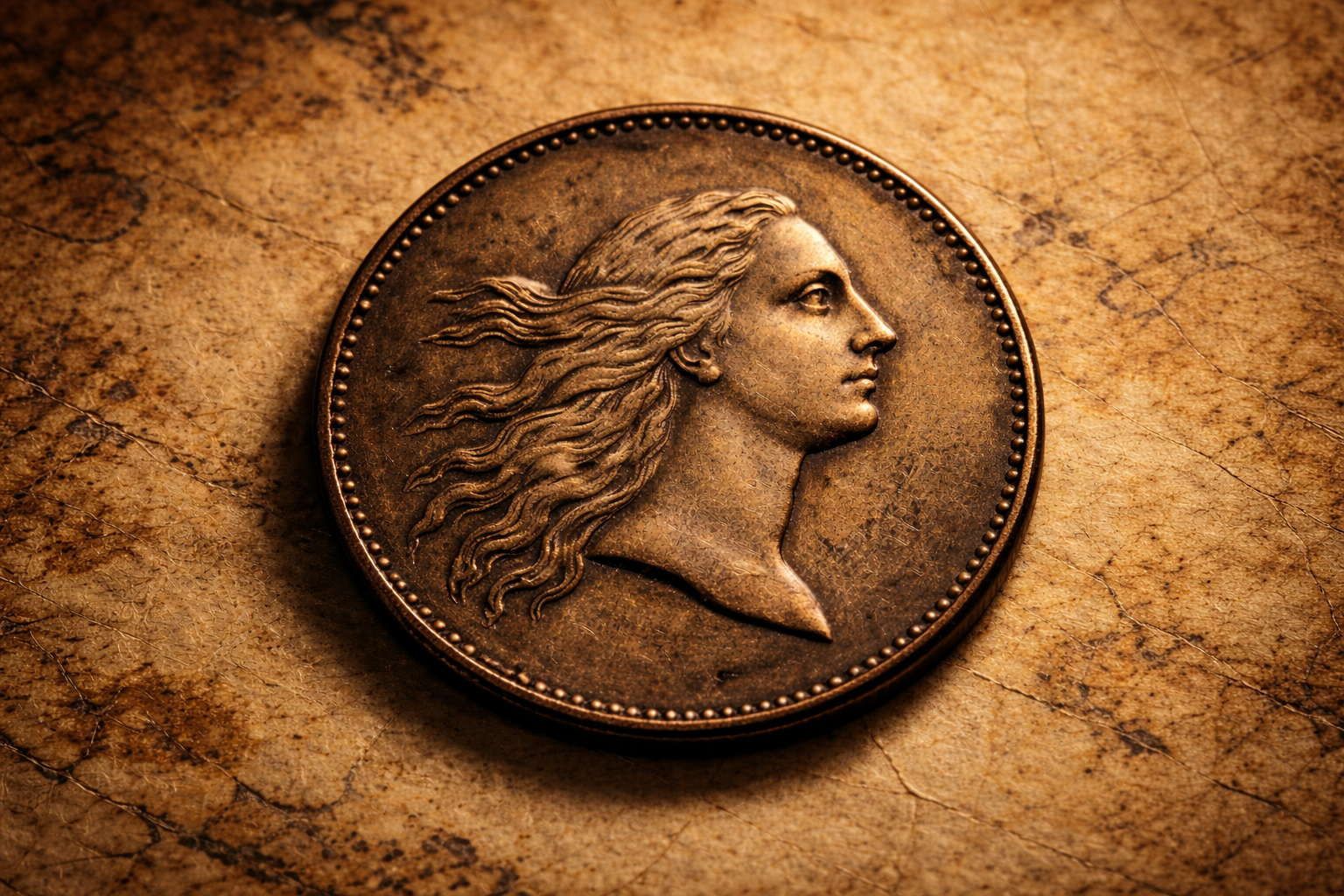
Who was on the 1793 penny. The question sounds simple, but the answer reveals how the United States wanted to describe itself in its earliest years.
The face on that first penny was not a president, not a queen, and not a specific historical person. It was Liberty, an idea turned into a portrait, chosen to communicate identity, unity, and independence through metal.
Table of contents.
What the 1793 penny really was.
When people say 1793 penny, they are usually referring to the first large cents made by the United States Mint in its earliest period. These were substantial copper coins, wide in diameter, designed for everyday commerce and for building trust in a new national system.
The United States in 1793 was still defining itself. Institutions were young. The idea of a national identity was still being shaped. In that setting, coin design was not merely decoration. It was messaging. A coin traveled farther than most printed words, and it reached people who might never read official documents.
That is why the portrait on the coin matters. It was chosen to represent a national concept, not a single ruler. This decision was intentional, and it connects to a broader story about how societies learn to recognize value and authority through objects, which is explored in how people learned to recognize value before money existed.
In other words, the 1793 penny was not only a piece of copper used for trade. It was a small moving statement about what the new country wanted to stand for.
The person on the coin was not a person.
So who was on the 1793 penny. The honest answer is that no single real individual was meant to be identified.
The portrait is Liberty, a symbolic female figure commonly used in the art and political imagery of the time. Liberty was already a familiar idea in the Atlantic world. It appeared in prints, emblems, and public symbolism during the revolutionary era, often portrayed as a woman to make an abstract concept feel human.
This is one of the most important distinctions to understand. The coin was not celebrating a ruler. It was expressing a principle. In many monarchies, coins carried the face of the sovereign to signal power. In early America, using Liberty signaled something different. It suggested that the nation’s authority did not flow from a single person, but from an ideal.
That choice also helped the coin feel less like a personal monument and more like a shared belonging. People could accept it without feeling they were carrying the identity of a king. They were carrying a symbol of the system itself.
Why Liberty became the national face.
Liberty was a practical choice for a young republic. It was broad enough to unite different communities. It was meaningful enough to feel serious. And it could be repeated across years without tying the nation to one living figure.
There was also a cultural reason. Many Americans were cautious about symbols that resembled monarchy. A ruler’s portrait on everyday money could feel like a return to what had been rejected. A symbolic figure avoided that problem while still giving the coin a recognizable and dignified face.
Liberty also worked well for visual communication. People did not need to read to recognize a portrait. They could learn the look of the coin by sight. This mattered in a world where literacy rates varied and where coins needed to be trusted quickly.
Most importantly, Liberty allowed the coin to speak a clear message. This money belongs to a nation built on the idea of freedom rather than hereditary rule.
What Americans needed coins to say in 1793.
A coin in 1793 had to do several jobs at once. It had to function in commerce, but it also had to build confidence in the new Mint. People needed to believe that the metal content was honest, that the design was official, and that the coin could circulate without constant dispute.
Coins helped create a shared standard. They reduced friction in daily exchange by offering a consistent object people could recognize. In that sense, the 1793 penny was part of a larger human pattern. Societies build trust through objects that carry consistent signals.
The Liberty portrait provided one of those signals. It said this coin belongs to a public system. It is not a private token. It is not local barter. It is part of a national agreement.
This is why the question of who was on the coin leads to a deeper point. The portrait was chosen to make trust visible, not to record a biography.
How the Liberty portrait was imagined.
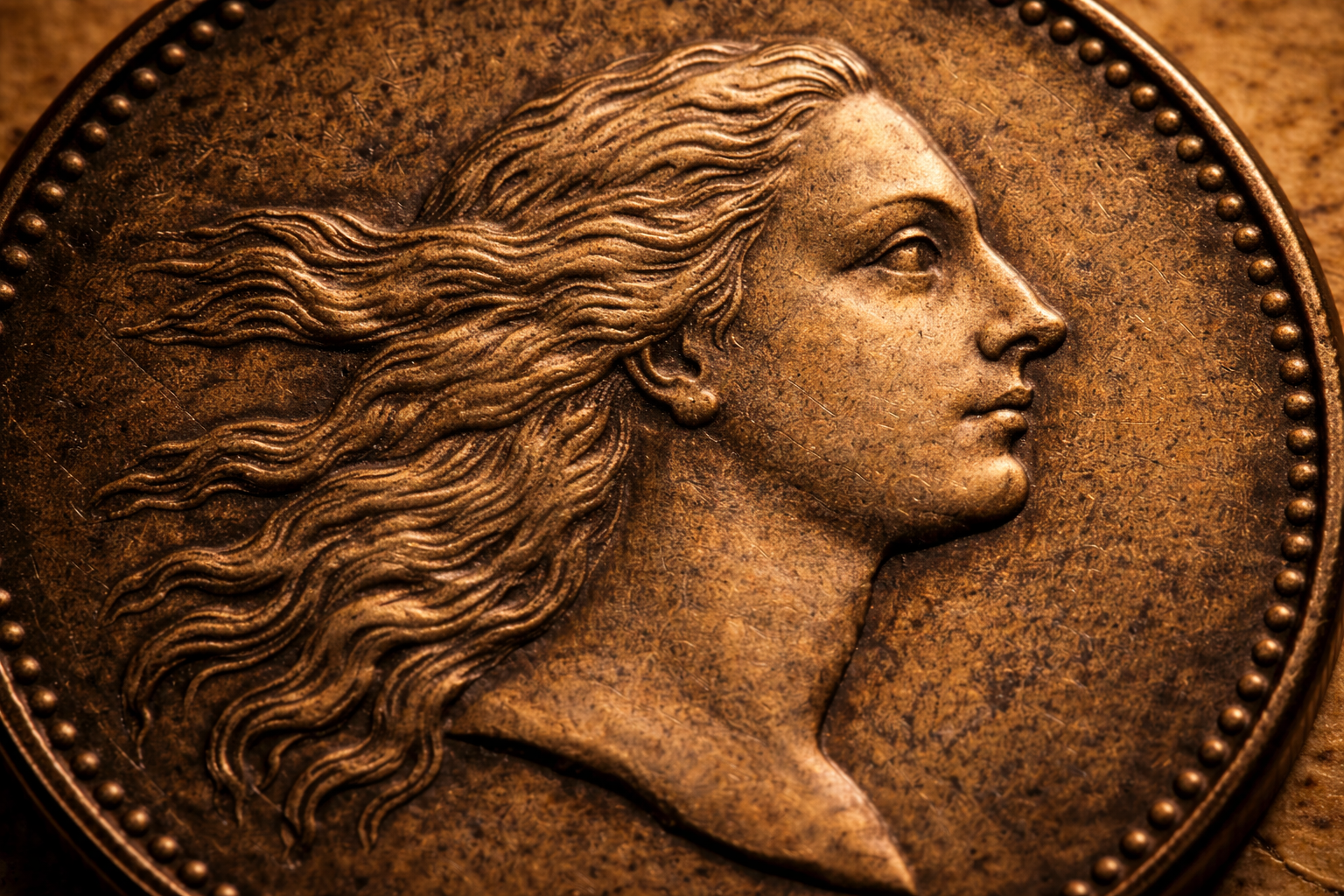
If Liberty was not a specific person, where did the face come from. The most accurate way to describe it is that it comes from an artistic tradition rather than a portrait session.
Artists and engravers of the late 18th century often used classical influences to represent virtues. Liberty, Justice, Victory, and similar ideals were commonly represented through stylized human figures. This helped viewers connect emotionally with concepts that otherwise feel abstract.
The Liberty head on early American cents reflects that tradition. The features are not meant to match a known individual. Instead, they are meant to communicate youth, strength, and dignity. The hair, the profile, and the overall style reflect the engraving language of the era.
This also explains why viewers today sometimes ask if the coin shows a real woman. The portrait is realistic enough to feel personal, but symbolic enough to avoid identification.
Early design variations and what they suggest.
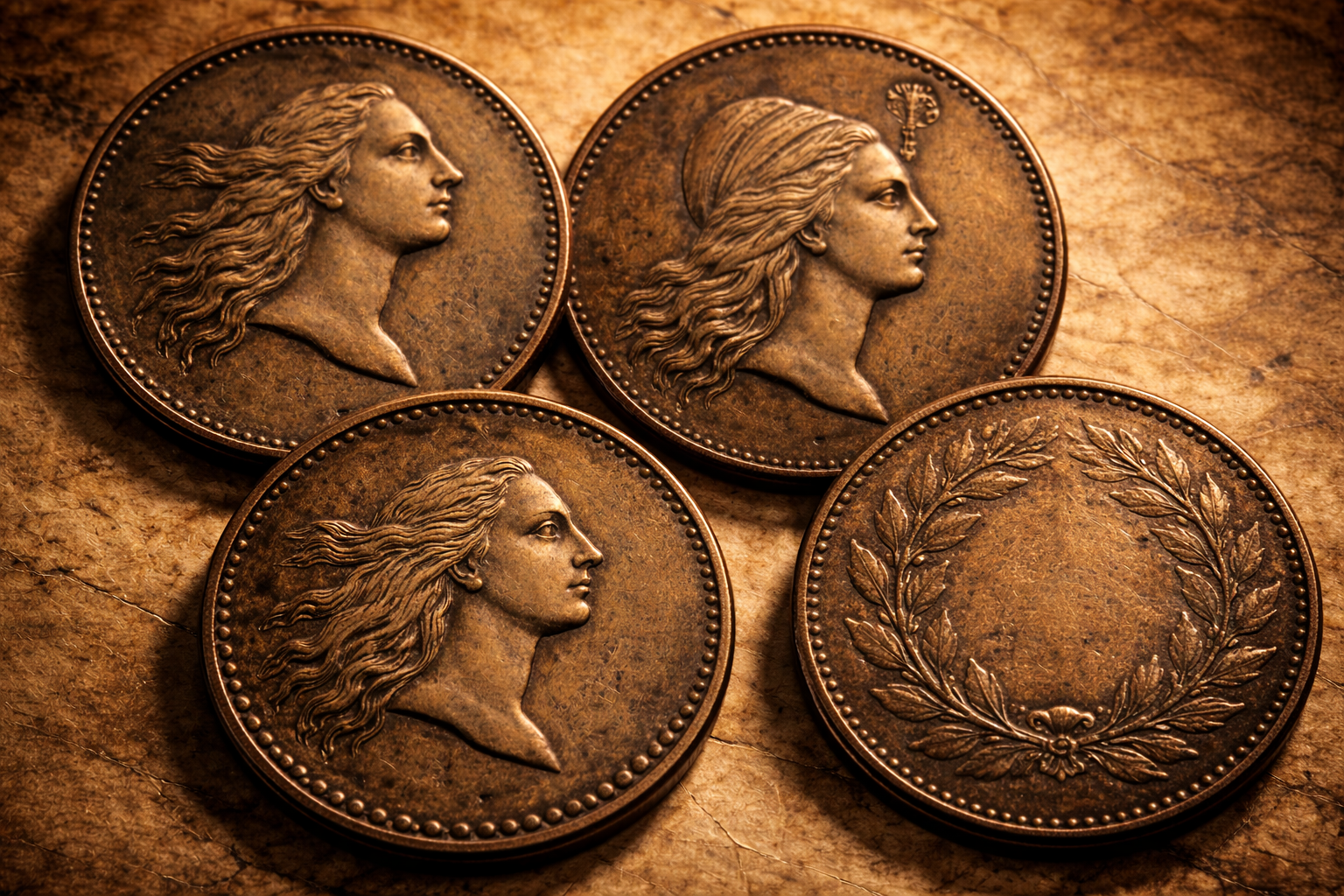
Another reason the Liberty portrait invites questions is that early cents did not all look identical. The Mint was still developing methods, and early designs show variation across issues.
These variations were not just artistic curiosity. They are evidence of a system in motion. The country was experimenting with how to present itself. Engravers adjusted details. Production methods evolved. Public expectations shaped what stayed and what changed.
What early design variations reveal.
The early variations found on the 1793 penny were not accidents without meaning. They reflected a mint still learning how to translate ideas into metal. Engraving techniques were developing, tools were limited, and experience was being gained through practice rather than long tradition.
These differences in design suggest that the image of Liberty was not fixed at first. It was being shaped, refined, and tested. The goal was not to preserve a perfect likeness, but to create a symbol that felt appropriate, recognizable, and authoritative.
This flexibility reinforces the idea that Liberty was never intended to represent a single real person. A true portrait demands consistency. A symbol allows interpretation.
As long as the figure communicated the intended message, variation was acceptable. In fact, it may have helped the public gradually accept the new national imagery.
Why the coin avoided real historical figures.
Avoiding real people on early American coins was not an oversight. It was a conscious cultural decision.
The new republic was wary of anything that resembled monarchy. European coins commonly displayed kings, queens, and emperors. Their faces reinforced hierarchy and personal rule.
Placing a living or recently deceased figure on American coinage could have suggested authority flowing from an individual rather than from the public.
Liberty solved this problem elegantly. She represented an idea larger than any one person. An idea that could belong to everyone without elevating anyone above the system itself.
This choice helped American coinage feel fundamentally different from European models. It signaled a break with tradition without rejecting the visual power of symbolism.
How people understood the image.
For the average person in the late eighteenth century, the image on the penny did not require explanation.
Liberty was already present in pamphlets, flags, public art, and revolutionary imagery. The figure had become a shared visual language.
Seeing Liberty on a coin reinforced familiarity. It made the penny easier to trust. The image felt national, not foreign. Familiarity reduces suspicion, especially when dealing with money.
Coins circulate through many hands. Each exchange reinforces recognition. Over time, the image becomes inseparable from the system that issued it.
In that sense, Liberty on the penny was doing quiet work. She was teaching recognition with every transaction.
The message carried by the metal.
The 1793 penny carried more than copper. It carried intention.
The metal itself was practical. Copper was widely used, durable, and familiar. It suited everyday exchange far better than precious metals for small transactions.
Combining common metal with a symbolic image created balance. The coin felt useful without feeling trivial. It felt official without feeling distant.
This balance mattered. Early trust in money depends on both material reliability and symbolic clarity.
The Liberty portrait provided the clarity. The copper provided the practicality.
Why the question still matters today.
Asking who was on the 1793 penny is really asking how a nation chose to present itself.
The answer reveals priorities. It shows a preference for shared ideals over individual authority. It shows caution toward power concentrated in one figure.
It also shows an understanding of how trust works. People trust systems that feel consistent, familiar, and grounded in values they recognize.
The designers of the first American penny understood this instinctively.
Final reflection.
The face on the 1793 penny was not meant to be identified in a biography.
It was meant to be recognized.
Liberty appeared on the coin not as a person, but as a promise. A promise that authority came from principles rather than rulers, and that everyday money could quietly reflect those principles.
That choice helped shape how Americans related to their earliest coinage. It also explains why the question still feels relevant.
Sometimes, the most important figures in history are the ones who were never meant to be real people at all.
FAQ.
Was the person on the 1793 penny a real individual.
No. The figure shown on the 1793 penny represents Liberty, a symbolic idea rather than a real historical person.
Why did the United States choose Liberty instead of a leader.
Early American leaders wanted to avoid symbols associated with monarchy. Using Liberty emphasized shared ideals rather than personal authority.
Did people at the time understand the meaning of the image.
Yes. Liberty was already a familiar symbol in revolutionary art, public imagery, and political expression, making it easy to recognize and trust.
Why are there design differences among 1793 pennies.
The United States Mint was still developing its engraving methods and visual language, leading to natural variations as the design evolved.
Why is the 1793 penny still discussed today.
Because it represents the first attempt by the United States to express national identity, values, and trust through everyday coinage.