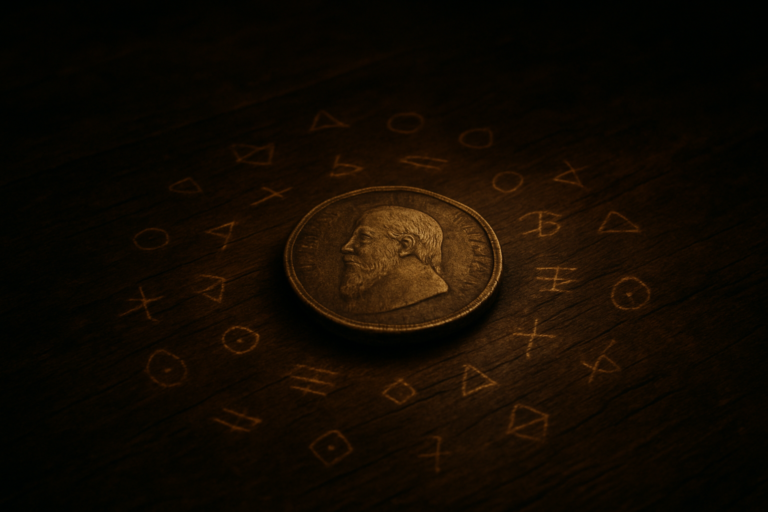
Why Collectors Love the 1980 Dutch 5 Cents Coin

Estimated reading time: 12 to 14 minutes.
Some coins become memorable because they were rare or dramatic. Others become memorable because they were quietly everywhere. The 1980 Dutch 5 cents coin belongs to that second group. It was a small piece of everyday life in the Netherlands, designed to be used, handled, and forgotten. Yet when you study it today, it becomes a surprisingly clear historical snapshot. It shows how a modern European country expressed identity through simple design, practical metal choices, and consistent standards.
This article is written in a historical and educational style. It avoids prices, rankings, and market language on purpose. Instead, it focuses on what the coin was meant to do, what its design communicates, and what the year 1980 meant in Dutch life and Dutch currency history.
Table of Contents
- A quick way to identify the coin
- Why small coins matter to history
- The Netherlands in 1980
- The Dutch guilder system and where 5 cents fit
- Dutch coin design language in the late twentieth century
- Reading the obverse as a historical document
- Reading the reverse as a practical design
- Materials, durability, and why the coin feels the way it does
- How coins were minted and why consistency mattered
- How 5 cents was used in daily life
- The age of vending machines and coin practicality
- Symbols, identity, and quiet national messaging
- How to appreciate the coin without turning it into hype
- Legacy of the guilder and what changed later
- Frequently asked questions
A quick way to identify the coin
If you have a Dutch 5 cents coin dated 1980, you can usually confirm it with a few calm checks that do not require tools. Look for the date. Look for the denomination. Look for language cues. Dutch coinage often uses clear, functional typography. A 5 cents coin typically shows the value in a direct way, because the coin’s job was to be recognized quickly in shops and in public transport.
You may also notice national elements such as a crown, a lion, or a royal portrait, depending on the design of that particular series. Coins can vary across years and redesigns, so the most reliable approach is simple. Use the date and denomination first. Then observe the surrounding design elements as clues to the era.
Why small coins matter to history
When people think about national history, they often focus on dramatic objects. Medals, commemoratives, or large silver pieces. But the most historically revealing coins are often the smallest. They were used by everyone. They traveled through every kind of pocket. They paid for everyday necessities. That makes them excellent evidence of real life.
A small coin also carries the philosophy of its era. If an economy values speed and clarity, the coin will look clean and readable. If an economy needs durability, the coin’s metal will be chosen to survive years of handling. If a country wants to project stability, designs will remain consistent and calm. All of that can be read on a 5 cents coin, if you approach it like a document rather than a mystery.
The Netherlands in 1980
The year 1980 sits in an important stretch of modern European history. The Netherlands was a mature democracy with strong institutions and a developed economy. Daily life was shaped by modernization, consumer culture, and expanding public services. At the same time, the country was still close enough to post war memories that stability mattered deeply. People valued predictability in systems such as transport, banking, and public administration.
Currency is one of the quiet ways a nation expresses that stability. A well designed coin does not need to explain itself. It simply works. It appears in daily routines. It becomes part of how people feel the rhythm of prices, wages, and small purchases. That is why a 1980 Dutch 5 cents coin can tell you something about Dutch society even if you never read a history book about that year.
Another reason 1980 matters is that it sits at the edge between two worlds. A largely cash based daily economy was still normal. But technologies that depended on standardized coinage, such as vending machines and automated ticket systems, were becoming more common. Coins had to be practical in human hands and predictable in machines. That practical requirement influenced design choices in many European countries, including the Netherlands.
The Dutch guilder system and where 5 cents fit
In 1980, the Netherlands used the Dutch guilder, a currency with deep historical roots. Within that system, small denominations like 5 cents served a specific role. They handled the fine texture of pricing. They made exact change possible. They supported daily commerce without forcing constant rounding.
In many cash economies, the smallest coins become the most used. They sit in pockets. They accumulate in jars. They move rapidly between shops and customers. This creates a design challenge. A coin must be cheap enough to produce, durable enough to circulate, and distinct enough to identify quickly. That is why many 5 cents coins across Europe share similar design priorities, even if their symbolism differs.
The 5 cents coin also acted as a training tool for the mind. Children learned arithmetic with coins. Adults built mental maps of pricing using small denominations. A 5 cents coin can represent not only money but also the habit of precision. That habit says something about how a society organizes everyday exchange.
Dutch coin design language in the late twentieth century
Dutch coin design in the late twentieth century often balanced two goals. National identity and clean function. Some nations chose highly decorative styles. Others preferred minimal, readable design. The Netherlands frequently leaned toward practical clarity, with a calm modern look. That approach matched broader Dutch design culture, where functionality and readability are often considered forms of beauty.
On small coins, this philosophy becomes obvious. The denomination is typically clear. The lettering is not overly ornate. Spacing is deliberate. Borders and rims are designed to protect the central design and reduce wear. Even the decision to include or not include certain symbols reflects an approach to communication. Coins are used in seconds, not minutes. A coin should be understood quickly.
Reading the obverse as a historical document
Many Dutch coins in the twentieth century feature royal imagery. When a monarch appears on a coin, it is not simply decoration. It is a statement about legitimacy and continuity. It tells the user, quietly, that the issuing authority is stable and recognized.
If your 1980 5 cents coin includes a royal portrait, treat it like a portrait on a document. Look at the style. Is it formal or modern. Is it idealized or realistic. Does it feel distant or approachable. These stylistic decisions reflect the era’s relationship with authority. Modern democracies often favor a calmer, less dramatic presentation than older monarchies did. That shift can be visible in the way a portrait is engraved.
You may also notice inscriptions that identify the country or the monarch. Those words matter historically because they show language choices and national self presentation. Some nations emphasize titles. Others emphasize the state. The balance between those options reflects constitutional culture.
If your coin does not have a portrait, the same principle still applies. Whatever is on the obverse is the coin’s identity side. A coat of arms, a crown, or a national emblem can carry the same message of continuity. The design choice is still a statement about what the nation wants to place in the foreground.
Reading the reverse as a practical design
The reverse side on small denomination coins often prioritizes function. The denomination is commonly the star of the design. This is not because designers lacked imagination. It is because the coin had a job. It had to communicate value at a glance.
Look at how the number and the word are arranged. Is the number large. Is it centered. Is the text easy to read. The answers reveal how strongly the designers prioritized fast recognition. In everyday life, a person might see a coin in poor lighting, in a hurry, while holding groceries, or while standing on a bus. A well designed coin respects that reality.
The reverse may also include decorative framing, such as leaves, lines, or geometric shapes. These details are not only aesthetic. They can help people distinguish denominations by touch and sight. They also provide structure so that wear does not destroy legibility immediately.
Materials, durability, and why the coin feels the way it does
By 1980, many countries had moved away from precious metal in small coins. That move was not a secret. It was a practical response to modern economics and mass circulation. Small coins are produced in huge quantities. They must be affordable to mint and strong enough to endure years of handling.
As a result, many 5 cents coins of the period were struck in base metal alloys designed for durability. These alloys were chosen to resist corrosion, reduce wear, and maintain a stable appearance. That choice changes how a coin feels in the hand. It can change the sound the coin makes when it lands on a table. It can change the way the surface ages. All of those effects are part of the coin’s physical history.
If you study older Dutch coins from earlier eras, you may notice differences in tone and aging. That is not only about storage. It is also about changes in metal standards across decades. These changes are common across the world. They reflect the shift from metal backed currency ideas toward modern token currency backed by law and institutions.
How coins were minted and why consistency mattered
Modern minting depends on repeatability. A coin is not only a picture. It is a manufactured object that must match standards. Weight, diameter, thickness, and edge design all matter. They matter for trust, and they matter for machines. In the late twentieth century, machine readability became increasingly important. Coins needed to behave predictably in sorting equipment, vending systems, and banking processes.
This is one reason many small coins have simple, stable shapes. Complex shapes can be beautiful but difficult for machines. A consistent rim protects the design. A consistent thickness helps stacking and sorting. Even small details such as edge texture can be used to distinguish denominations.
For the 1980 Dutch 5 cents coin, think of the design as a contract between the mint and society. The mint promises consistency. Society accepts the coin. Every successful transaction reinforces the contract. That is why coin design is not trivial. It supports trust at scale.
How 5 cents was used in daily life
It is easy to forget how important small change once was. In a cash based daily economy, coins like 5 cents were constantly in motion. They helped people pay exact amounts. They helped shopkeepers return correct change. They supported pricing that felt fair and precise.
A 5 cents coin might be used in bakeries, kiosks, public transport, and small markets. It might be part of a child’s allowance. It might be dropped into a public phone or used to top up a small purchase. These scenes matter because they are the real life environment of the coin. A coin is designed for the life it will live.
When you study a circulated example, you are seeing a record of handling. Wear patterns show what parts of the design were raised. They show what parts took the most contact. They reveal which letters were most exposed. This is not about perfection. This is about evidence. A worn 5 cents coin can be more historically honest than an untouched one, because it carries the marks of daily life.
The age of vending machines and coin practicality
By 1980, many European countries were deep into modernization. Machines that accepted coins were becoming part of everyday life. This created a new kind of demand on coinage. A coin had to be consistent not only for people but also for devices.
Machines recognize coins through predictable properties. Size. Weight. Edge profile. And sometimes the way a coin interacts with sensors. This technical reality pushed mints to keep standards stable across years. A sudden change can cause problems across thousands of machines. So designs evolved carefully, and major shifts were treated seriously.
This context helps explain why many small coins of the late twentieth century look restrained. They are engineered objects. Their beauty often lies in how well they do their job.
Symbols, identity, and quiet national messaging
Even the most practical coin still carries symbolism. If the coin shows a crown, it points to constitutional continuity. If it shows a national emblem, it signals state identity. If it shows typography and clean lines, it reflects modern design culture.
In the Dutch context, symbolism often feels calm rather than aggressive. The message is not conquest. It is stability. The coin tells you the Netherlands is organized. That it values order. That it trusts its institutions enough to keep the design consistent and readable.
This kind of symbolism is easy to miss because it does not shout. But history is often written in quiet forms. A small coin used daily can be a more honest symbol than a large ceremonial object that few people ever touch.
How to appreciate the coin without turning it into hype
It is normal to feel curiosity about any older coin. But historical appreciation does not require dramatic language. You do not need mystery claims. You do not need market framing. You can appreciate the 1980 Dutch 5 cents coin as a time capsule of ordinary life.
Here are a few educational angles that make the coin more meaningful. Compare the typography to other Dutch denominations from the same period. Compare the overall style to earlier Dutch coins from decades before. Ask how design choices match the social mood of the time. Ask what the coin communicates about public trust. These questions make the coin richer, and they keep the conversation historical.
If you keep coins as a personal archive, consider labeling them by place and time rather than by hype. A jar of everyday coins can become a private museum. Not because the objects are dramatic. Because they represent real life. That is one of the most honest ways to study history.
Legacy of the guilder and what changed later
The Dutch guilder remained an important symbol for decades. For many people, it was part of personal memory, daily habits, and national routine. Eventually, the Netherlands transitioned to the euro, and the guilder became part of the past. When that change happens, old coins gain a new role. They shift from tools to artifacts.
The 1980 5 cents coin is a good example of that shift. It once functioned as a practical object in daily transactions. Today it can function as a small historical reminder of a different monetary world. A world where cash was constant, where small coins mattered more, and where design consistency supported trust in a very tactile way.
In that sense, the coin is not important because it is extraordinary. It is important because it is ordinary. It is a fragment of lived history.
Frequently asked questions
What is the best historical way to learn about a coin like this
Start with identification. Confirm the date, denomination, and country. Then study what was happening in that place and time. A coin becomes more meaningful when you connect it to social context, not only to design.
Why do small denomination coins often have simple designs
Because they are used constantly. They need quick readability and durability. Simple, clear design helps both people and machines in everyday transactions.
Does the coin tell us something about Dutch society in 1980
Yes. It reflects a preference for stable systems, practical design, and calm national identity. Those values appear in how the coin communicates and how it was engineered to function.
Why do coins become historical artifacts after currency changes
When a currency is replaced, everyday coins stop being tools and start being reminders. They carry memory. They become small evidence of a past economic routine.
Follow HistoraCoin on every platform, because the next story will shock you.