Why Old Coins Feel More Trustworthy Than Modern Money
Estimated reading time: 22–26 minutes
Have you ever picked up an old coin and felt an inexplicable sense of reliability? Not just nostalgia — a real sense of connection and trust? There’s a reason for that.
Old coins carry centuries of human experience and social memory. They survived wars, trade routes, empires rising and falling. Their presence feels stable because they physically *embody continuity*—something modern money struggles to communicate in a digital world.
Quick Takeaways
- Old coins embody visual and emotional trust
- Modern money relies on abstract systems, not presence
- Psychology of trust shapes how we feel about money
- Coins taught humans how to sense value and reliability
- Digital systems borrow symbolic trust built over millennia
The Feeling of Trust in Money
Trust is not a mathematical concept; it’s a human one. It is shaped by experience, familiarity, repetition, and meaning. When people trusted a coin centuries ago, they weren’t just trusting metal. They were trusting a system backed by community beliefs, rituals, and symbols.
Physical presence mattered. A coin weighted in your hand, looked familiar, and followed known symbols. This physical reassurance created a psychological anchor that numbers on a screen cannot replicate easily.
What Makes Old Coins Feel Stable?
Old coins were tangible objects with physical weight, texture, and design. These features made them feel “real.” When you held a coin, you could *see* where it came from, and *recognize* what it stood for.
Physical objects have memory. They show wear. They keep patterns of use. Modern digital money lacks this. Numbers can flicker, vanish, or shift with a click. Coins don’t.
The Emotional Weight of Old Coins
Coins carry what psychologists call *material continuity*. This means humans feel continuity when they interact with material objects over time. Coins act like anchors in the stream of experience. They signal stability, connection, and meaning.
This emotional response is very different from how we feel about digital money, which often feels abstract, invisible, and dependent on systems we don’t see or touch.
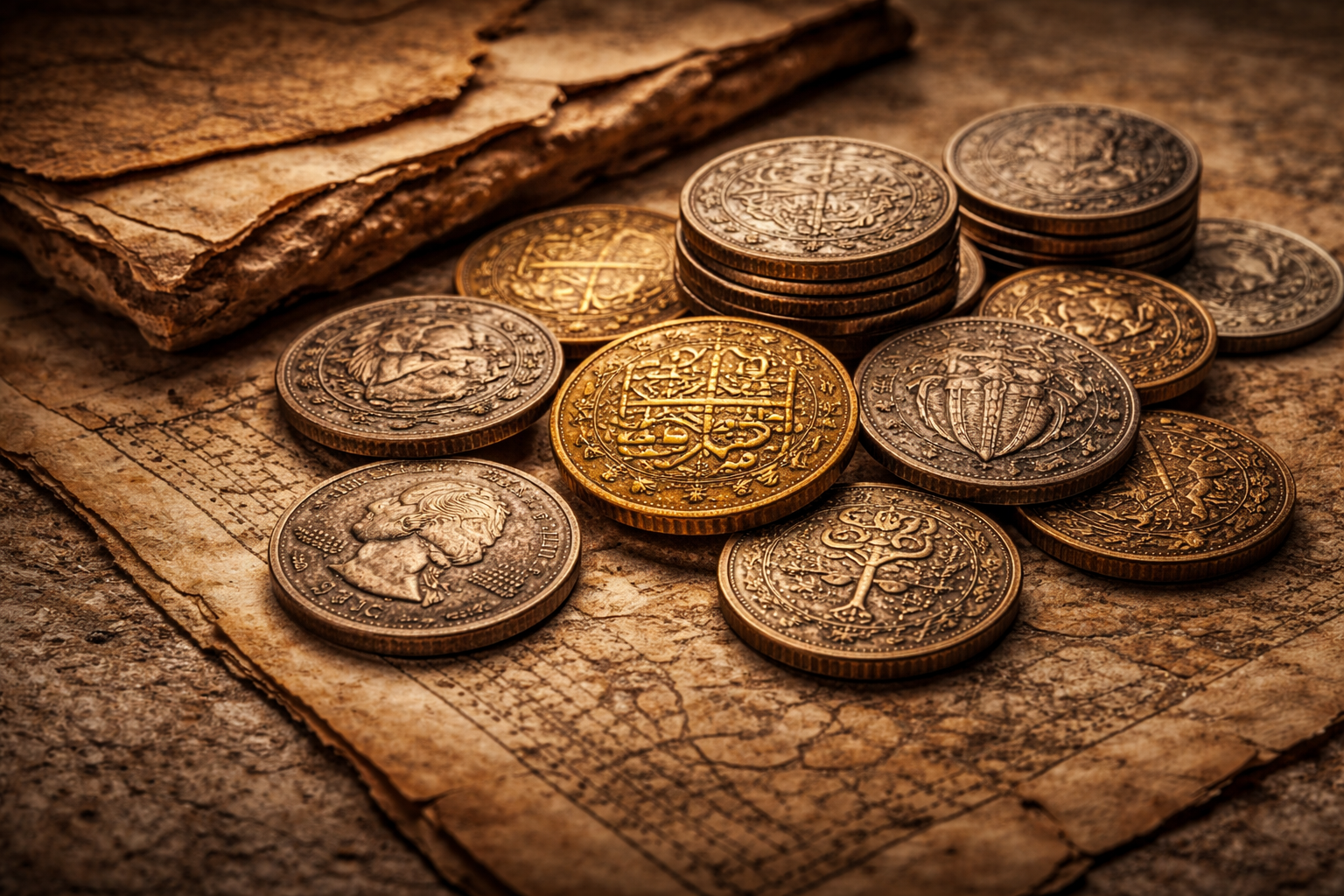
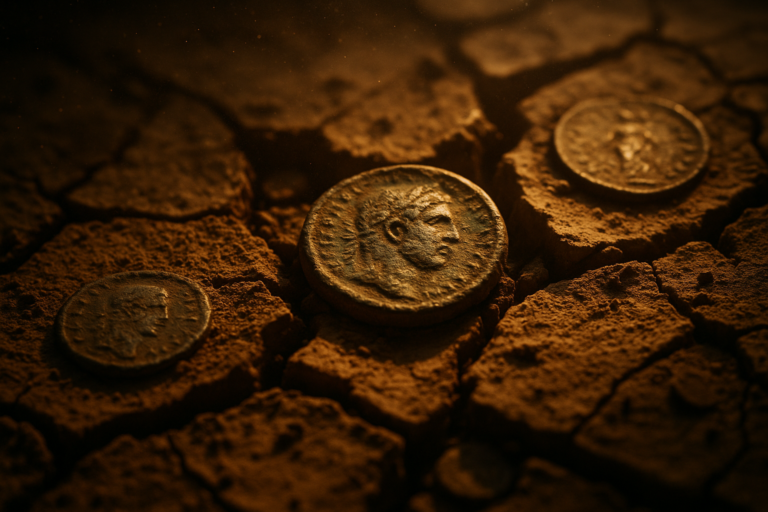
Caption: Old coins often symbolize trust and stability in human experience.
Image credit: HistoraCoin
Tangible vs Abstract Trust
Old coins communicated trust through presence. Modern money communicates trust through systems. This difference is profound. Presence gives concrete reassurance. Systems give abstract assurance.
People naturally respond more strongly to what they can touch and see. That’s why coins feel stable. Digital systems feel reliable only after repeated validation through experience.
Fact Card | Tangibility and Trust
Fact Card | Tangibility and Trust
Humans experience trust more intensely when something is physical and familiar, a phenomenon long exploited by the design of coin imagery and usage.
Why Old Coins Feel Emotionally Anchored
Coins carry history. Each scratch, each worn edge tells a story of journeys traveled and hands held. That accumulated presence resonates with human psychology.
Modern money, by contrast, is mostly invisible. It exists as numbers within networks and databases. For many people, this feels less “real,” even when it functions perfectly.
Stability Versus Speed in Modern Money
Modern money is designed for speed. Payments happen instantly. Balances update in real time. While this efficiency is powerful, it also removes the sense of permanence that coins once provided.
Speed creates convenience, but it can also create anxiety. When money moves too quickly and invisibly, people feel less in control. Old coins moved slowly, physically, and visibly. That slowness created confidence.
How History Shapes Our Perception of Value
Perception of value is shaped by repetition across generations. When the same coin designs were used for decades or centuries, they became part of collective memory.
Old coins feel trustworthy because they appear unchanged. They suggest endurance. Modern money changes interfaces, formats, and systems constantly, which can weaken emotional confidence.
Comparison | Old Coins vs Modern Money
- Old coins offer physical presence and weight
- Modern money exists primarily as data
- Coins build trust through visibility and continuity
- Digital money builds trust through performance and reliability
Timeline Insight | From Weight to Code
The transition from metal to digital code did not eliminate trust. It transformed how trust is communicated. Weight became confirmation screens. Design became interface feedback. Symbols became digital icons.
Yet the expectations remain. People still want reassurance that value exists and is protected. Coins established those expectations long ago.
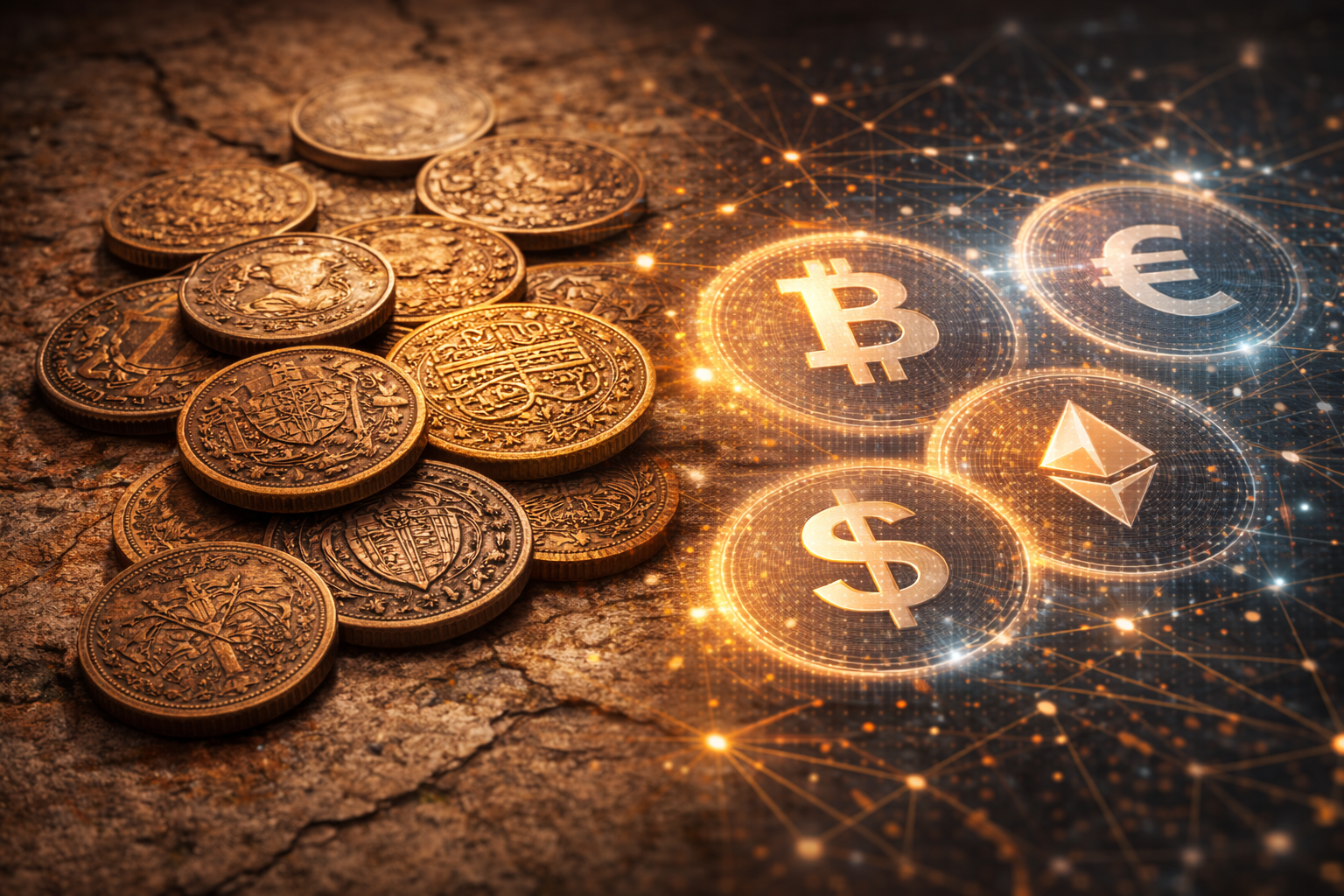
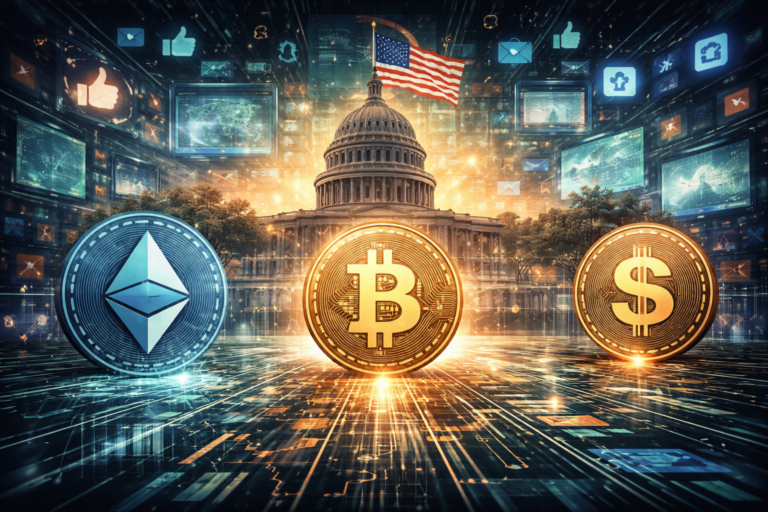
Caption: The contrast between physical coins and invisible digital money shapes trust.
Image credit: HistoraCoin
Methodology and Research Approach
This article applies a cultural and psychological research approach rather than financial analysis. The focus is on trust formation, material presence, and historical continuity in monetary systems.
Insights are drawn from monetary history, behavioral psychology related to trust, and analysis of material culture. No investment advice, valuation models, or speculative claims are included.
By examining how physical money shaped trust historically, this article explains why modern systems still rely on familiar symbolic cues.
People Also Ask
Why do old coins feel more trustworthy?
Because they provide physical presence, continuity, and visible history,
which strengthen emotional confidence.
Is modern money less reliable than old coins?
Not technically.
Modern money is reliable, but it communicates trust differently.
Will physical money disappear completely?
Possibly, but its psychological influence will remain embedded in digital systems.
Final Reflection
Old coins feel more trustworthy than modern money not because they function better, but because they speak a language humans understand instinctively. They represent continuity, visibility, and shared experience.
As money becomes increasingly digital, understanding this history helps explain why trust still depends on ideas first shaped by coins. The past continues to influence how we feel about value today.
Continue Exploring Trust and Coins
Share This Article