Why Roman Coins Look So Different Over Time
Estimated reading time: 16–18 minutes
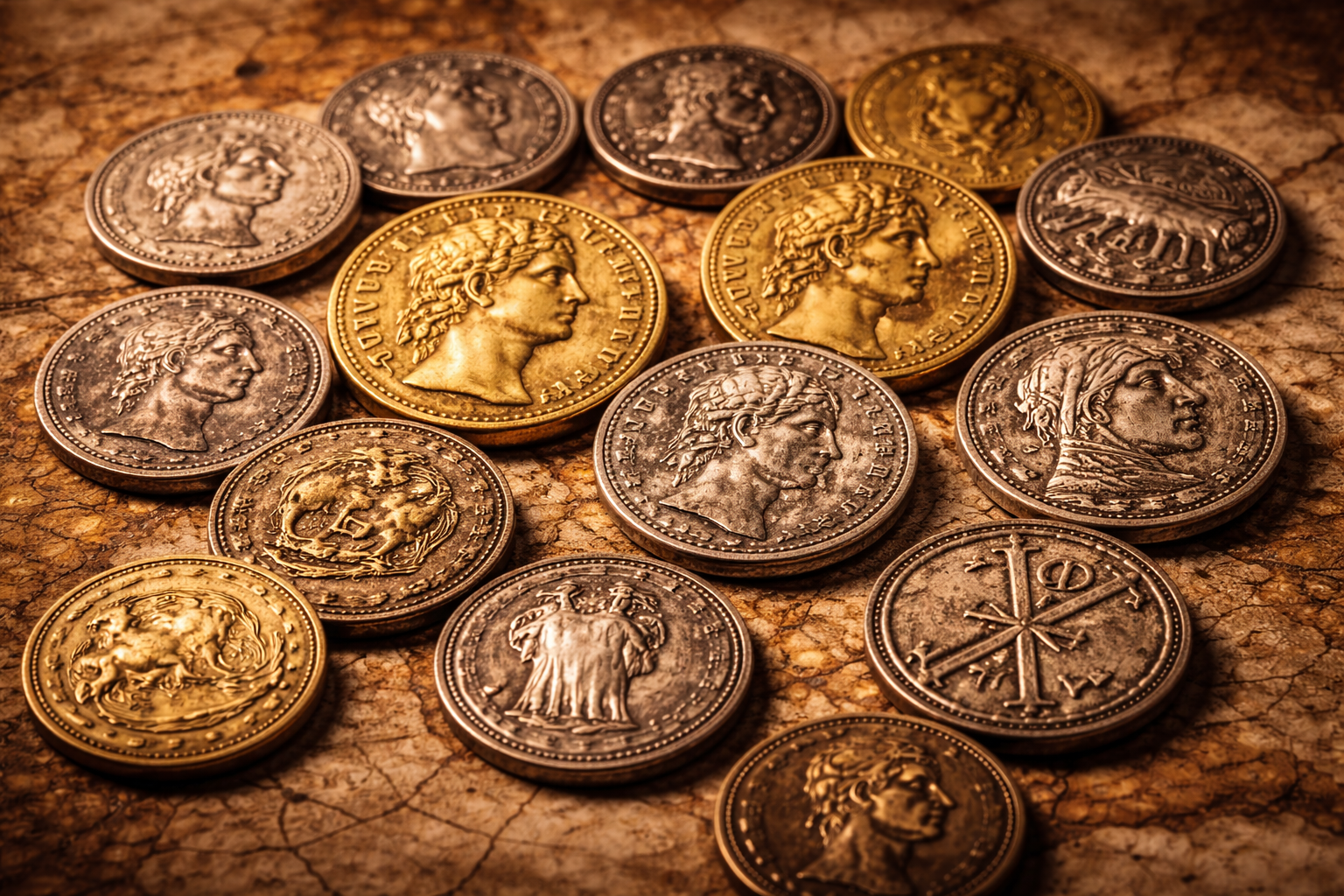
Roman coins are some of the most familiar artifacts from the ancient world, but their appearance varies dramatically depending on when and where they were made. If you look at a coin from the Republic era next to one from the late Empire, you’ll notice clear differences in design, style, and execution. These changes didn’t happen randomly. They reflect evolving political power, economic conditions, artistic trends, and cultural priorities over centuries.
Understanding why Roman coins look so different over time helps us see history not as a static series of objects, but as a lived experience that changed with each century, dynasty, and region of the empire.
Quick Takeaways
- Roman coin designs changed over centuries for many reasons
- Political shifts and leaders influenced how coins looked
- Economic pressures affected materials and style
- Local production added regional variations
- Design evolution tells a historical story
Table of Contents
Why Roman Coin Designs Changed
Roman coin designs changed for many reasons, but three stand out: shifts in political leadership, economic pressures, and evolving artistic styles. Each era of Roman history had its own priorities. During times of strong leadership, images of powerful rulers and gods dominated coin designs. In periods of crisis, simpler designs and cheaper metals became more common.
These changes didn’t just reflect taste. They told a story about the priorities of the society that produced them, the people in charge, and the challenges they faced.
Fact Card | Design and History
Fact Card | Design and History
Roman coin design evolution reflects political, economic, and cultural shifts over time. Coins serve as visual records of changing priorities and leadership in Roman society.
Political Change and Coin Appearance
When a new emperor came to power, coin designs were often among the first things to change. Rulers used coins to communicate legitimacy, stability, and their own image to the public. Portraits, titles, and symbols could reinforce authority across the empire.
For example, early Republican coins focused on simple imagery tied to civic values, while Imperial coins often depicted emperors and imperial symbols designed to unify the diverse population under one ruler.
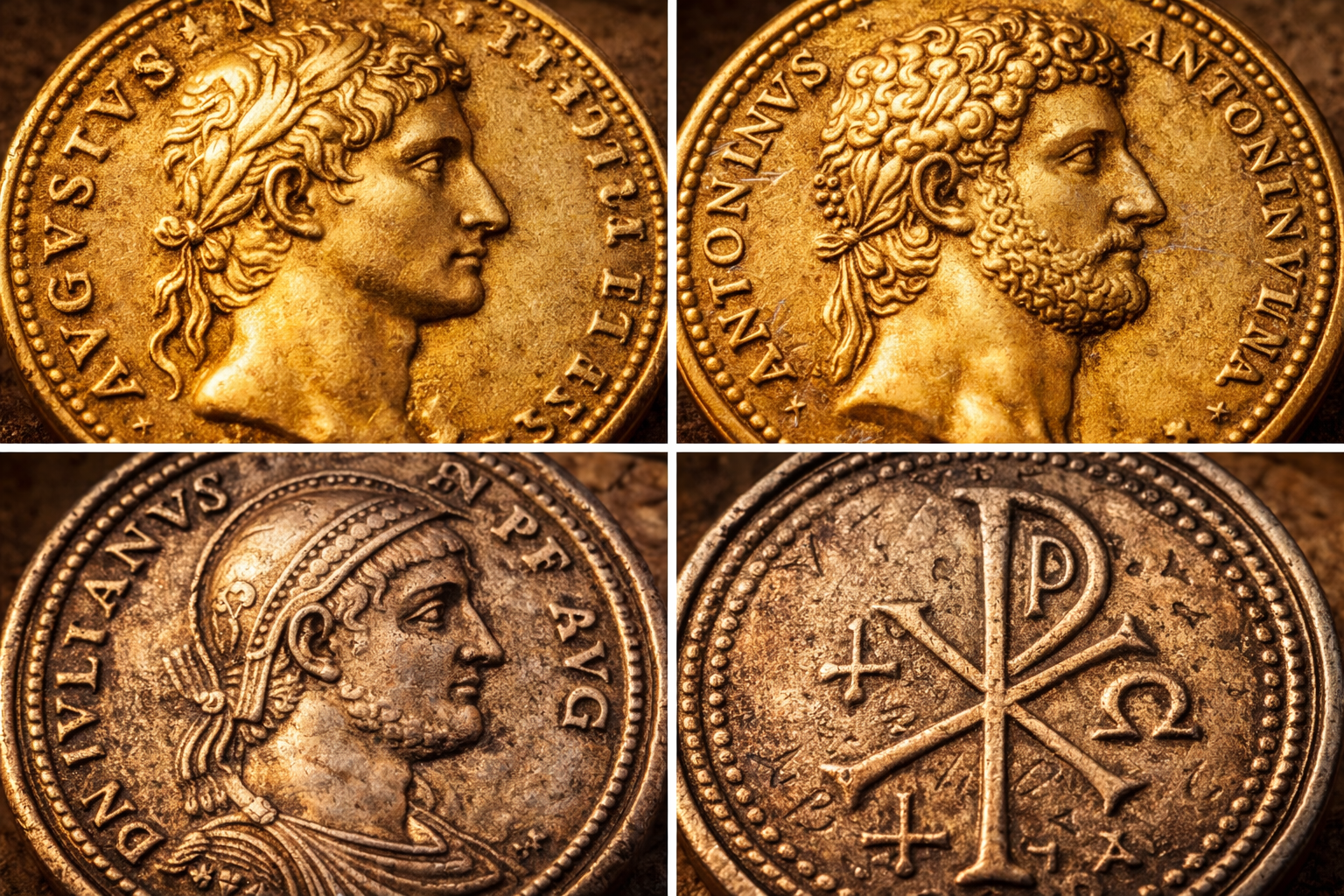
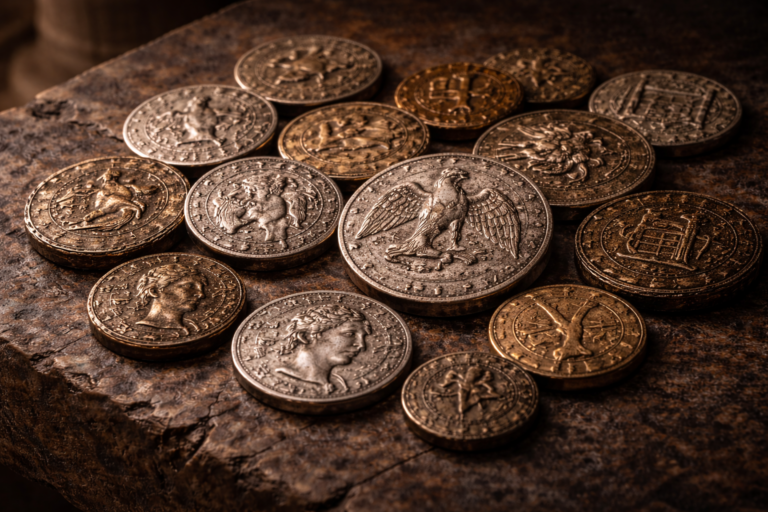
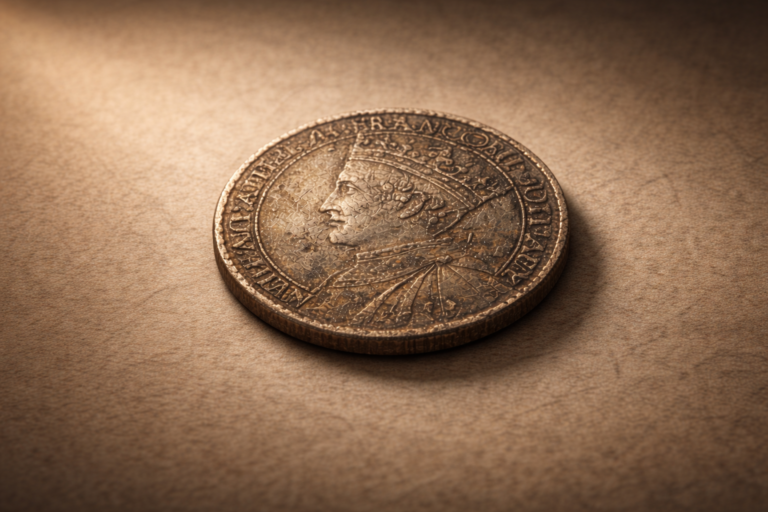
Caption: Close-up details show how Roman coin designs evolved across different eras.
Image credit: HistoraCoin
Comparison Card | Early vs Later Coins
Early Roman Coins
- Simple design elements
- Symbolic imagery tied to civic values
- Less emphasis on portraits
- Heavier reliance on bronze
Later Roman Coins
- Portraits of emperors
- Complex symbolic imagery
- Use of silver and gold for prestige
- Reflections of changing leadership
Economic and Material Factors
Roman economic conditions played a significant role in how coins looked. During prosperous periods, coins might be struck in higher quality metals with detailed designs. In times of strain, coins often shifted to cheaper metals or simpler imagery as a way to preserve economic stability.
Inflation and shortages impacted the metals used, which in turn affected how coins were struck and how well design details were preserved over time.
Regional Variation in Coin Styles
The Roman Empire covered vast territory, and local mints sometimes produced coins with subtle regional variations. Certain designs might be unique to a province or reflect local artistic preferences, even while still adhering to official imperial standards.
Timeline Insight | Republic to Late Empire
- Republic Era: Civic symbols and early design conventions
- Early Empire: Introduction of imperial portraits
- Mid Empire: Standardization and prestige imagery
- Late Empire: Simplified designs due to economic strains
Quote Highlight
The way a coin looks tells us not just who made it, but the story of the society that used it.
People Also Ask
Why do Roman coins change design?
Roman coins changed design due to political shifts, economic conditions, and artistic trends across different periods.
Did every emperor change coin designs?
Many emperors did update designs to reflect their authority, though some changes were subtle and gradual.
Did coin materials change over time?
Yes. Metals used in coins—bronze, silver, gold—reflected economic conditions and priorities of each era.
Final Reflection
Roman coins evolved over time because the world around them evolved. From political shifts to economic cycles and regional needs, every change in design tells a piece of the broader historical narrative. When we look closely at these variations, we’re reading history written in metal.