Why the 1973 Canadian Penny Still Matters – A Quiet Coin in Daily Canadian Life
Estimated reading time: 12 minutes
The 1973 Canadian penny rarely gets the spotlight. It is not the kind of coin most people stop to admire, and that is exactly why it matters. This small cent piece was built for routine life, the quiet rhythm of paying exact change, emptying pockets on a dresser, and hearing coins clink in a jar at the end of the day.
When you look closer, the 1973 penny becomes a useful window into Canadian daily culture in the 1970s. Its design choices, minting decisions, and circulation habits tell a story about how Canadians bought, saved, and moved through ordinary moments. This article focuses on history, design, minting, circulation, and subtle variations, all through the lens of a coin that lived in real hands.
- Why the 1973 Canadian Penny Still Matters
- Daily Life in Canada in the 1970s
- Design Language and What It Communicates
- Obverse and Reverse Details Worth Noticing
- Minting and Production Context
- How the Coin Traveled Through Circulation
- Small Differences That Appear Within a Common Year
- Quick Reference Table for Researchers
- How This Coin Fits the Larger Penny Story
- Related HistoraCoin Stories
- FAQ
Why the 1973 Canadian Penny Still Matters
A coin can matter even when it is common. The 1973 Canadian penny matters because it captures the practical purpose of a one cent coin at a time when small change still played an everyday role. In the 1970s, precise pricing was normal in local shops, and the penny helped keep transactions exact. It also shaped habits. People saved pennies without thinking, counted them for small purchases, and used them as a quiet tool for budgeting.
This is the kind of significance that does not rely on drama. It is cultural and functional. A cent piece that moved constantly through circulation becomes a record of routine. When you study a 1973 penny, you are studying what a typical Canadian coin looked like when it was doing its job every single day.
If you want the full big picture of where the penny fits in Canadian identity and design evolution, start with learn more about the hidden story of Canadian pennies. This article is a close up chapter within that wider narrative.
Daily Life in Canada in the 1970s
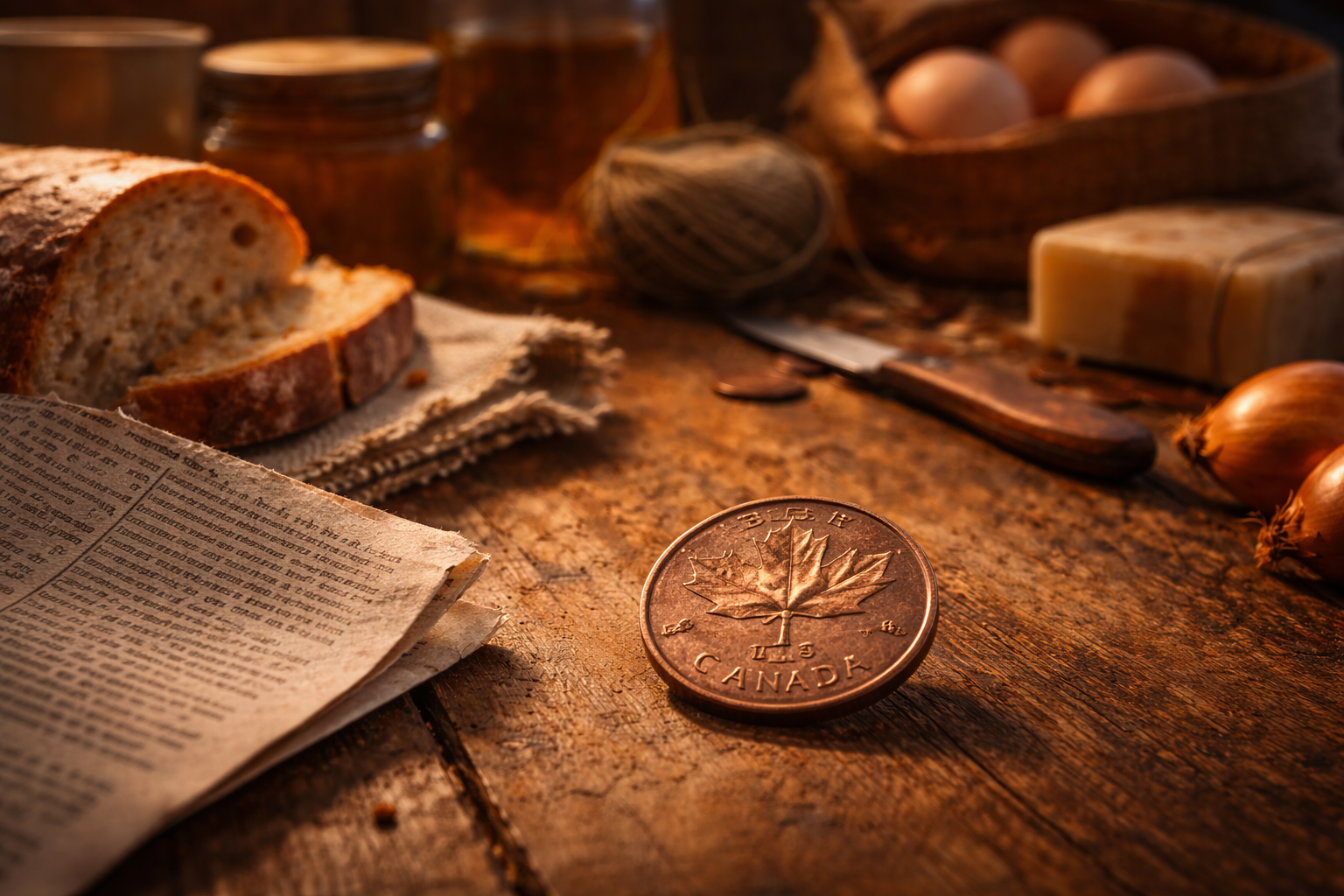
To understand a coin, it helps to imagine its environment. In the 1970s, Canadian shopping was more tactile. People carried cash more often, and many small purchases depended on coins. A penny could be the difference between exact change and an extra coin left on the counter. It could be the small piece you needed when a price ended in ninety nine cents. It could be the coin a child received as change and immediately saved in a jar at home.
Pennies were also part of movement. They rode in pockets, purses, and small coin holders. They ended up in couch cushions and coat linings. They collected in kitchen bowls near the door. That ordinary travel pattern is not random. It is evidence of how frequently the penny was used and how deeply it was woven into daily life.
When people talk about the 1970s, they often focus on broad cultural shifts, music, fashion, or big political themes. A penny tells a more intimate story. It tells you what the average person did, what they carried, and how they paid for small moments. That is why a single common year like 1973 is worth studying in detail.
Design Language and What It Communicates
Canadian coin design tends to favor clarity and symbolism over decoration. The penny reflects that approach. It is meant to be instantly recognizable and easy to read, even after wear. The national iconography is not subtle. It is direct and consistent, which helps the coin function in circulation for years.
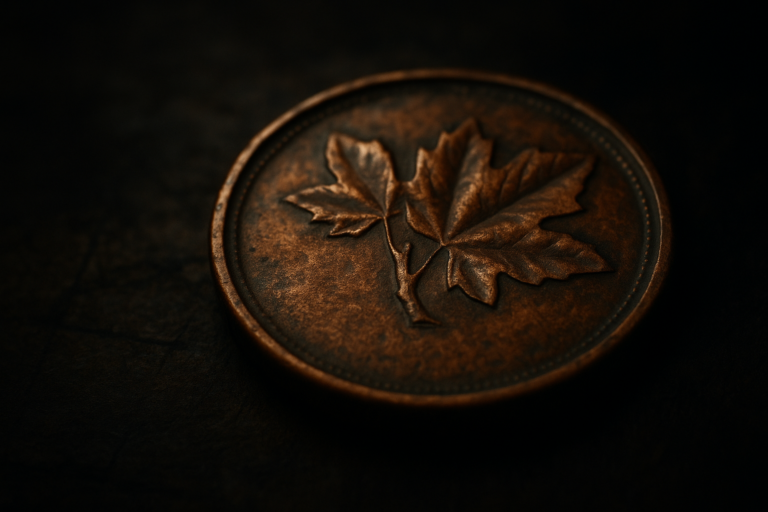
The most important symbol on the reverse is the maple leaf. The maple leaf is not just a decorative plant shape. It is a national signature. It signals Canada in a single glance and ties a daily object to a shared identity. On a one cent coin, that identity becomes something you handle routinely, not something you only see on flags or official documents.
Design also includes typography and spacing. The placement of letters, the balance between elements, and the relative size of the central motif all matter. Over time, these details can change slightly based on die preparation and production decisions. Those small shifts are one reason people compare coins from the same year and notice subtle differences.
Obverse and Reverse Details Worth Noticing
The obverse portrait on Canadian coins is more than a face. It is a timeline marker. Portrait styles shift as engraving approaches evolve and as official designs update. Even within a single era, the way a portrait is rendered, the sharpness of the hair details, and the spacing of lettering can vary depending on the die and strike quality.
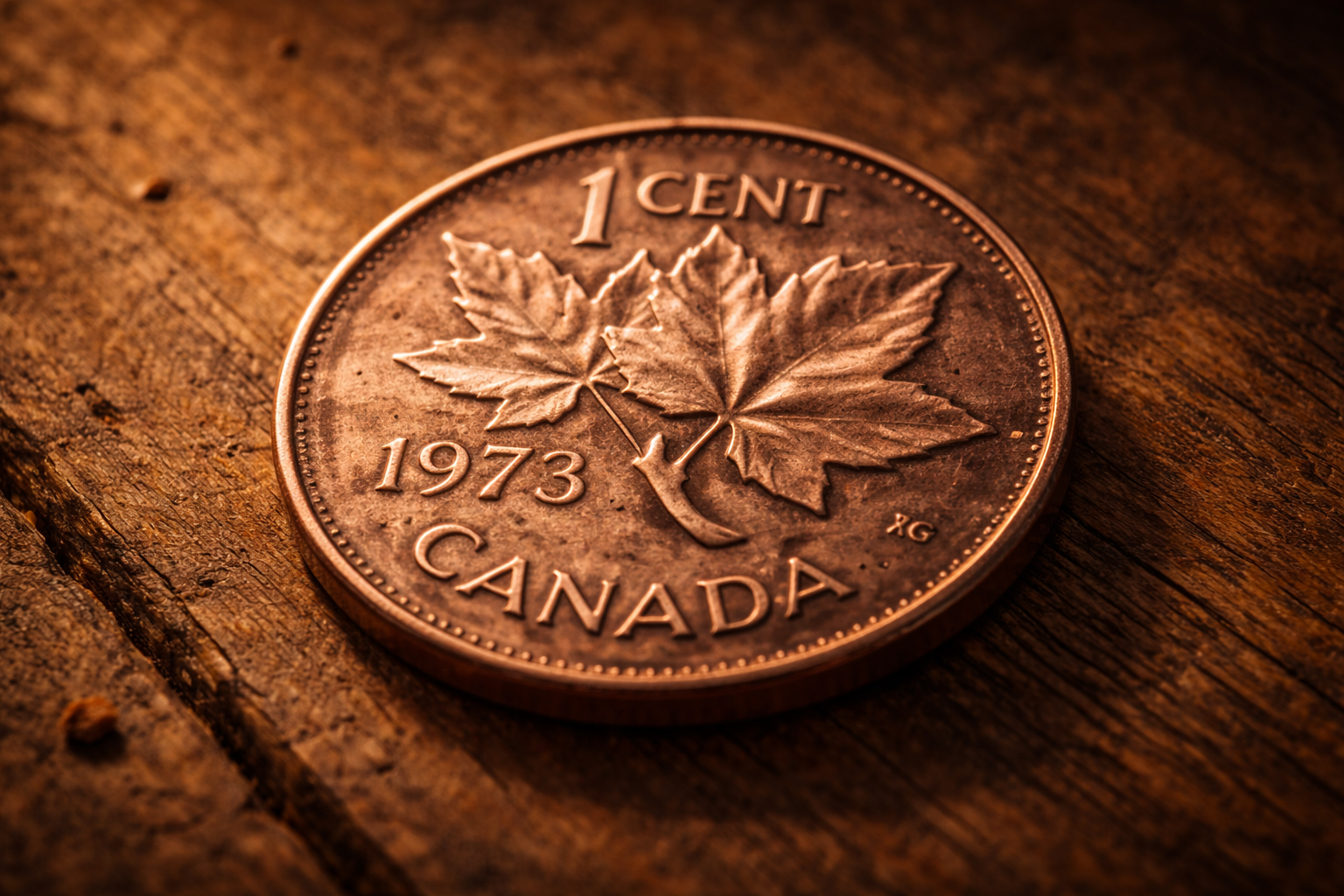
The reverse maple leaf is a lesson in strong design. It has to remain readable under real wear. In circulation, pennies rub against other coins, keys, and hard surfaces. The maple leaf lines and the surrounding lettering were designed to survive that daily abrasion better than overly fine artwork would.
The easiest way to train your eye is to study a clear close up image and then compare it to a worn example. Look at the edges of letters, the depth of the maple leaf veins, and the crispness of the rim. These are practical details that connect directly to minting and circulation.
Minting and Production Context
Coins do not appear by accident. They are planned, designed, and produced under a controlled system. The Royal Canadian Mint is central to that system. By the 1970s, modern minting methods were well established, with consistent processes for die creation, blank preparation, striking, and inspection.
Minting is often described in a technical way, but the basics are simple. A design is turned into hardened dies. Metal blanks are prepared to a standard size and thickness. The blanks are struck under pressure, transferring the design from the die to the coin. After that, coins are inspected and released into circulation.
What matters for understanding a 1973 penny is that minting is a real industrial process. Different dies may be used across production runs. Dies wear with use. Tooling can be refreshed. Minor differences can appear. When people compare coins and notice small differences, those differences usually come from the reality of production, not from a secret story.
If you want a deeper narrative focused specifically on the year, including how people discuss the year and why it became a reference point in conversations, see the story behind the 1973 Canadian penny. This article stays grounded in daily life and design analysis, while that one expands the broader storytelling angle.
How the Coin Traveled Through Circulation
Circulation is where a coin becomes real. A mint can produce a perfect coin, but once it enters the public, it becomes part of the world. A 1973 penny might pass through dozens of transactions in a short time. It might sit in a cash drawer for weeks. It might travel from one province to another in a pocket and never be noticed.
Wear patterns tell a story about that travel. High points on the design will flatten first. Lettering may soften at the edges. The rim can pick up tiny nicks and dents. These are not flaws in the moral sense. They are proof of use. For a coin designed to circulate widely, wear is a normal outcome.
Daily circulation also explains why so many pennies survive. People saved them casually. They were easy to keep and hard to spend all at once. Jars filled slowly, and those jars sometimes stayed untouched for years. That is one reason modern people still encounter 1973 pennies in old containers and family collections.
Small Differences That Appear Within a Common Year
Many people assume every coin from a given year is identical. In practice, coins from the same year can show small differences. These differences might be subtle changes in the thickness of lettering, tiny spacing shifts, or slight variations in how sharply the maple leaf lines appear.
A practical way to think about this is to remember that coins are struck with dies that can be replaced or refreshed. If one die is slightly different from another, or if a die becomes worn, the resulting coins will show differences. These differences are usually small, but they can be noticeable when you place coins side by side.
This is why comparison photos are so useful. When you compare a 1973 penny to nearby years, you can start to see how design and production details shift over time. You can also begin to notice which elements tend to vary and which remain stable.
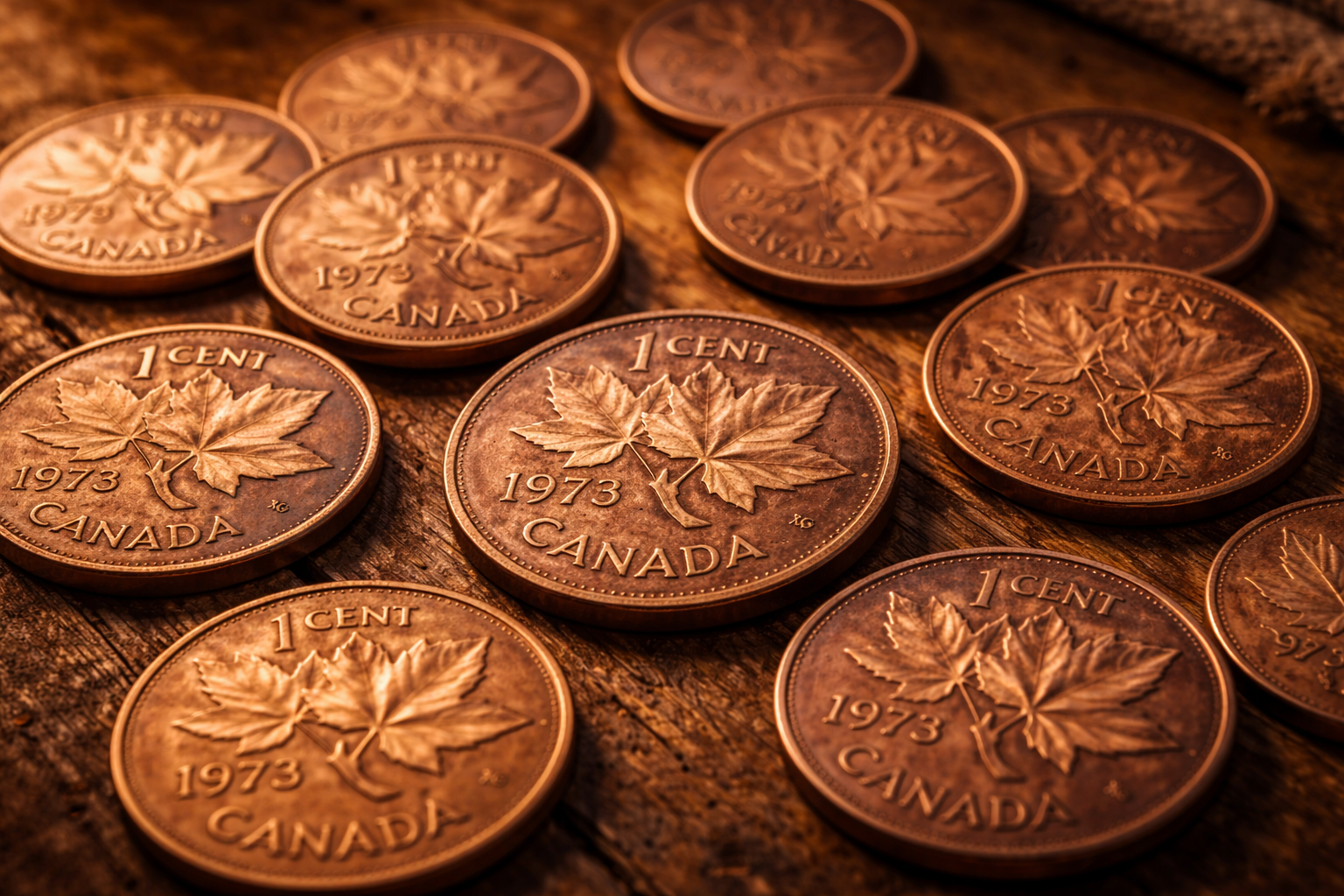
For a structured overview of the types of differences people commonly point to, and how to describe them clearly, see small variations found in the 1973 Canadian penny. That guide pairs well with this article because it goes deeper into how to talk about tiny design differences in a consistent way.
Quick Reference Table for Researchers
| Research angle | What to look for on a 1973 penny | Why it matters historically |
|---|---|---|
| Design clarity | Sharpness of lettering, rim definition, and maple leaf line detail | Shows how the coin was meant to remain readable through heavy circulation |
| Minting consistency | Small differences between coins, especially in letter shapes and spacing | Reflects die usage patterns and real production workflows |
| Circulation wear | Flattened high points, softened edges, surface marks from daily handling | Documents how the coin functioned as a tool of everyday exchange |
| 1970s context | Comparison with nearby years, noting gradual visual shifts | Helps place the coin within broader Canadian penny evolution in the decade |
| Cultural memory | Evidence of saving habits such as jar storage versus heavy wear | Connects the coin to household routines and daily life stories |
How This Coin Fits the Larger Penny Story
A single year becomes more meaningful when it is connected to a larger arc. The 1973 penny is a mid story chapter in the long timeline of Canadian pennies. It sits in a decade where people still relied on small change, where the penny still helped pricing feel precise, and where coin design maintained strong national symbolism.
Studying this year also trains your eye. Once you learn how to notice maple leaf line clarity, lettering spacing, and strike differences, you can apply those skills to other years. That is part of what makes a common coin educational. It is accessible. You can learn from it without needing a rare specimen to begin.
This is why the 1973 penny still matters. Not because it demands attention, but because it rewards attention. It is a practical coin that carries real history, daily culture, and design intent in a small, familiar form.
Related HistoraCoin Stories
FAQ
What makes the 1973 Canadian penny historically interesting
It is a strong example of a daily circulation coin in the 1970s. Its design, minting context, and wear patterns reveal how small change supported everyday life in Canada.
What should I notice first when looking at a 1973 penny
Start with the maple leaf lines, the clarity of the lettering, and the rim. Compare a crisp example to a worn one to understand how circulation changes the look of the coin.
Why do two pennies from the same year sometimes look slightly different
Small differences can result from die wear, die replacement, and strike quality. These differences are normal in large scale coin production.
How does this article connect to the broader penny topic
This article is a focused chapter on one year. For the wider narrative of Canadian pennies, their symbolism, and long term evolution, use the linked pillar guide.
Where can I read more about design differences in 1973
Use the variations guide linked in the related stories section. It expands on how to describe and compare small design differences clearly.