1909-S VDB Lincoln Cent | A Turning Point in U.S. Coin History

Estimated reading time: 12 minutes.
In the early twentieth century, most Americans did not think of a one cent coin as something that could carry national emotion. Yet in the year 1909, a single design decision on the smallest everyday coin sparked a public argument about art, credit, and the meaning of a president’s image. That is why the 1909 S VDB Lincoln cent is best understood as a turning point. Not because it was made to be a headline. But because it revealed how deeply a country can care about what appears on its money.
This article focuses on history, design, and context. It avoids modern market language on purpose. The goal is simple. To understand why a coin struck for daily life ended up becoming one of the most discussed objects in American numismatic history.
Table of Contents
- America in 1909 and why a new cent mattered
- How the Lincoln cent was born
- Victor David Brenner and the role of the artist
- The VDB controversy and why it became political
- Why San Francisco struck the S VDB cent
- Design details people still study today
- A clear timeline of what happened
- How people authenticate without turning history into hype
- What the coin changed in American coin design
- Legacy and why this story still matters
- Frequently asked questions
America in 1909 and why a new cent mattered
To understand the Lincoln cent, you have to understand America’s mood in 1909. The country had grown quickly. Cities were expanding. Industry was transforming work. Newspapers reached huge audiences and public debate moved faster than ever. At the same time, Americans were navigating a modern question that still feels familiar today. What should a national symbol look like when the nation itself is changing.
Coinage might seem like a small detail, but it was a daily national presence. A cent could be touched by almost anyone, from a factory worker buying lunch to a child purchasing a newspaper. For decades, the obverse had carried an idealized Liberty head rather than a real person. That tradition was not random. Many Americans believed that placing a real person on a coin felt too close to monarchy. In the United States, symbols mattered, and money was one of the most visible symbols of all.
Then came the Lincoln cent. A real president. A recognizable face. A human profile that most people already knew from photographs and monuments. It felt like an announcement. America was willing to do something new.
How the Lincoln cent was born
The Lincoln cent was tied to memory and commemoration. The year 1909 marked the centennial of Abraham Lincoln’s birth. Across the country, communities prepared speeches, ceremonies, and school events. Lincoln had become more than a historical figure. He had become a moral symbol, representing unity, sacrifice, and a vision of the Union that survived catastrophe.
In this atmosphere, changing the design of the one cent coin carried emotional weight. This was not a high denomination coin reserved for banks. This was the cent that moved through every pocket. A new design would be seen constantly. That visibility was exactly the point. Placing Lincoln on the cent was a way to make national memory feel present, not distant.
From a practical perspective, the United States Mint also needed a design that could be produced reliably. The cent was struck in enormous numbers. Any redesign had to work on industrial equipment, with clarity and durability in mind. The artist could not only make something beautiful. It had to be repeatable at speed, and readable when worn.
Victor David Brenner and the role of the artist
Victor David Brenner was a trained medalist and engraver. He worked in a world where artists created objects meant to last, but also meant to serve a public purpose. In coinage, an artist is always negotiating. There is the artistic vision. There is the technical reality of metal striking. And there is the political reality of who approves what appears on a coin.
Brenner’s portrait of Lincoln was shaped by an idea that was becoming popular in the early twentieth century. Realism. Not only idealized symbolism, but recognizable human features. This mattered because it allowed a president to look like a person, not a myth. Lincoln’s face on the cent became one of the earliest moments when everyday American money moved closer to modern portrait realism.
Brenner also brought something else into the design conversation. Authorship. In a period when many Americans were beginning to treat art as a serious profession, artists increasingly wanted credit. For a medalist, initials were a normal signature. They were a quiet mark of responsibility and pride. In a gallery, no one panics when an artist signs a painting. But a coin is not a gallery object. It is a national object. And that difference is where the controversy began.
The VDB controversy and why it became political
The initials VDB appeared on the reverse of the earliest Lincoln cents of 1909. For Brenner, it was a signature. For some officials and commentators, it looked like advertising. The question became less about design and more about perception. Should an artist’s name appear on a coin that belongs to the public. Who owns the image. Who receives credit.
It is easy to underestimate how quickly public debates could grow in the early twentieth century. Newspapers loved strong opinions. A coin redesign was perfect material. It was visual, accessible, and tied to Lincoln’s reputation. Critics argued that the initials were too visible. Supporters argued that artists deserved recognition. Behind the scenes, administrators worried about one specific risk. If a signature on a coin is allowed, where does it stop. Would every designer demand more space. Would coins become crowded with personal marks.
The result was a rapid decision. The initials would be removed from the reverse. This is the key moment to understand. The controversy did not require years of debate. It required only enough pressure for officials to act quickly, and to choose caution over artistic credit.
When the Mint decided to remove VDB, it was not simply changing a detail. It was sending a message about authority. The coin was a government object, not an artist’s platform. That message shaped American coin design culture for generations.
Why San Francisco struck the S VDB cent
In 1909, the United States Mint system included multiple facilities. Philadelphia was the main center. But branch mints served regional demand and made distribution easier. San Francisco, marked with an S, was crucial for serving the western economy.
When the Lincoln cent was introduced, San Francisco produced a portion of the early cents with VDB on the reverse. The issue became historically notable because the window of production was short. Once the decision to remove VDB was made, the design changed, and the initial version stopped. San Francisco’s role matters because it shows how a national decision can freeze a regional product into a historical snapshot.
In simple terms, the 1909 S VDB cent exists because of timing. A new design launch. A short public controversy. A quick administrative reversal. And a branch mint that had already struck coins before the reversal took full effect. That chain of events is what makes the coin important as a historical object.
Design details people still study today
Even when you remove modern market talk, the coin remains fascinating because it teaches you how to look. It teaches you that small details can carry large meaning. Here are a few details that historians and careful collectors examine for educational reasons.
Obverse portrait and typography
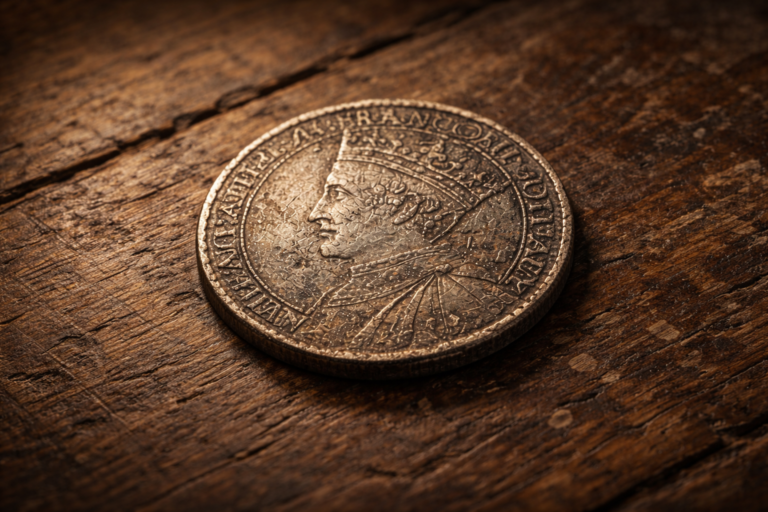
Lincoln’s profile introduced a sense of realism that felt modern in 1909. The lettering around the portrait, including the national name, was designed to remain legible even as a coin wore down. On high volume coins, typography is not decoration. It is function.
Reverse wheat ears and the placement of initials
The reverse of the early Lincoln cent used wheat ears, a design choice that connected the coin to agriculture and everyday labor. The initials VDB appeared at the bottom of the reverse. Their placement is important because it made the signature visible without dominating the main symbols. Yet even this restrained placement was enough to trigger criticism. That tells you how sensitive national symbolism can be.
Physical specifications
The coin’s physical specifications were designed for consistent striking and circulation. The 1909 cent’s composition and size fit the practical needs of the era. These technical details are not just trivia. They are part of how a coin becomes a tool.
- Mint mark: A small S appears below the date on the obverse for the San Francisco issue.
- Reverse initials: VDB appears at the bottom center between the wheat ears on the earliest version.
- Diameter: 19 mm.
- Weight: 3.11 grams.
- Composition: Bronze alloy used for U.S. cents of the era.
Notice what is missing here. There are no promises. No ranking language. No hype. Just the physical facts that help explain what the coin is. That approach protects historical writing from turning into advertising.
A clear timeline of what happened
The story of the 1909 S VDB cent becomes much easier to understand when you place it on a clean timeline.
- Design planning: The Mint prepares a new cent design honoring Lincoln’s centennial year.
- Initial production: Early Lincoln cents are struck with VDB on the reverse.
- Public reaction: Newspapers and officials debate whether the initials are too prominent.
- Administrative decision: The Mint chooses to remove the initials from the reverse.
- Design change: New cents are produced without VDB on the reverse.
- Historical aftermath: The short initial run becomes a lasting example of how public perception can reshape coin design.
This timeline shows the real lesson. Coins are not only created by artists and machines. They are shaped by public expectations. A small detail can be reinterpreted as a big statement, and then policy follows that interpretation.
How people authenticate without turning history into hype
Any famous coin story attracts imitations. That is a historical reality, not a modern trend. When people hear that a specific design detail is important, some will attempt to copy it. For educational writing, the key is to discuss authenticity in a calm and responsible way. Not as a shopping guide. As a historical skill set.
Step one. Study the mint mark placement
On genuine examples, the S mint mark sits below the date. Its shape and position follow consistent patterns for the era. When you compare known genuine photos, you notice that the mint mark is not random. Counterfeiters often struggle to place it with the same balance and spacing.
Step two. Examine the VDB style
The VDB on genuine pieces has a specific engraving style. The letter shapes, spacing, and alignment between the wheat ears matter. Many imitations get the letters right in theory but wrong in feel. Authenticity is often about the relationship between details, not any single detail alone.
Step three. Observe the surface as a whole
Older coin surfaces reflect how metal ages. Wear patterns, rim shape, and fine texture are part of the story. An imitation might copy the design but fail to replicate the natural visual logic of age and striking.
If there is one helpful rule for historical learning, it is this. Do not treat a coin like a rumor. Treat it like an object. Look slowly. Compare calmly. Let the evidence speak.
What the coin changed in American coin design
The 1909 Lincoln cent was not only a new portrait. It was a shift in how America used money to tell stories. The cent became a tiny memorial. It also set a precedent for featuring real people, especially presidents, on everyday coinage.
At the same time, the VDB controversy created an important boundary. It clarified that coin design would prioritize government control over personal credit. That boundary still influences how designers and mints work today.
In other words, the turning point was double. Lincoln’s portrait moved American coinage toward modern commemoration. The removal of VDB moved American coinage toward stricter institutional authority. Together, they show how art and power negotiate in public spaces.
This is why the 1909 S VDB cent belongs in American cultural history, not only in numismatic discussions. It sits at the intersection of memory, media, and design governance.
Legacy and why this story still matters
More than a century later, the story still matters because it feels familiar. We live in a world where public symbols are constantly debated. Statues, flags, logos, even the design of a banknote. People argue about what should be displayed, and who should be credited. The 1909 S VDB cent is a small, early example of this modern cultural pattern.
The coin also reminds us that historical significance can come from conflict. Not all important objects are created to be important. Some become important because society argued about them, and the argument left a permanent mark.
Finally, the Lincoln cent demonstrates how memory can be built into daily life. A nation can place history in your pocket. That is powerful. And it shows why coin design remains relevant even in a digital age.
Frequently asked questions
Why was Lincoln chosen for the cent in 1909
The year 1909 marked the centennial of Abraham Lincoln’s birth. Putting Lincoln on the cent was a public way to honor his legacy on an everyday object.
What do the initials VDB mean
VDB stands for Victor David Brenner, the artist who designed the Lincoln portrait. The initials were placed on the reverse as a signature, then removed after controversy.
Why does the San Francisco mint mark matter
The San Francisco mint mark identifies the branch mint that struck that issue. For 1909, it also connects the coin to the short initial production window before the design change.
Is the coin important even without discussing money
Yes. Its importance comes from what it reveals about design, public perception, and government authority. It is a historical object that documents a cultural moment.
What is the simplest historical lesson from this coin
Small design details can become public controversies. When they do, institutions react quickly. Coins are not only metal. They are public symbols.
Follow HistoraCoin on every platform, because the next story will shock you.