🇨🇦 1921 Canadian 50 Cents
Estimated reading time: 9 minutes.
Some coins are remembered because they circulated widely. Others are remembered because they almost vanished.
The 1921 Canadian 50 cents coin belongs firmly to the second category. It is not famous for how often it was used, but for how close it came to being erased from history altogether.
Often referred to by collectors and historians as the King of Canadian Coins, this silver piece represents one of the most fascinating survival stories in North American numismatic history.
The World Canada Faced in the Early Nineteen Twenties
To understand why the 1921 fifty cents coin became so rare, we must step into the uncertain world that followed the First World War.
Canada, like much of the world, was navigating economic instability, shifting trade patterns, and changing monetary needs. Silver coinage, once a symbol of reliability and intrinsic worth, was becoming increasingly impractical for daily commerce.
Large silver denominations circulated slowly. People tended to save them rather than spend them, especially during uncertain economic times.
By the early nineteen twenties, Canadian banks were already sitting on significant stockpiles of unused silver coins.
The Fifty Cents Coin Before 1921
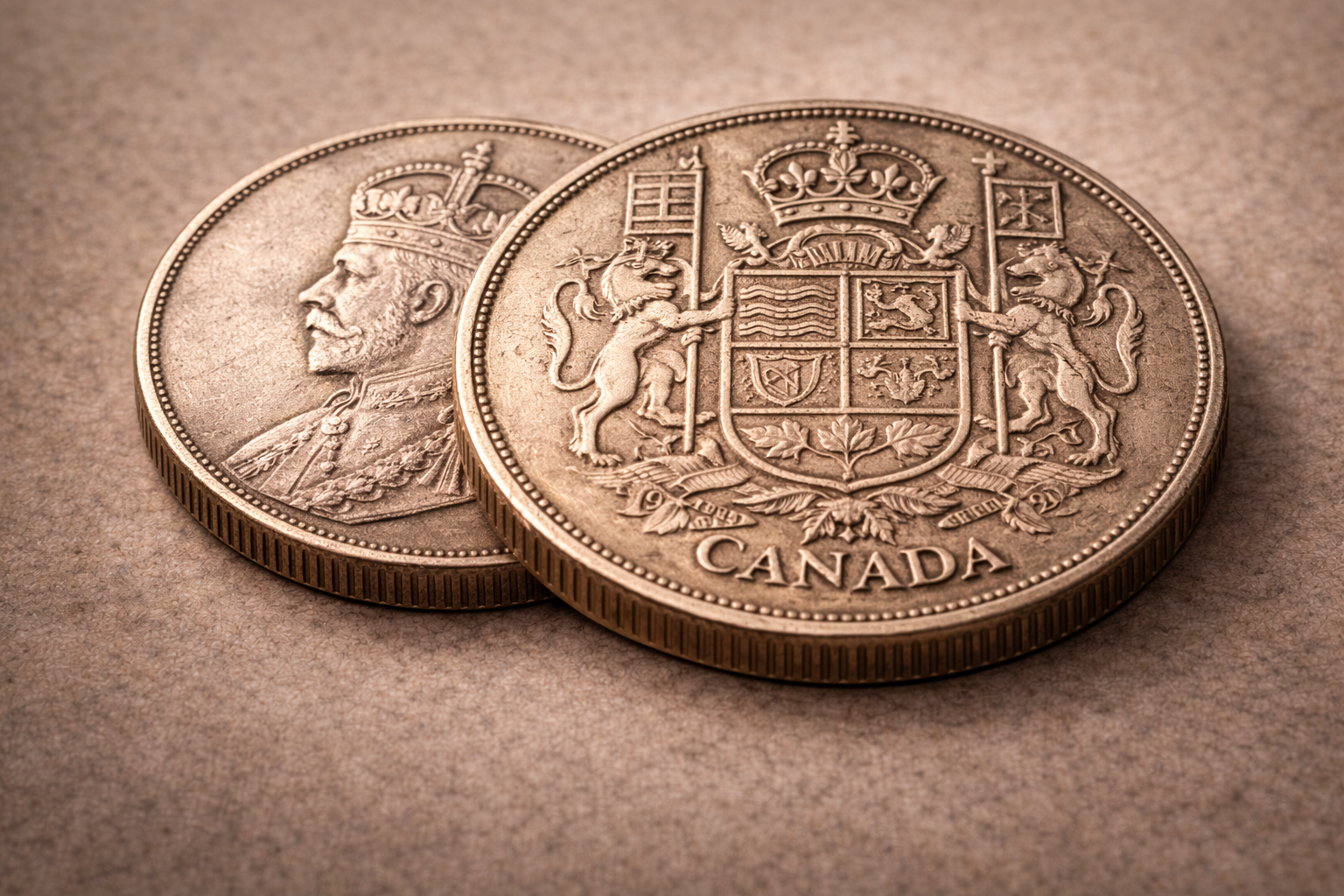
The Canadian fifty cents coin had existed since the nineteenth century, featuring the portrait of the reigning monarch on the obverse and Canada’s coat of arms on the reverse.
While beautifully designed, it had one persistent problem. It simply did not fit naturally into everyday transactions.
Most Canadians preferred smaller denominations for daily use, leaving the half dollar to accumulate in bank vaults.
By the time nineteen twenty one arrived, demand for new fifty cents coins was minimal.
Why Were New Coins Minted at All
Despite the lack of demand, the Royal Canadian Mint proceeded with production.
At the time, minting decisions were not always based on immediate circulation needs. They were influenced by long standing production schedules, metal contracts, and institutional momentum.
Thousands of fifty cents coins were struck bearing the date nineteen twenty one.
What happened next would define their legacy.
The Melting Decision That Changed Everything
Soon after production, officials recognized that these newly minted coins were unlikely to circulate.
Banks already had more silver coinage than they could distribute, and storing additional pieces made little sense.
Rather than releasing the coins into circulation, a decision was made to melt the vast majority of them.
Silver could be reused. Storage costs could be avoided. The problem would quietly disappear.
Except it did not disappear completely.
The Few That Escaped Destruction
A very small number of nineteen twenty one fifty cents coins avoided the melting furnace.
Some were set aside as records. Others were preserved unintentionally, forgotten in vaults or collections.
These survivors were never meant to be special. History made them special.
Their rarity was not intentional at first. It was accidental, the result of administrative efficiency colliding with historical chance.
Design Details That Reflect a Transitional Era
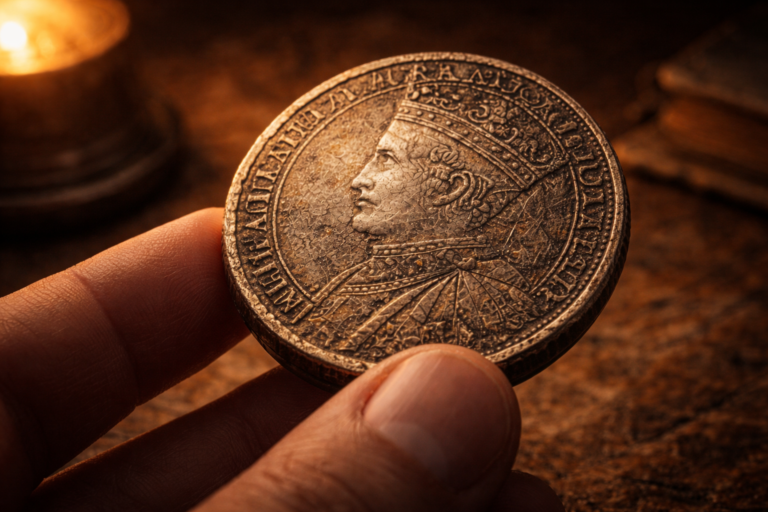
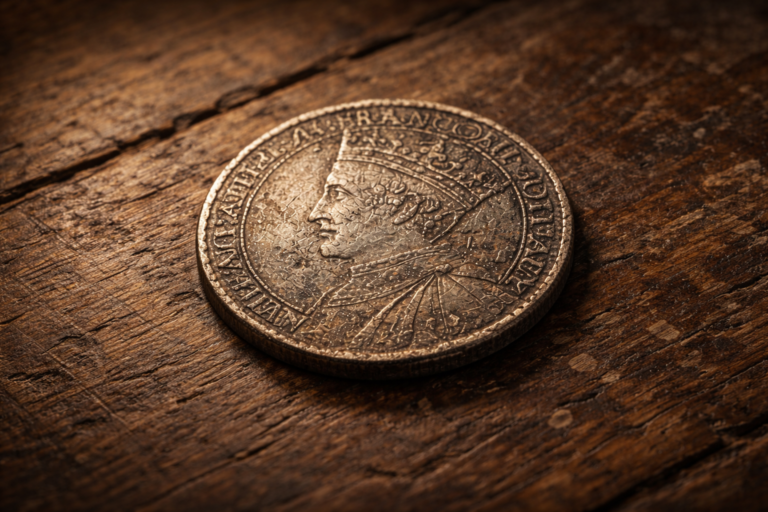
The obverse features King George the Fifth, whose reign coincided with one of the most turbulent periods in modern history.
The portrait is formal, restrained, and dignified, reflecting the tone of a nation emerging from war.
On the reverse, the Canadian coat of arms symbolizes unity, authority, and national identity.
Together, both sides capture a moment when Canada was redefining itself economically and politically.
Why It Never Became a Circulating Coin
Unlike many famous coins that gained recognition through heavy use, the nineteen twenty one fifty cents coin earned its status through absence.
Most Canadians never saw one in their change.
It did not shape daily commerce. Instead, it became a silent artifact of decisions made behind closed doors.
This makes it uniquely powerful as a historical object.
The Birth of a Numismatic Legend
As awareness grew among collectors in later decades, the story of the melted coins began to circulate.
What started as a bureaucratic footnote transformed into one of Canada’s most compelling coin legends.
The phrase “King of Canadian Coins” was not about monetary dominance.
It was about survival.
Historical Importance Over Modern Metrics
On HistoraCoin, coins are not examined through the lens of market trends.
They are studied as historical witnesses.
The nineteen twenty one fifty cents coin tells us about minting practices, post war economics, and the unintended consequences of efficiency.
Its importance lies in what it represents, not what it could be exchanged for.
What This Coin Teaches Collectors and Historians
This coin reminds us that rarity is not always planned.
Sometimes, it is created by decisions meant to simplify systems rather than complicate them.
It also shows how quickly ordinary objects can become extraordinary when circumstances change.
A Coin That Was Never Meant to Be Remembered
Perhaps the most fascinating aspect of the nineteen twenty one fifty cents coin is that it was never designed to be famous.
It was meant to be melted, reused, forgotten.
Instead, it became one of the most studied coins in Canadian history.
The Legacy It Left Behind
Today, the coin stands as a reminder that history often survives by accident.
Every surviving example carries with it the weight of countless others that did not survive.
It is not just a coin. It is a lesson in decision making, economics, and chance.
Final Thoughts
The nineteen twenty one Canadian fifty cents coin is not powerful because of metal or numbers.
It is powerful because it nearly vanished.
In that near disappearance, it gained a story worth telling.
And that story continues to fascinate anyone who looks beyond the surface of history.