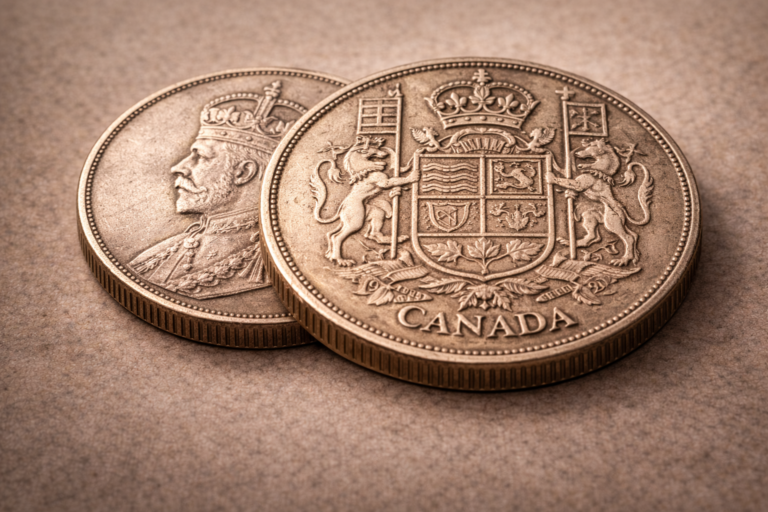
Best Ways to Store and Protect Your Coin Collection
A real-world coin care guide—like a friend walking you through what actually works, step by step.
Great storage is the quiet superpower behind a beautiful coin collection. It protects surfaces, preserves original luster, and lets your coins age gracefully instead of fighting the environment. In this in-depth guide, we’ll keep things practical: what to use (and avoid), how to control humidity and light, and simple routines that protect value over the long term. I’ll also point you to deeper reads on historacoin.com so you can dig in whenever you want.
Why Storage Matters More Than You Think
Coins don’t just lose value because of big accidents; most damage comes from little habits repeated for years: touching the fields, sliding coins in and out of PVC sleeves, storing them in damp rooms, or “polishing” them before a photo. Good storage is about quiet prevention. You won’t see dramatic changes day to day—but in five years, you’ll be glad you built the right habits.
Golden Rules (Short and Sweet)
Finger oils etch fields and leave permanent marks.
Cool, dry, and still beats “fancy but fluctuating”.
No PVC. Choose archival flips, Mylar, or capsules.
Date, mint mark, notes—stories add value and context.
Tip: If you remember just one thing—avoid PVC. It off-gasses chemicals that haze and pit coin surfaces over time.
Choosing the Right Holders
Capsules
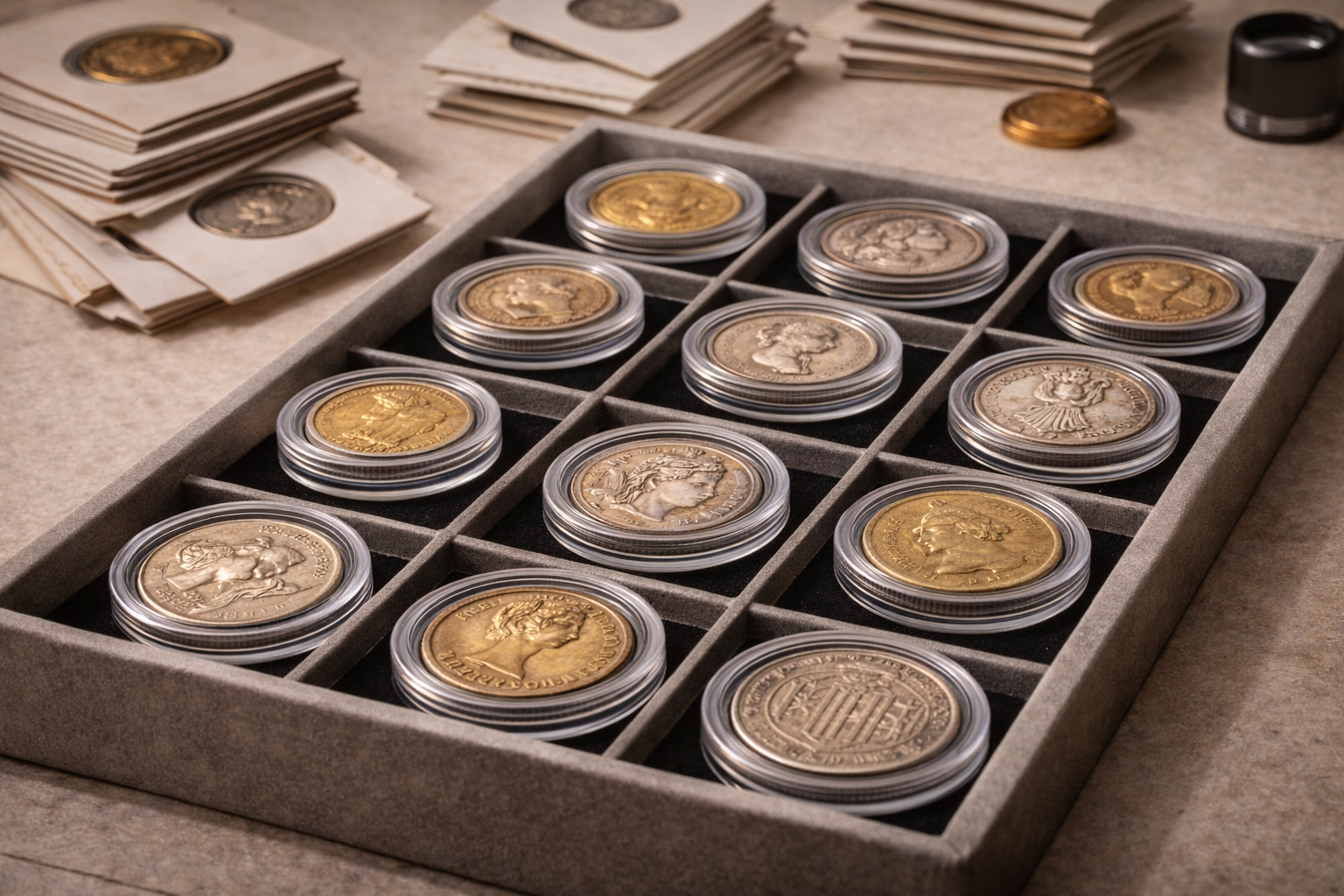
Clear, hard, and inert. Capsules are ideal for display and everyday handling. They protect rims and fields, stack neatly, and fit trays or boxes. Great for bullion and showcase pieces.
2×2 Cardboard + Mylar Windows
The hobby classic: affordable, label-friendly, and album-ready. Use a quality stapler and flatten staples so they don’t scratch adjacent coins. Choose acid-free, archival 2×2s.
Archival Plastic Flips (No PVC)
Flexible, good for quick sorting or when you’re sending coins for grading. Always confirm material—vinyl (PVC) is a hard no. Look for “archival, inert, PVC-free”.
Third-Party Grading Slabs
Coins certified by PCGS/NGC come sealed in inert holders with a barcode and grade. Store slabs upright in purpose-built boxes to prevent rattling and hairline friction.
Environment: Humidity, Temperature, and Light
Humidity
Aim for ~35–50% relative humidity. Too high encourages corrosion; too low can stress some materials. Use silica gel packs in boxes or safes and refresh them regularly (many have color indicators).
Temperature
Stability matters more than a magic number. Avoid attics and basements—big swings cause condensation. An internal closet or office cabinet is usually better.
Light
Direct sunlight accelerates reactions and fades album inks. Display under diffuse light and limit UV exposure. For photos, remove the coin briefly and return it to its holder.
Handling: The “Do Less” Philosophy
Most accidental damage happens while admiring coins (which we all love to do!). Keep a soft, clean surface on your desk. Handle coins over a pad, not over tile or wood. If you use gloves, choose lint-free cotton or nitrile; otherwise, clean, dry hands are fine—just grip the edges. Avoid breathing over the coin (micro-moisture + salts).
Myth check: “Polishing makes coins look better.” It might look brighter for a moment, but hairlines and unnatural surfaces crush value. If you suspect contaminants, talk to a professional about conservation—not polishing.
Materials to Avoid (and Why)
Organizing and Cataloging (Adds Value, Saves Time)
A tidy collection is easier to enjoy—and to insure or sell later. Use simple labels on holders: country, date, mint mark, variety, grade, and a short note (“Gift from Dad, 1988” or “Flea market find”). Keep a spreadsheet or notebook with purchase price, source, and any provenance. Photos (obverse/reverse/edge) help you track changes and prove condition.
If you ever decide to publish your stories, those little notes become pure gold. You’ll find templates and examples on historacoin.com.
Security and Insurance Basics
- Out of sight: A boring box in a boring place beats a flashy display in a window.
- Home safe: Fire-resistant, bolted down, with space for desiccants and trays.
- Inventory + photos: Keep a backup copy off-site or in the cloud.
- Insurance: Ask your insurer about scheduled personal property coverage for collectibles.
Pro tip: Never mark boxes “COINS.” Use neutral labels like “Documents A.”
Special Notes by Metal
Silver
Natural toning can be attractive and does not necessarily hurt value. Tarnish from sulfurous materials, however, can pit. Focus on inert holders and low-sulfur environments.
Gold
Gold is corrosion-resistant, but alloys can react. Treat gold coins with the same care—capsules, low humidity, and minimal handling keep surfaces pristine.
Copper/Bronze
Very reactive to oils and humidity. Fingerprints can ghost permanently. Use gloves or edge-only handling and refresh desiccants more often.
Moving, Mailing, and Display
Moving at Home
Box coins upright in trays, add foam spacers so capsules don’t rattle, and include silica gel. Transport during cooler parts of the day.
Mailing
Double-box valuable items, use tamper-evident tape, and require signature on delivery. Photograph contents before sealing.
Display
For exhibitions, use cases with UV-filter acrylic and hidden desiccant compartments. Rotate displays—coins don’t need to live under bright lights.
Cleaning vs. Conservation (Know the Line)
“Cleaning” in the harsh sense (polishes, abrasives, dipping without expertise) usually destroys value—micro-scratches and unnatural surfaces are forever. Conservation is different: stabilizing a coin, removing active contaminants, or lifting harmful residues without altering original surfaces. If a coin is rare or valuable and you think it needs help, speak to a professional conservator or your grading service about options.
Simple Routines That Pay Off
- Quarterly humidity check (refresh silica gel if color indicators suggest).
- Quick visual sweep: any foggy windows on capsules? Any flips turning sticky? Replace them.
- Update your inventory with new acquisitions, grades, and photos.
- Revisit security: are boxes still discreet and safely placed?
These small, boring habits are what keep your collection beautiful for decades.
FAQ: Storing and Protecting Coins
What humidity level is best for coin storage?
Target roughly 35–50% RH with minimal swings. Use silica gel packs and refresh as needed.
Are PVC flips really that bad?
Yes. PVC off-gasses over time, leaving greenish haze and pitted surfaces. Choose archival, PVC-free materials.
Should I wear gloves?
Gloves are helpful, but clean, dry hands are fine if you hold coins strictly by the edges over a soft surface.
Is it okay to clean a coin before selling?
No. Polishing or harsh cleaning kills value. If needed, consult a professional about conservation, not cleaning.
Do capsules affect value?
Capsules protect value by preventing hairlines and contact marks. They’re a plus for most collectors and buyers.
Final Thoughts
Great storage isn’t glamorous—but it’s powerful. Inert holders, steady climate, careful handling, and simple documentation protect both value and the stories that make your collection uniquely yours. If you’d like checklists, photo examples, and deeper dives, you’ll find friendly guides on historacoin.com.