The 1943 Copper Penny That Should Not Exist – America’s Most Mysterious Coin
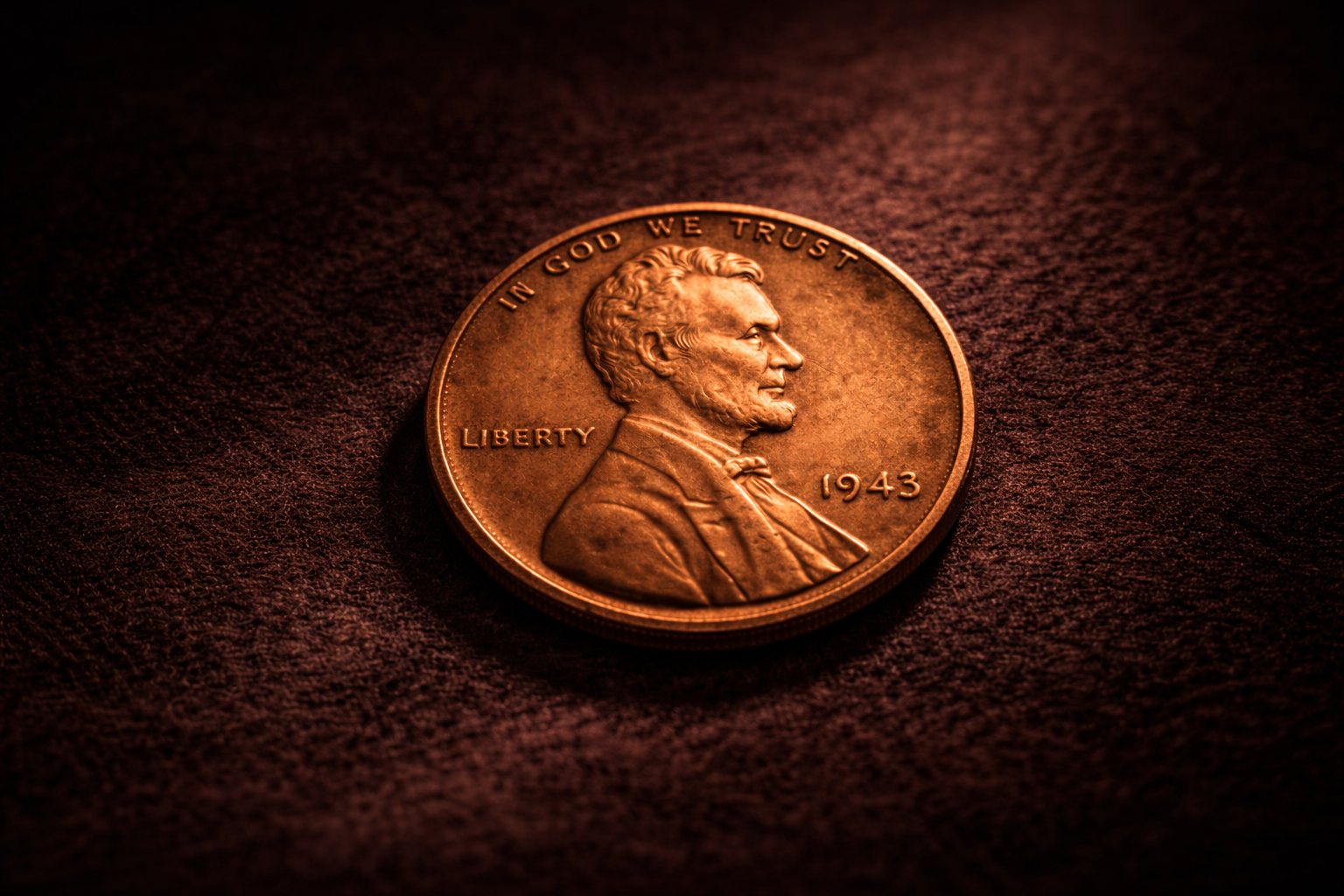
In nineteen forty-three, the United States changed the material of its one-cent coin. Copper was needed for the war effort, so the familiar bronze Lincoln cent was replaced with a zinc-coated steel version. That decision was clear, deliberate, and carefully executed across all three mints. And yet, a few pennies appeared in copper anyway. Coins that were never meant to exist.
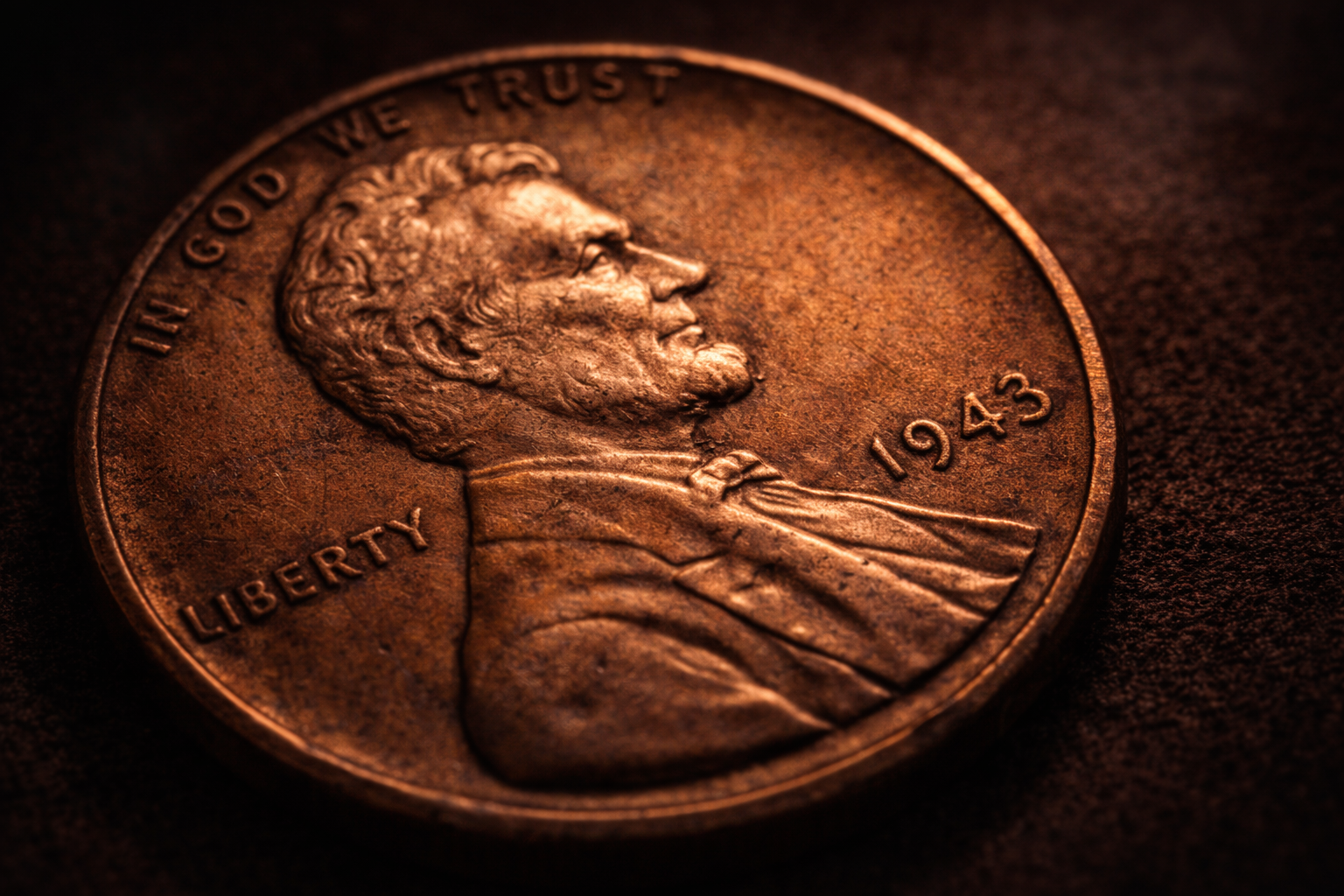
The 1943 copper penny is one of the most studied and discussed pieces in American numismatics. Not because it is simply rare, but because its very existence raises a question that collectors still ask. How did a copper cent get struck in a year when copper was not supposed to be used at all.
Table of contents.
- Why the US Mint switched to steel in nineteen forty-three.
- How the copper coins were accidentally created.
- How many 1943 copper pennies are known.
- How to tell a real copper example from common fakes.
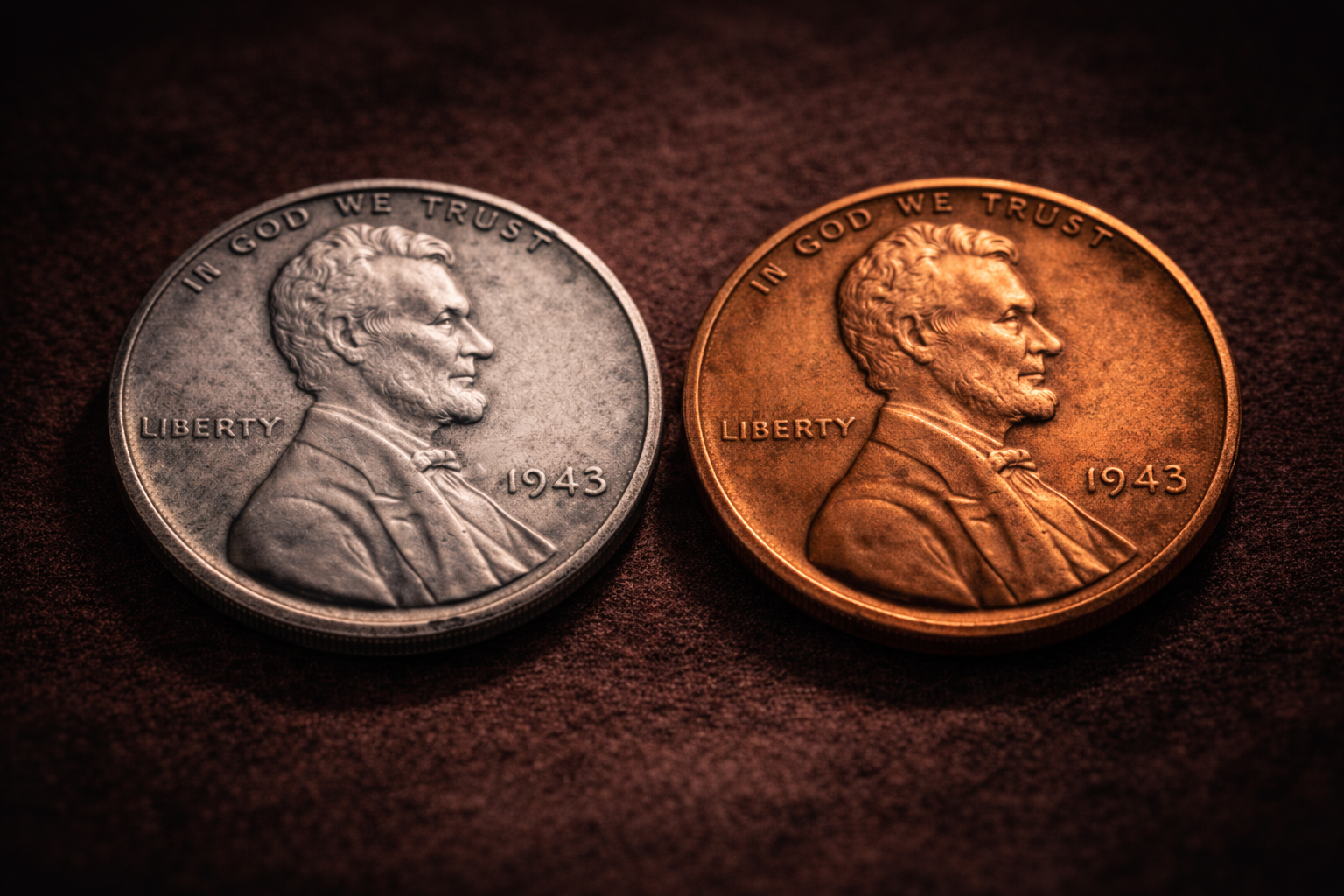
- Mid-article table. Steel vs copper cents in nineteen forty-three.
- Why collectors are fascinated by this coin.
- Related HistoraCoin stories.
- FAQ.
Why the US Mint switched to steel in nineteen forty-three.
By the early nineteen forties, copper had become a strategic material. It was needed for ammunition, wiring, communications equipment, and military vehicles. The United States Mint responded by changing the composition of the one-cent coin for nineteen forty-three. Instead of the usual bronze alloy, the planchets were made from low-carbon steel coated with zinc.
The change solved an urgent problem. It saved large amounts of copper without stopping coin production. More than a billion steel cents were produced that year across Philadelphia, Denver, and San Francisco. They looked different, sounded different, and even felt lighter in color than the traditional brown cent.
How the copper coins were accidentally created.
The transition from bronze to steel did not happen in a single instant. At the end of nineteen forty-two, bronze planchets were still present in storage bins, feeding systems, and machinery. When the new year began, a very small number of those leftover copper planchets remained in the production line.
As dies dated nineteen forty-three were installed, those few remaining bronze blanks were fed into the presses and struck like any other coin. The result was a normal-looking Lincoln cent, but made from the previous year’s material. In most cases, these pieces were not noticed immediately. They entered circulation quietly, mixed among the new steel cents.
What makes the story remarkable is not just that it happened, but how rarely it happened. The minting system worked extremely well under pressure. Only a tiny number of copper pieces slipped through.
How many 1943 copper pennies are known.
The exact number of genuine pieces is still debated among specialists, but it is generally accepted that only a few dozen authentic examples exist across all mints. Philadelphia pieces are the most frequently recorded, while Denver and San Francisco examples are significantly rarer.
Each confirmed coin has been studied in detail. Die markers, weight, metal composition, and microscopic characteristics are used to confirm authenticity. Because the number is so small, every new discovery becomes a major event in the collecting world.
How to tell a real copper example from common fakes.
Because of its fame, the 1943 copper cent is one of the most frequently imitated coins in American numismatics. Collectors use several simple checks before moving to professional testing.
- Magnet test. Steel cents are magnetic. Genuine copper examples are not.
- Weight. Bronze cents weigh around three point one grams, while steel cents are lighter.
- Surface texture. Plated coins often show uneven color and hidden steel underneath.
- Date style. Altered dates sometimes reveal tool marks or incorrect digit shapes.
These tests are only a first step. Serious authentication requires metallurgical analysis and expert examination. Because of the coin’s importance, certification by a recognized grading service is considered essential.
Mid-article table. Steel vs copper cents in nineteen forty-three.
| Feature. | Standard 1943 steel cent. | Rare 1943 copper cent. |
|---|---|---|
| Metal. | Steel core with zinc coating. | Bronze alloy similar to earlier years. |
| Magnetism. | Magnetic. | Non-magnetic. |
| Color. | Silvery gray. | Brown to reddish copper. |
| Historical status. | Official wartime issue. | Accidental transitional error. |
| Rarity. | Very common. | Extremely rare. |
Mobile note. This table scrolls horizontally on phones to keep the layout readable.
Why collectors are fascinated by this coin.
The 1943 copper penny combines three powerful elements. It is tied to a major historical moment, it exists because of a clear production error, and it is extremely rare. Those three elements together create a narrative that collectors remember and share.
It also represents a transition. It marks the moment when the United States changed its coinage materials for a global conflict. In that sense, each surviving copper example is a small piece of wartime history preserved in metal.
The core insight.
The 1943 copper penny is not just a rare object. It is evidence of a system under pressure, where even a well-managed change can leave behind a few unexpected traces.
Related HistoraCoin stories.
Continue exploring American coins.
As you continue through this series, you will see how different American coins reflect different historical moments. Another famous American coin from the same era will be linked here as the series expands.
FAQ.
Was the 1943 copper penny officially produced.
No. It was not part of the official plan. It resulted from leftover bronze planchets being struck with nineteen forty-three dies.
Why did the US Mint use steel in nineteen forty-three.
To conserve copper for military use during the Second World War.
Are all copper-colored 1943 pennies valuable.
No. Many are altered coins or plated steel cents. Only professionally authenticated examples are considered genuine.
Why is this coin so famous.
Because it combines rarity, a clear historical context, and a striking visual difference from the standard steel cent.
Is this article safe for AdSense.
Yes. It is educational and historical, with no selling, pricing, or financial advice.