How to Tell If a Penny Is Copper or Zinc – Simple Ways to Identify U.S. Pennies
Estimated reading time: 24 minutes
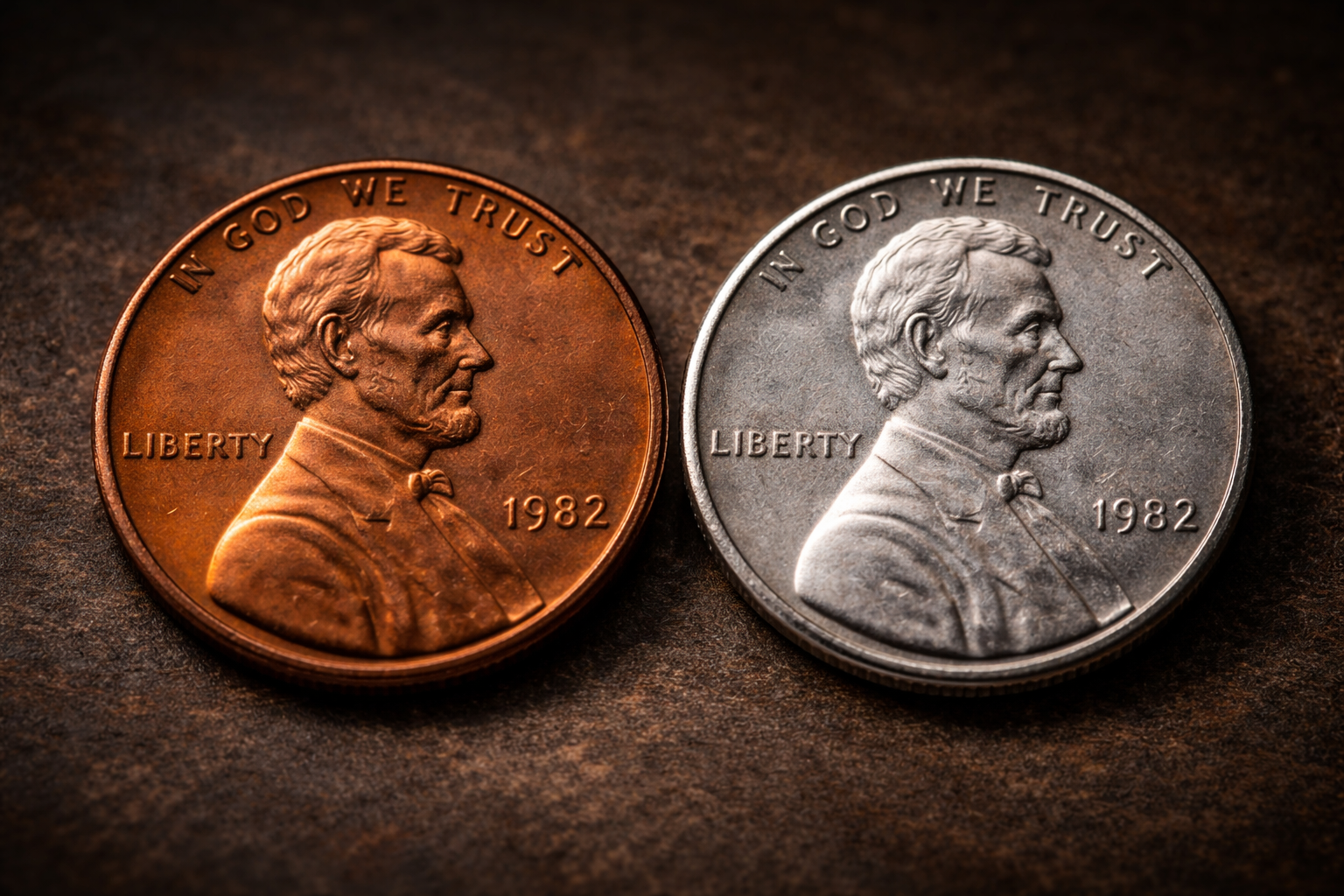
Most people never think twice about a penny. It looks simple, feels ordinary, and often ends up forgotten in pockets, jars, or drawers. But hidden inside this small coin is a surprising detail that many people miss. Not all pennies are made the same. Some are mostly copper, while others are built around zinc.
Once you understand how to tell the difference, something interesting happens. Every handful of coins becomes a small investigation. You start noticing weight, color, and even sound. And suddenly, what looked like ordinary change turns into a quiet piece of American history you can hold in your hand.
Why Pennies Have Different Metals
For decades, the U.S. penny was made primarily from copper. This was not random. Copper was reliable, durable, and widely available. It gave the coin strength and a distinctive appearance that people could easily recognize.
But by the late 1970s, economic pressure started building. Copper prices were rising steadily. Producing pennies the traditional way was becoming more expensive every year.
Eventually, the cost of the metal inside the coin began approaching the coin’s face value. This created a serious problem. Governments cannot afford to lose money producing money. Something had to change.
That change came in 1982, when the composition of the penny was redesigned to use a zinc core with a thin copper coating. The appearance stayed similar, but the inside of the coin was completely different.
You can explore the full historical background in why pre-1982 U.S. pennies are made of copper.
Copper vs Zinc Pennies Explained
At a glance, copper and zinc pennies look almost identical. That is intentional. The Mint wanted people to accept the new coins without confusion.
But the internal structure is very different. Copper pennies are made from a solid alloy. Zinc pennies are made from a lighter metal core covered by a thin copper layer.
This difference changes everything. It affects how the coin feels, how it wears over time, how it sounds, and how it reacts to damage.
Understanding these differences is the key to identifying them correctly.
The Weight Test
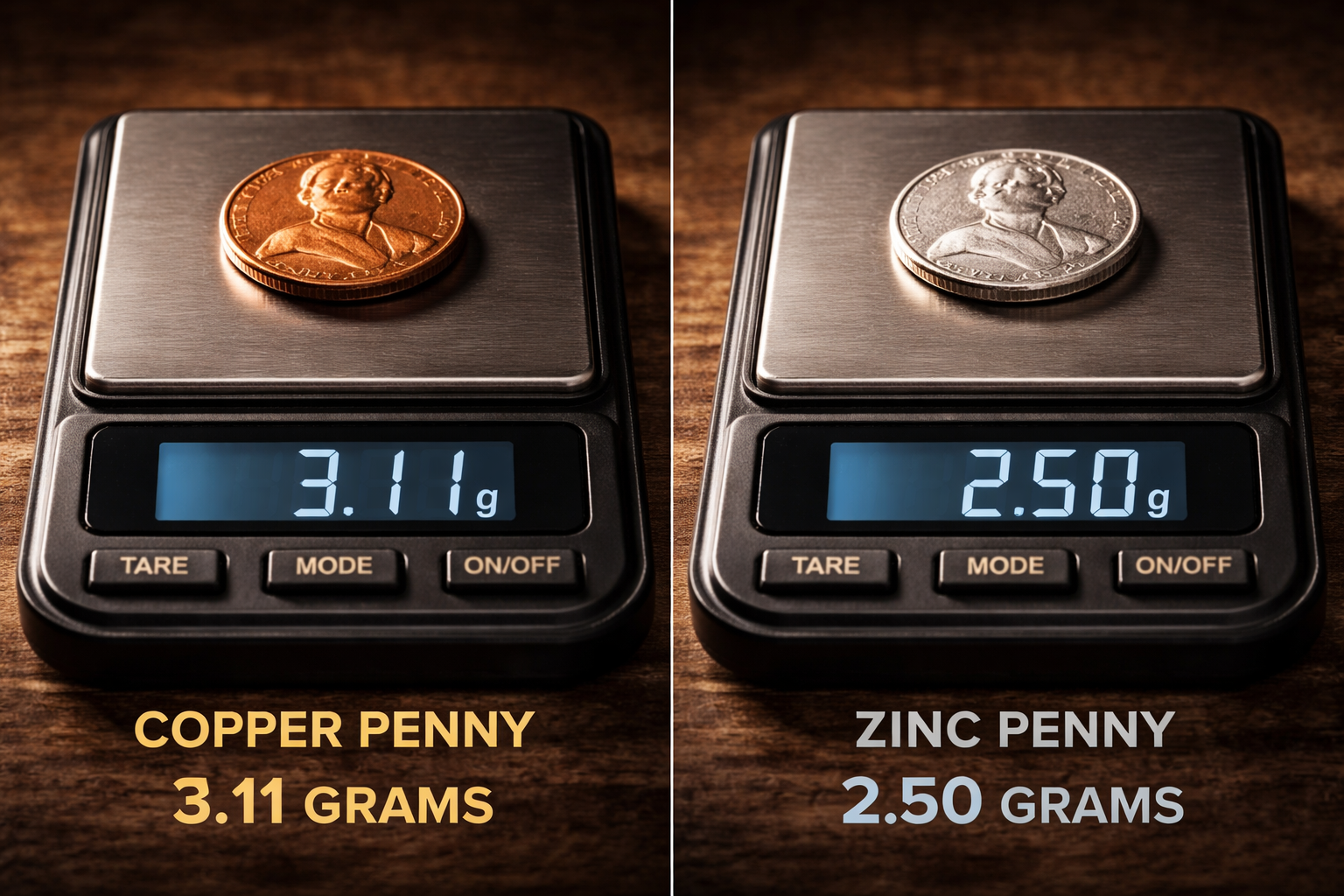
The most accurate method to identify a penny is the weight test. Copper pennies weigh about 3.11 grams. Zinc pennies weigh about 2.5 grams.
That difference might sound small, but in practice it is very noticeable. If you place several coins in your hand, you can often feel the heavier copper coins immediately.
This works because copper is denser than zinc. Even though both coins have the same size, the material inside creates a clear difference in mass.
Collectors often rely on a small digital scale for precision, but even simple comparison can be enough with experience.
The Edge Test
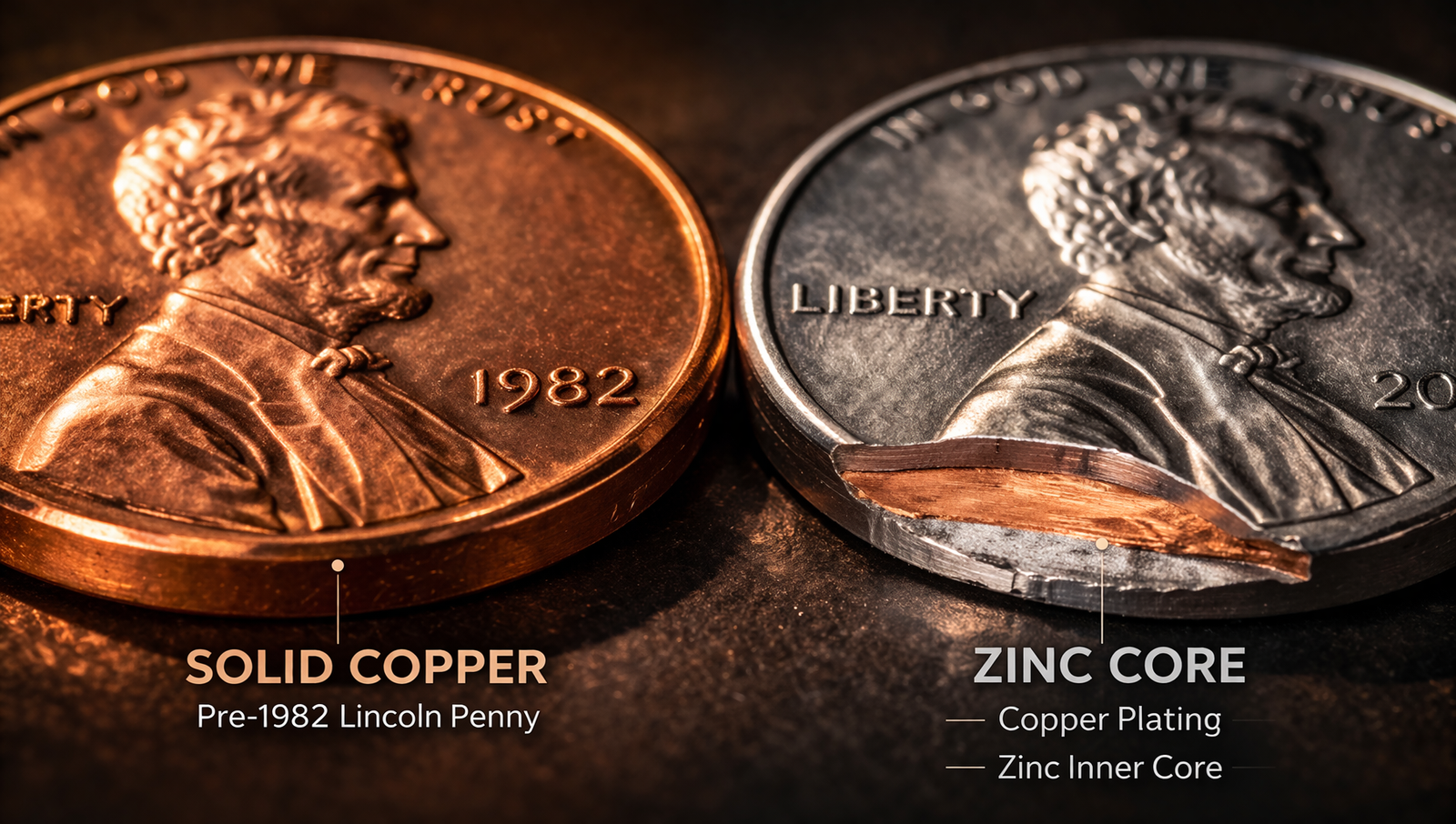
Looking at the edge of a penny can reveal subtle differences. Copper pennies usually have a consistent color across the entire surface. Zinc pennies may show variations, especially when worn.
In damaged coins, the zinc core can become visible. This creates a clear contrast between the outer coating and the inner metal.
While this test is not always perfect on clean coins, it becomes very useful on worn or circulated pieces.
The Color Test
Color is one of the first clues people notice. Copper pennies tend to have a warm reddish tone that can darken over time. This natural aging process gives them a distinct look.
Zinc pennies often appear lighter and may show uneven discoloration as the thin copper layer wears down.
When comparing multiple coins side by side, these differences become much easier to see.
The Sound Test
The sound test is simple but effective. Drop a penny onto a hard surface. A copper penny produces a clear ringing sound. A zinc penny produces a softer, duller sound.
This difference happens because metals vibrate differently. Copper carries vibration more efficiently, creating a sharper tone.
Although this method is less precise than weighing, it is a quick and practical way to compare coins.
The 1982 Transition Explained
The year 1982 is one of the most important moments in penny history. During this year, both copper and zinc pennies were produced.
This means you cannot rely on the date alone for identification. A 1982 penny could be either composition.
Because of this, the weight test becomes essential. It is the most reliable method to determine the metal used in that specific year.
This transition reflects how economic pressure can reshape even the smallest details of everyday life.
Real World Identification
In real situations, people often encounter mixed coins. A handful of pennies might include both copper and zinc pieces.
A practical approach is to start with the date. Then use weight and color to confirm. Over time, recognition becomes faster and more intuitive.
Many collectors describe a moment when they suddenly begin to recognize copper coins instantly. It becomes second nature.
This is where history meets experience. What started as a simple test becomes a deeper understanding of how coins were made and why they changed.
Comparison Table
| Feature | Copper Penny | Zinc Penny |
|---|---|---|
| Weight | 3.11 grams | 2.5 grams |
| Composition | 95 percent copper | Zinc core with copper coating |
| Color | Warm reddish tone | Lighter tone |
| Sound | Clear ringing | Duller sound |
Related HistoraCoin Stories
FAQ
How can I tell if a penny is copper
Use the weight test and check the color. Copper pennies are heavier and darker.
Why did the U.S. switch to zinc pennies
To reduce production costs as copper became more expensive.
Is 1982 a copper year
Both copper and zinc pennies were produced in 1982, so weight must be checked.
Do copper pennies still exist in circulation
Yes, they still appear in circulation alongside modern coins.