Hidden Details on the 1973 Canadian Penny
Estimated reading time: 18 minutes
At first glance, the 1973 Canadian penny looks completely ordinary. A simple coin with a familiar maple leaf design. Something millions of people handled without a second thought.
But if you slow down and look closer, something interesting begins to appear. Tiny details. Subtle differences. Features so small that most people never notice them. And once you see them, the coin stops being ordinary forever.
Why the 1973 Penny Seems Ordinary
The 1973 Canadian penny was produced in large numbers. It was part of everyday life. People used it without thinking about its design or structure.
Because of that, most coins from this year were never examined closely. They were treated as simple currency, not objects worth studying.
If you want to understand how common it was, you can explore when the 1973 Canadian penny was everywhere.
And that is exactly what makes it interesting today. The more common something is, the easier it is to overlook its details.
Hidden Details in the Maple Leaf
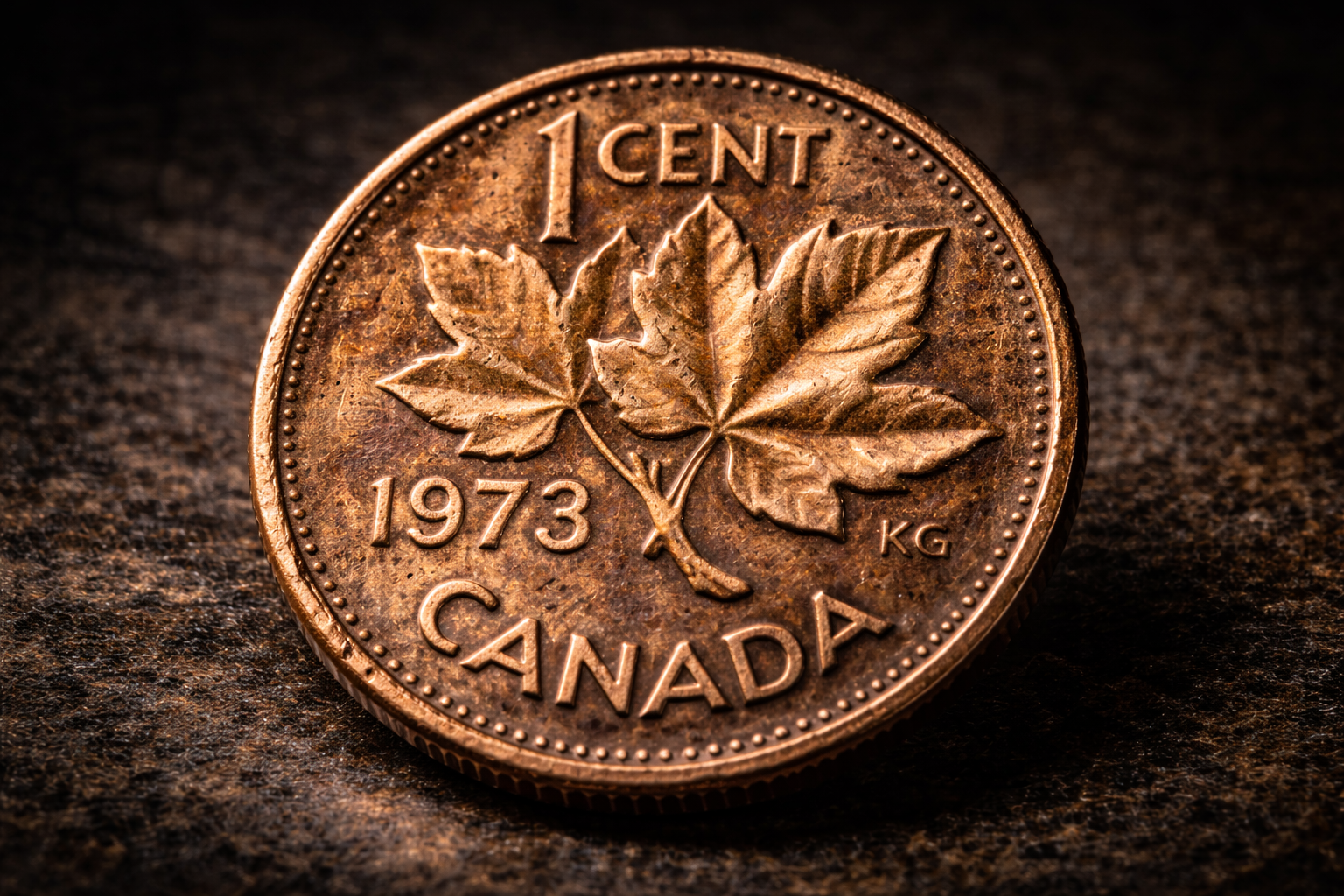
The maple leaf design is one of the most recognizable elements of Canadian coins. But on the 1973 penny, it holds more detail than most people realize.
If you look closely, you will notice fine lines running through the leaf. These are not random marks. They are carefully engraved details meant to give the design depth and texture.
The sharpness of these lines can vary from one coin to another. Some coins show crisp, well-defined veins. Others appear softer and less detailed.

This difference often comes down to how the coin was struck and how well the details were preserved over time.
If you want to go deeper into these micro details, you can explore tiny details on the 1973 Canadian penny.
Strike Differences You Can Actually See
Not all coins are struck the same way. Even when produced in the same year, small differences can appear during the minting process.
Some 1973 pennies show stronger, more defined features. Others look slightly flat or less detailed.
These variations are not mistakes. They are natural results of the minting process.
Once you start comparing coins side by side, these differences become easier to notice.
The Story Behind the Rim
The rim of a coin is often ignored, but it can reveal a lot.
On some 1973 pennies, the rim appears thicker and more defined. On others, it looks slightly thinner or uneven.
This can be influenced by how the coin was struck, how the metal flowed during production, and how the coin was handled over time.
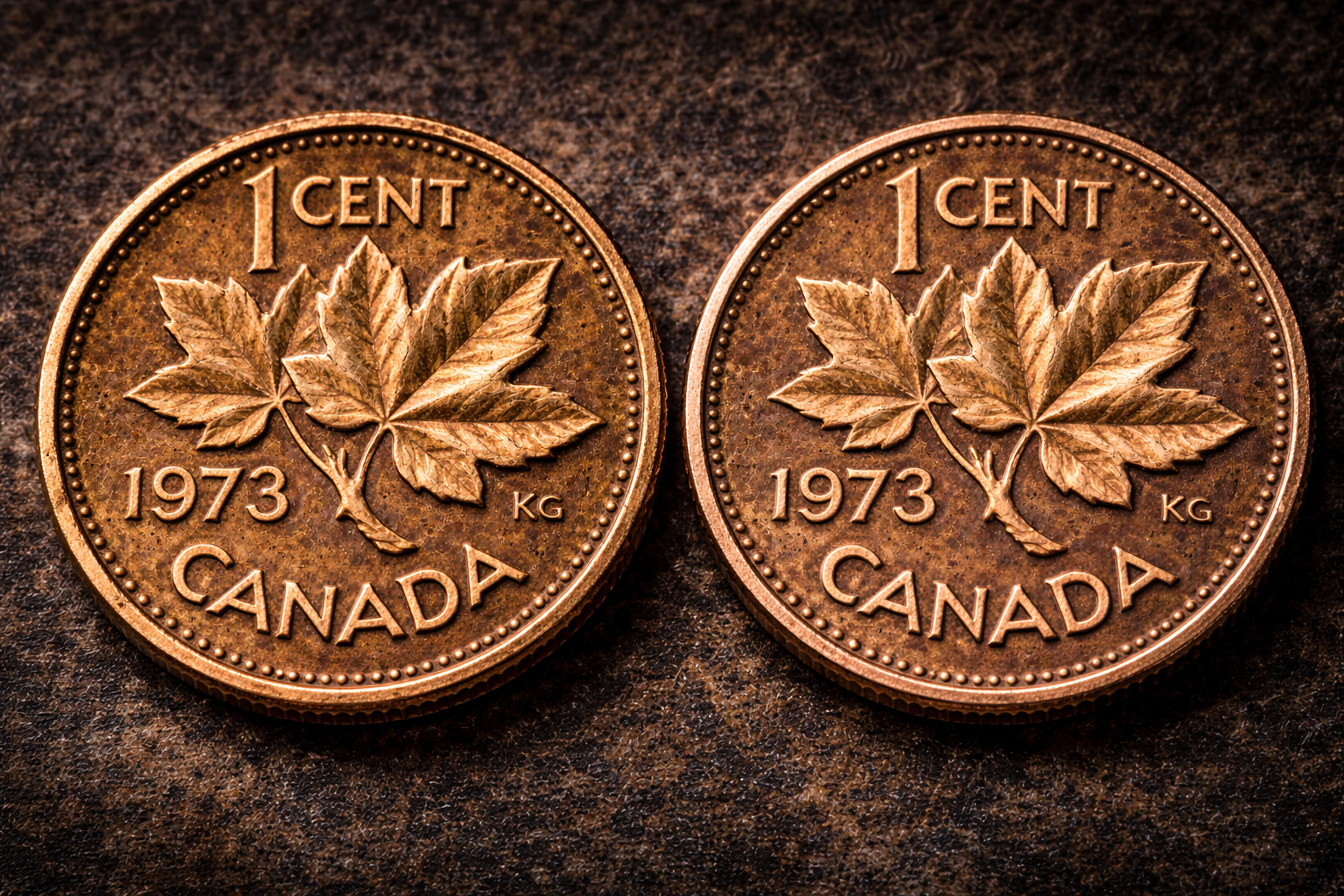
These small differences are easy to miss unless you are actively looking for them.
Small Details in Letters and Numbers
Another area where hidden details appear is in the lettering.
The numbers and letters on the coin may seem identical, but close inspection often reveals slight variations.
Edges may appear sharper on some coins and softer on others. Spacing can feel slightly different. These are subtle but real differences.
They are part of what makes each coin unique, even within the same year.
How Wear Reveals Hidden Features
Time changes coins. As a penny circulates, its surface begins to wear down.
At first, this might seem like damage. But in some cases, wear can actually highlight certain features by removing surrounding details.
This creates a different kind of visibility. Instead of sharp lines, you begin to see shapes and patterns more clearly.
This is why two coins from the same year can look completely different after years of use.
Why These Details Matter
So why do these small details matter at all.
Because they change how we see the coin. What once looked ordinary becomes something worth examining.
These details tell a story about how the coin was made, how it was used, and how it changed over time.
They also remind us that even the most common objects can hold hidden complexity.
FAQ
Are 1973 Canadian pennies rare
No, they were produced in large numbers and are generally common.
Why do some coins look different from others
Differences in strike quality and wear can change how details appear.
What is the most noticeable hidden detail
The maple leaf engraving often shows the most visible fine details.
Can wear improve visibility of details
In some cases, wear can highlight certain features by reducing surrounding textures.