Hidden Details on the Lincoln Wheat Penny That Most Collectors Never Notice
Estimated Reading Time: 13–15 minutes
At first glance, a Lincoln Wheat Penny seems almost too familiar to deserve a second look. Millions were struck, billions circulated, and countless examples still rest inside jars, old drawers, and family coin collections. Yet the more closely you examine one, the more you realize this tiny copper coin is packed with details that tell stories about American history, art, technology, and even wartime manufacturing.
Collectors often spend years studying Wheat Pennies because every letter, every line, and every design choice has a purpose. Some details are obvious, while others remain hidden until light catches the surface at just the right angle. Understanding these small features doesn’t simply help you identify a coin—it changes the way you see one of America’s most famous pieces of everyday history.
Quick Context
The Lincoln Wheat Penny was produced from 1909 through 1958, becoming the first regular U.S. circulating coin to feature a real historical person instead of the symbolic Lady Liberty. Designed by sculptor Victor David Brenner, it introduced countless design elements that collectors continue to study more than a century later.
Table of Contents
- Why an Ordinary Penny Isn’t Ordinary
- Every Part of Lincoln’s Portrait Tells a Story
- The Hidden Meaning Behind the Lettering
- Why the Mint Mark Matters More Than You Think
- What the Wheat Reverse Really Represents
- Tiny Details Most People Never Notice
- Why Wheat Pennies Change Color
- How History Left Its Mark on the Wheat Penny
- Reality Check
- Related Stories
- Final Verdict
- Frequently Asked Questions
Why an Ordinary Penny Isn’t Ordinary
When the Lincoln cent debuted in 1909, it represented a dramatic break from more than a century of American coinage tradition. Until then, circulating U.S. coins generally featured symbolic figures such as Liberty rather than actual people. Choosing Abraham Lincoln to commemorate the centennial of his birth transformed the smallest denomination into a national tribute that every American could carry.
What makes the Wheat Penny especially fascinating is that its appearance has remained familiar for generations while quietly preserving hundreds of tiny artistic decisions. Every curve of Lincoln’s coat, every serif on the lettering, and every line engraved into the wheat stalks was intentionally placed by designer Victor David Brenner.
Many collectors begin by looking at the date or mint mark, but experienced numismatists know that the real story lies in the combination of all the details working together.
| Feature | What It Reveals |
|---|---|
| Date | Production year and historical period. |
| Mint Mark | Where the coin was struck. |
| Portrait | Strike quality and wear patterns. |
| Lettering | Die condition and design sharpness. |
| Reverse | Overall preservation and minting quality. |
Every Part of Lincoln’s Portrait Tells a Story
Most people recognize Abraham Lincoln immediately, but few stop to notice how much craftsmanship is packed into such a small portrait. Brenner was already known for creating expressive medallic art, and he brought that same attention to detail when designing the cent.
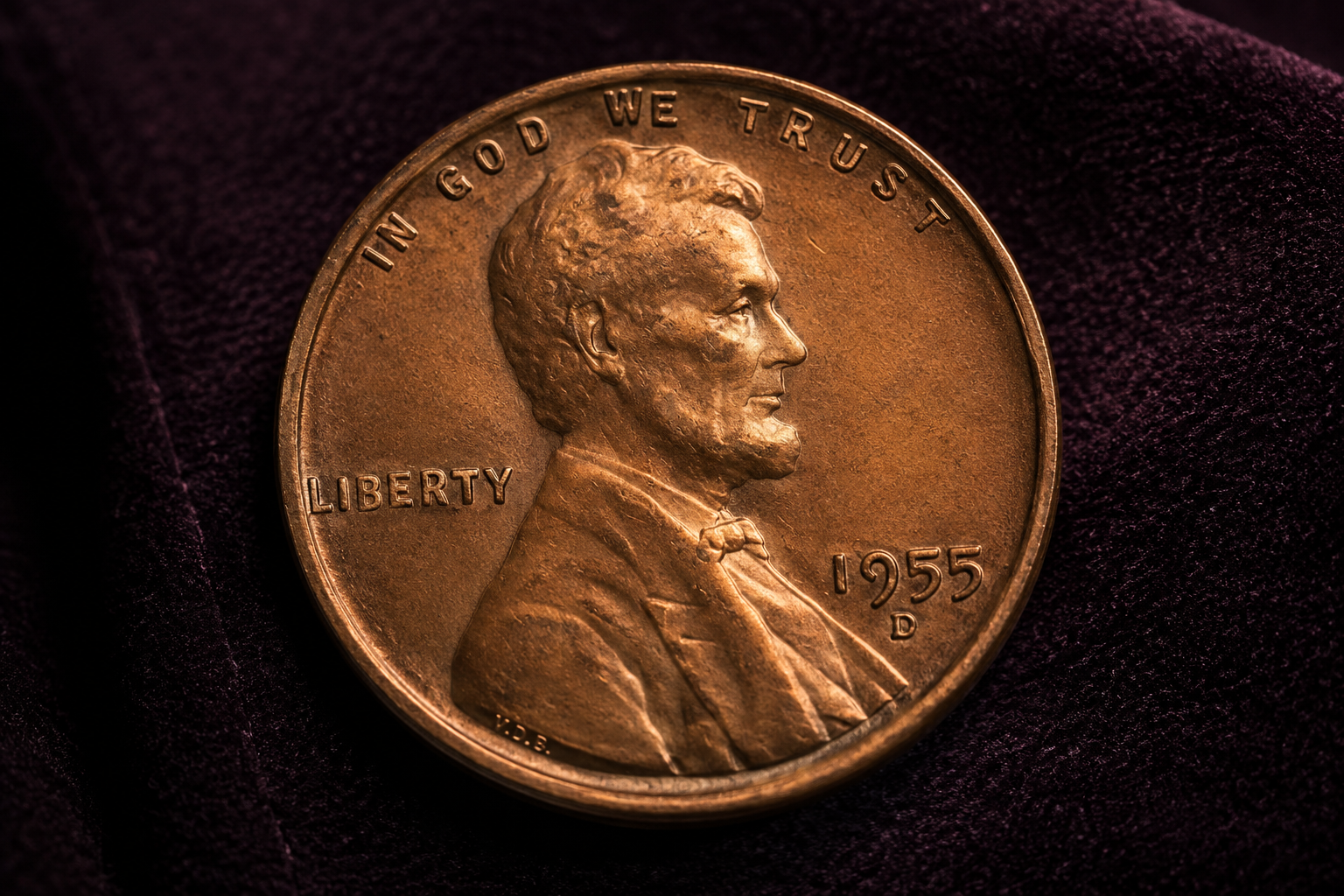
Lincoln’s hair is composed of numerous raised strands that wear away gradually in circulation. Collectors often study these high points first because they provide a quick indication of how much actual circulation a coin has experienced. The cheekbone, jawline, shoulder, and coat also develop wear long before the lower portions of the design.
Lighting makes an enormous difference. Under direct illumination, subtle contours become visible that disappear under ordinary room lighting. This is one reason experienced collectors frequently rotate a coin beneath a lamp instead of viewing it from a single angle.
The portrait also reflects advances in early twentieth-century engraving. Despite being only a few millimeters high, Lincoln’s expression remains recognizable because Brenner balanced realism with simplified sculptural forms that could survive millions of strikes.
The Hidden Meaning Behind the Lettering
Around Lincoln’s portrait are words that most people read without thinking: IN GOD WE TRUST, LIBERTY, and the date. Yet each inscription carries historical significance beyond its obvious meaning.
The placement of the lettering was carefully calculated so that the design remained balanced while allowing metal to flow evenly into every part of the die during striking. If the letters had been placed too close together or too near the rim, production problems would have increased dramatically.
Collectors often inspect the lettering for signs of weak strikes, die wear, grease-filled dies, or machine doubling. Small changes in letter sharpness can reveal how the dies aged during production, making the lettering far more informative than it first appears.
Even the fonts reflect artistic choices common in medallic engraving during the early 1900s, helping the coin maintain a timeless appearance that still feels familiar today.
Why the Mint Mark Matters More Than You Think
One of the smallest details on a Lincoln Wheat Penny can completely change how collectors view a coin—the mint mark.
Located just below the date on issues that carry one, this tiny letter identifies where the coin was produced. A coin may display no mint mark if it was struck in Philadelphia during years when Philadelphia did not use one, while others bear a D for Denver or an S for San Francisco.
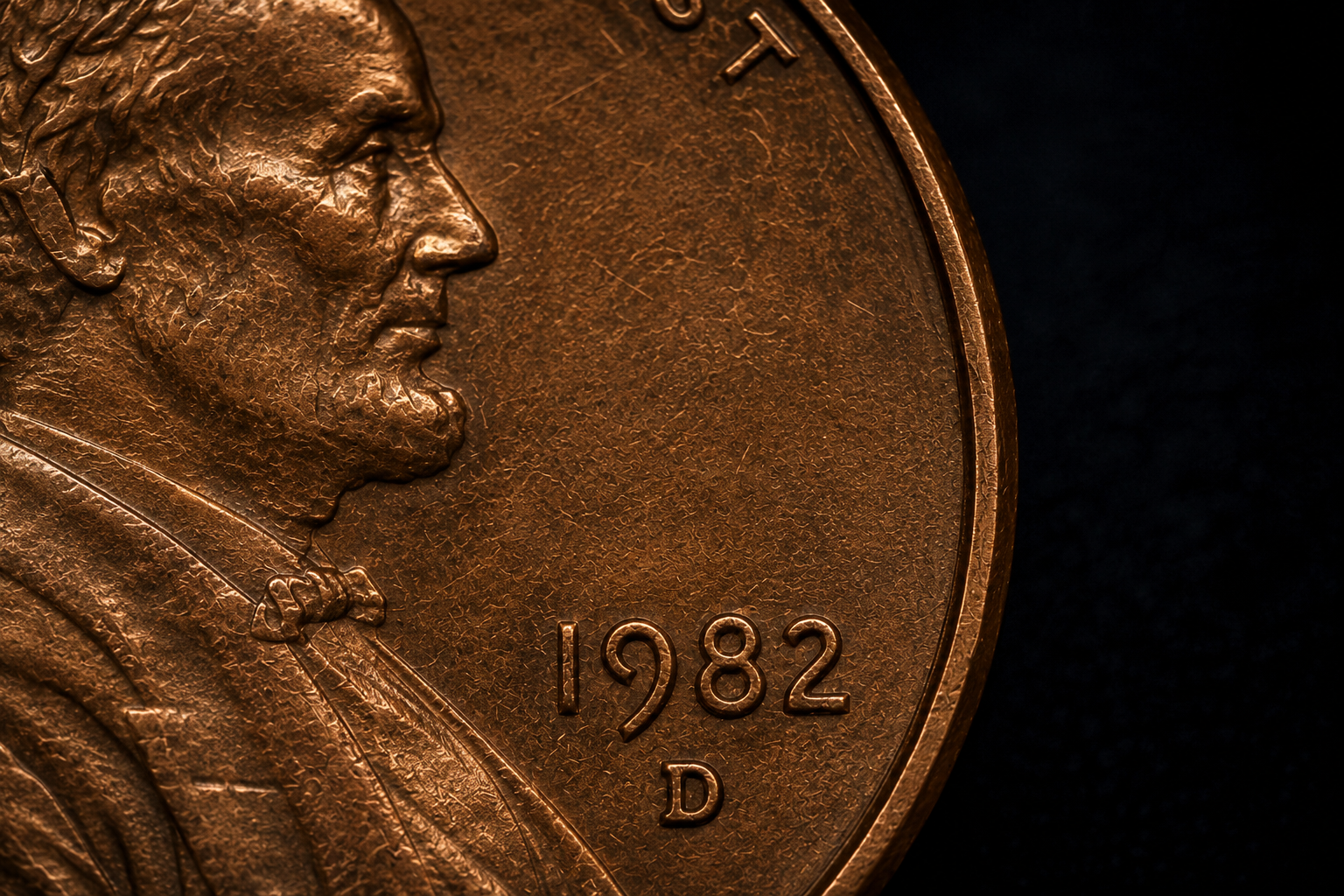
The tiny mint mark beneath the date is one of the first details experienced collectors examine because it identifies where the coin was struck.
Because each mint produced different quantities every year, two pennies bearing the same date may have dramatically different rarity simply because they originated at different facilities. This tiny letter therefore becomes one of the most important starting points for identifying any Wheat Penny.
It also provides clues about die preparation, striking quality, and production practices that varied slightly between U.S. Mint facilities throughout the Wheat Penny era.
What the Wheat Reverse Really Represents
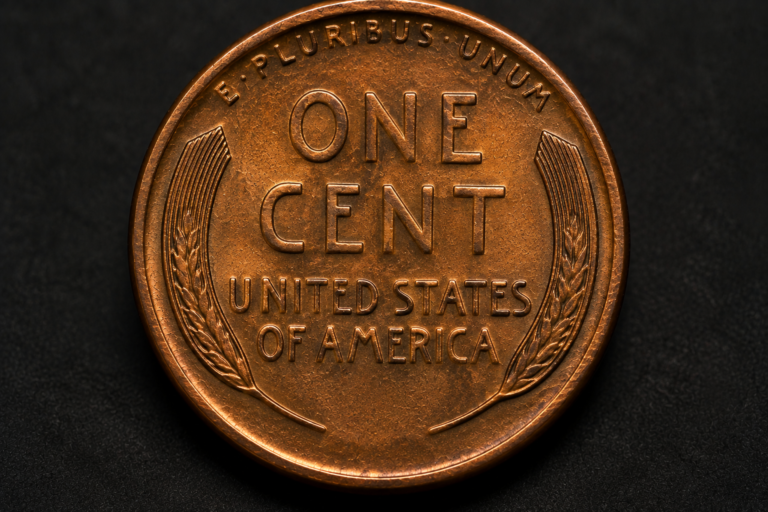
Turn a Lincoln Wheat Penny over, and you’ll find one of the most recognizable reverse designs in American numismatics. At first glance, the layout appears simple: two wheat stalks frame the words ONE CENT, with UNITED STATES OF AMERICA below and the national motto E PLURIBUS UNUM above.
The simplicity is intentional. Victor David Brenner avoided an overly complex composition so the most important inscriptions could remain readable even after years of circulation. The wheat ears naturally guide the viewer’s eye toward the denomination while creating a balanced frame around the center of the coin.
Although many people assume the wheat symbolizes a specific crop or farming region, the design was meant to represent the nation’s agricultural prosperity more broadly. In the early twentieth century, agriculture remained one of America’s economic foundations, making wheat an instantly recognizable symbol of abundance and productivity.
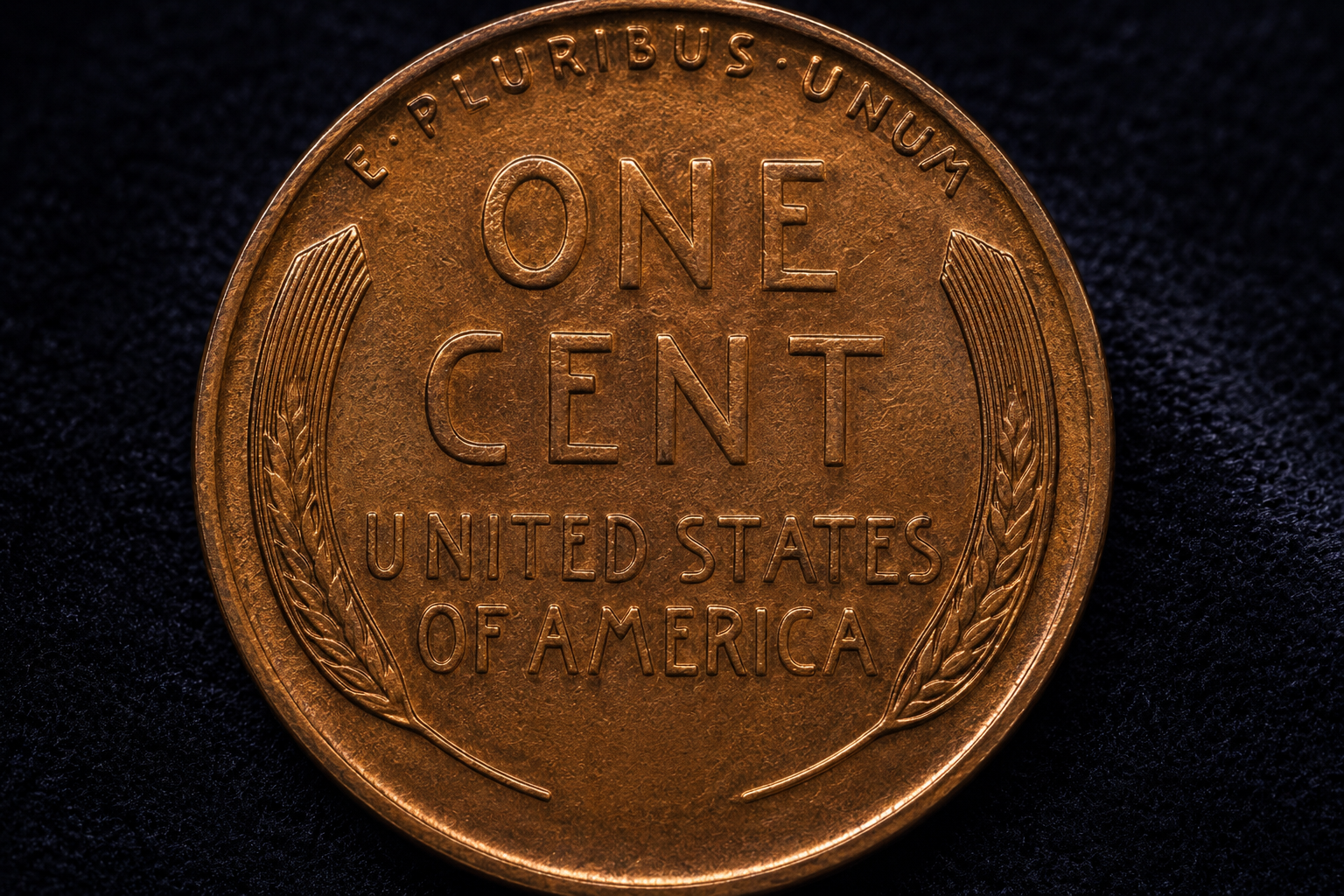
The famous wheat ears became one of the defining symbols of the Lincoln cent and remained on the reverse until the design changed in 1959.
Collectors often inspect the reverse as carefully as the obverse. The sharpness of the wheat grains, the visibility of the stalk lines, and the crispness of the lettering all reveal how well a coin was struck and how much circulation it has experienced.
Tiny Details Most People Never Notice
Many of the Wheat Penny’s most fascinating features are almost invisible unless you intentionally look for them. These small details are exactly what make the series so enjoyable to study.
For example, the spacing between letters can reveal the condition of a die. A weak strike may leave parts of the lettering soft, while worn dies sometimes produce rounded details instead of sharp edges. Small die chips, polishing marks, or tiny raised lines may also appear on individual coins, creating minor varieties that collectors enjoy documenting.
Another overlooked feature is the rim. A complete, well-defined rim usually indicates a stronger strike and better preservation, while flattened rims often suggest heavy circulation. Experienced collectors rarely judge a coin based on one feature alone—they evaluate the entire design together.
The relationship between the portrait, lettering, rim, mint mark, and reverse tells a much more complete story than any single element ever could.
Why Wheat Pennies Change Color Over Time
One of the first things new collectors notice is that Wheat Pennies rarely share the same color. Some appear bright orange, others show rich reddish-brown tones, while heavily circulated examples may become chocolate brown or nearly black.
These color changes are completely natural. Copper reacts with oxygen, moisture, and environmental conditions throughout its lifetime. As oxidation develops, the surface gradually changes, creating the wide range of colors seen today.
Professional grading services generally classify copper coins into three broad color categories:
| Color | Description | Typical Collector Appeal |
|---|---|---|
| Red (RD) | Original bright mint color with minimal oxidation. | Usually the most desirable. |
| Red-Brown (RB) | Mix of original red and natural brown toning. | Very popular among collectors. |
| Brown (BN) | Fully toned copper after decades of exposure. | Common but historically attractive. |
Color alone does not determine value. Two coins with identical shades may differ significantly in rarity, strike quality, surface preservation, or eye appeal. Learning to separate natural aging from damage is one of the most valuable skills a collector can develop.
How History Left Its Mark on the Wheat Penny
The Lincoln Wheat Penny witnessed some of the most significant events in modern American history. It circulated through World War I, the Great Depression, World War II, and the beginning of the Cold War.
During the economic hardships of the 1930s, pennies represented meaningful purchasing power for everyday Americans. During World War II, metal conservation became so important that the U.S. Mint temporarily replaced the traditional bronze composition with zinc-coated steel in 1943, creating one of the most famous one-year issues in American coin collecting.
After the war, the familiar bronze composition returned, and the Wheat Penny continued serving Americans until 1958. In 1959, the reverse design changed to feature the Lincoln Memorial, ending the fifty-year Wheat Penny era while preserving Lincoln’s portrait on the obverse.
Today, each surviving Wheat Penny represents more than a collectible object. It is a small historical document that passed through countless hands while witnessing decades of American life.
Reality Check
Not every Lincoln Wheat Penny is rare or valuable. Millions remain common, especially those from high-mintage years. However, every genuine Wheat Penny offers historical significance, educational value, and insight into American coin design. Learning to recognize the hidden details is often more rewarding than searching only for expensive dates.
Final Verdict
The Lincoln Wheat Penny is far more than an old one-cent coin. Beneath its familiar appearance lies a remarkable combination of artistic design, historical symbolism, precision engineering, and everyday American history. Every inscription, every line of Lincoln’s portrait, every wheat grain, and every tiny mint mark contributes to a story that has fascinated collectors for more than a century.
Once you begin looking beyond the date and denomination, you’ll discover that no Wheat Penny is truly “ordinary.” Each one carries subtle clues about how it was made, where it was struck, how it circulated, and how history shaped its journey. That’s exactly why the Lincoln Wheat Penny remains one of the most collected coins in the world.
Frequently Asked Questions
What years were Lincoln Wheat Pennies produced?
Lincoln Wheat Pennies were produced from 1909 through 1958 before being replaced by the Lincoln Memorial reverse in 1959.
Where is the mint mark located?
On coins that have one, the mint mark appears directly below the date on the obverse. Philadelphia coins from most Wheat Penny years carry no mint mark.
Why do Wheat Pennies have different colors?
Copper naturally reacts with its environment over time, producing shades that range from bright red to deep brown depending on oxidation and storage conditions.
Is every Wheat Penny valuable?
No. Many Wheat Pennies are common, but certain dates, mint marks, varieties, and high-grade examples can be considerably more desirable.
Why do collectors study tiny design details?
Small features help identify strike quality, die condition, authenticity, preservation, mint origin, and other characteristics that reveal the history of each individual coin.