Why Lincoln Faces Right on the Penny: The Real Story Behind the Design
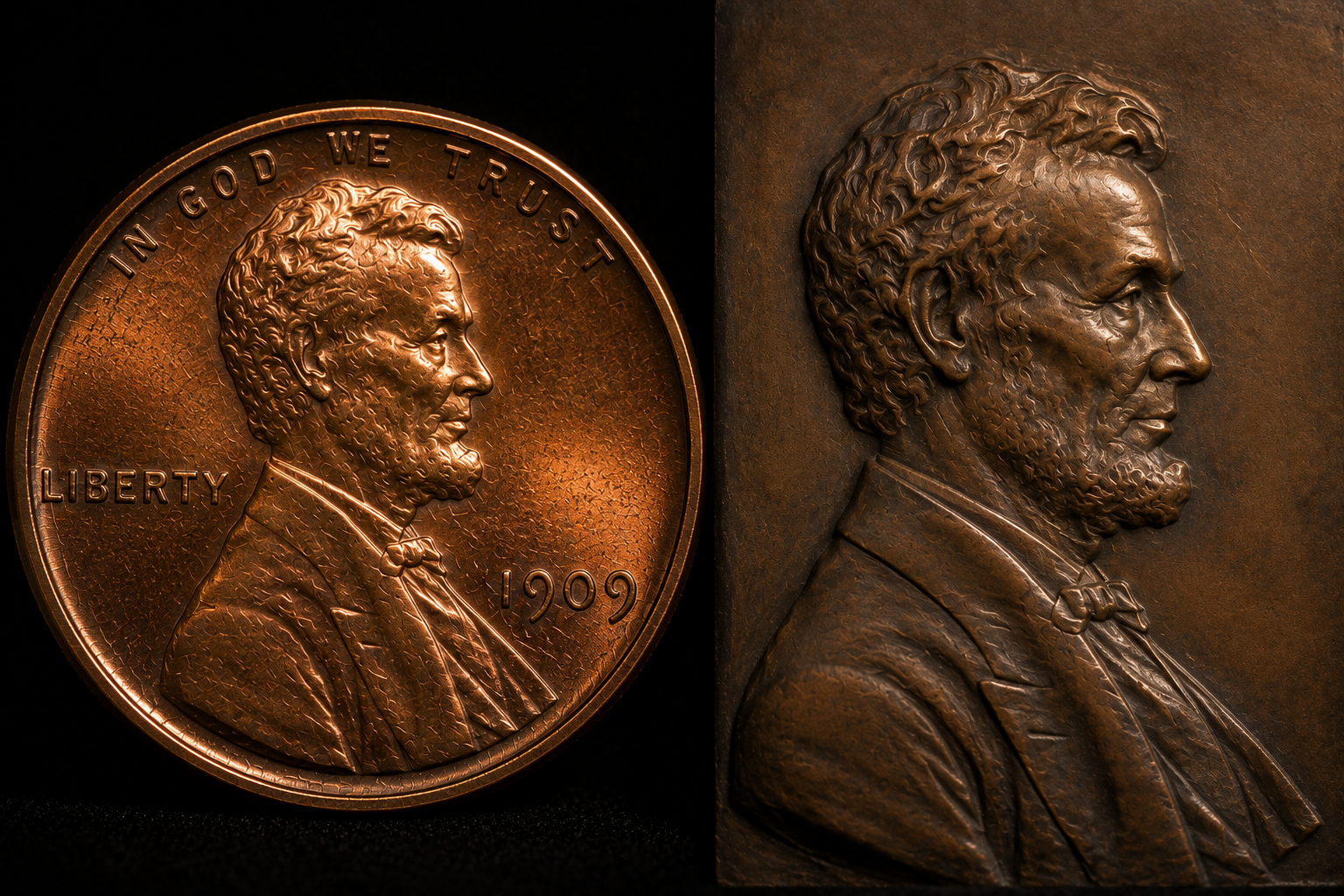
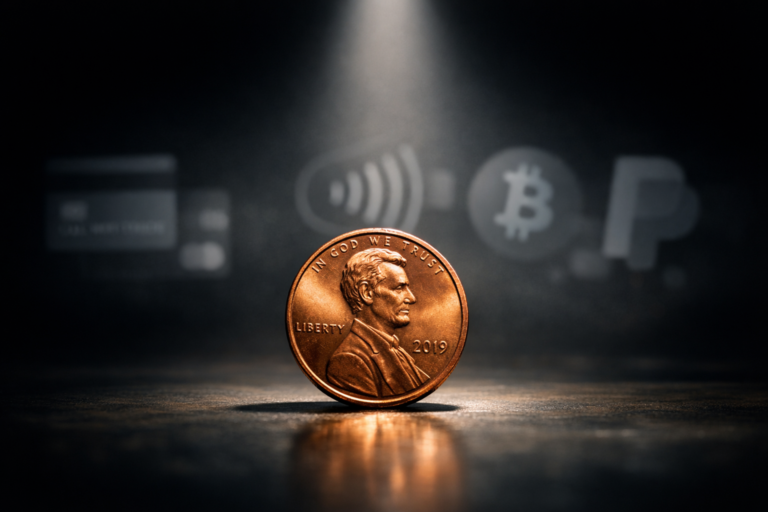
Almost every American has seen Abraham Lincoln’s face on a penny, yet very few people stop to ask a surprisingly simple question: why does he face to the right? It seems like such a small artistic choice that most of us assume it was completely arbitrary. In reality, that single decision connects the coin to sculpture, presidential history, and one of the most influential artists ever hired by the United States Mint.
The direction of Lincoln’s portrait has remained unchanged since the Lincoln cent debuted in 1909. More than a century later, billions of pennies have carried the same right-facing profile. Understanding why reveals not only how the Lincoln Wheat Penny was designed, but also how artists balance realism, symbolism, and practicality when creating coins that millions of people will use every day.
Quick Context
The Lincoln Wheat Penny entered circulation in 1909 to celebrate the 100th anniversary of Abraham Lincoln’s birth. Sculptor Victor David Brenner based the portrait on an earlier bronze plaque he had created several years before the coin was designed. The familiar right-facing portrait has remained on every Lincoln cent ever since, even as the reverse designs have changed.
Table of Contents
Was There a Rule About Which Way Lincoln Should Face?
One of the biggest myths surrounding the Lincoln cent is that American presidents always face a particular direction on coins. Some people believe a president must face right, while others claim the direction alternates from one coin to another.
Neither idea is correct.
Unlike certain traditions found in European coinage, the United States Mint has never adopted an official rule requiring portraits to face a specific direction. Each coin is designed individually, and the orientation depends primarily on the artist responsible for the design and the approval process that follows.
That means Lincoln’s right-facing portrait was not required by law or by Mint policy. It was an artistic decision that happened to become one of the longest-lasting portrait designs in American history.
| Common Belief | Reality |
|---|---|
| Presidents must always face right. | No official U.S. Mint rule requires this. |
| Portraits alternate direction on every coin. | No such design rule exists. |
| Lincoln faces right because of tradition. | The direction comes from Victor David Brenner’s artistic design. |
Victor David Brenner’s Original Sculpture
To understand why Lincoln faces right, it helps to look beyond the coin itself.
Several years before the Lincoln cent was created, sculptor Victor David Brenner produced a bronze plaque featuring Abraham Lincoln in profile. Brenner was already an accomplished medalist, known for creating highly realistic portraits that emphasized natural facial expressions instead of idealized classical features.
President Theodore Roosevelt admired Brenner’s work and believed American coins should display stronger artistic quality. As plans developed to honor the centennial of Lincoln’s birth in 1909, Brenner was invited to adapt his portrait for the nation’s one-cent coin.
Rather than creating an entirely new image, Brenner refined the profile from his earlier sculpture. Because the original artwork already showed Lincoln looking to the right, the coin naturally preserved that orientation.
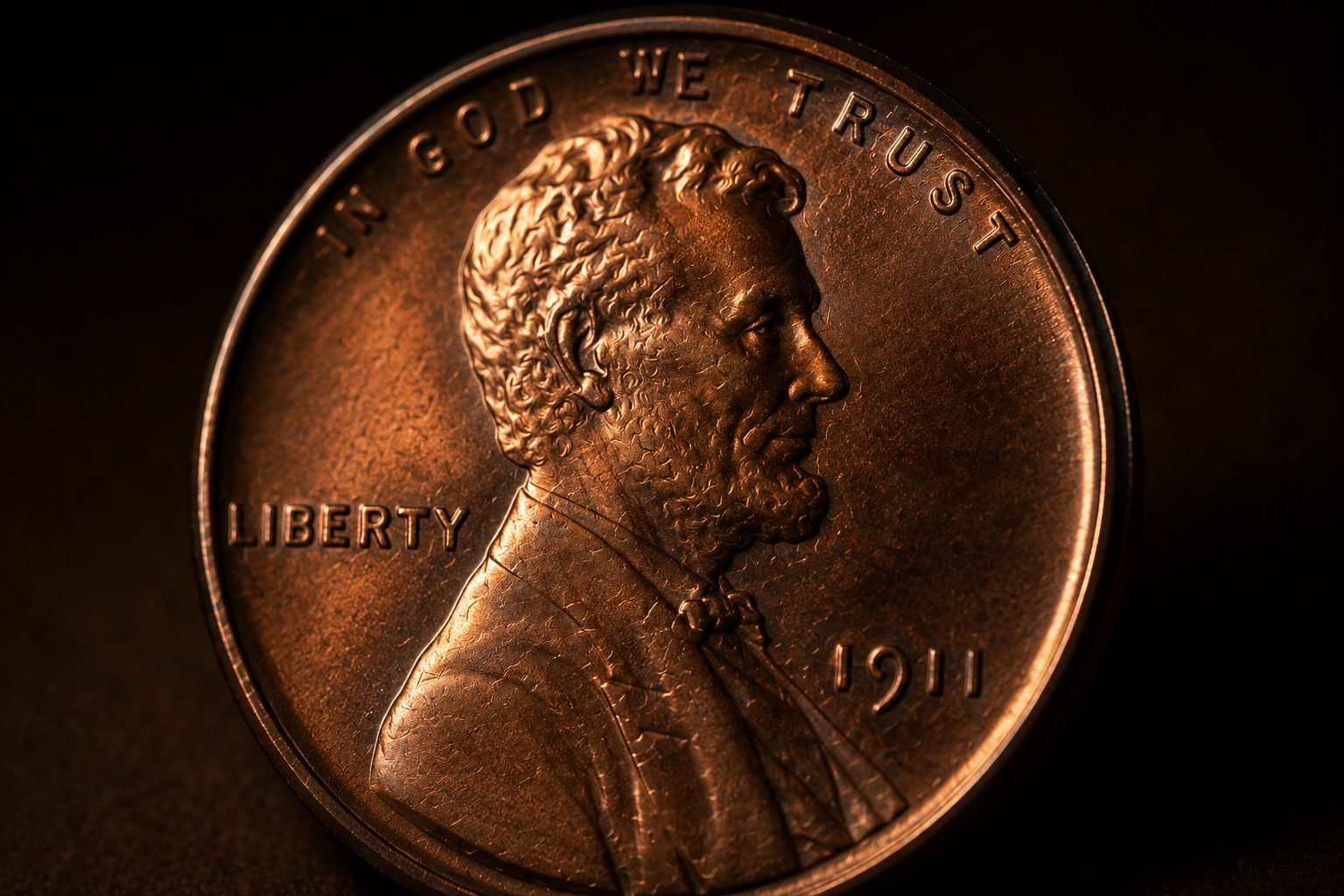
The portrait used on the Lincoln Wheat Penny was adapted from Victor David Brenner’s earlier bronze plaque, preserving Lincoln’s right-facing profile almost exactly.
Collectors who compare the plaque with the finished coin quickly notice the similarities. Lincoln’s forehead, beard, nose, and calm expression remained remarkably faithful to Brenner’s original work, although certain details were simplified so they could be struck clearly on millions of circulating coins.
Why the Portrait Faces Right
The simplest answer is also the most accurate: Lincoln faces right because that is how Brenner originally sculpted him.
There is no surviving evidence that Roosevelt, the Treasury Department, or Mint officials instructed Brenner to reverse the portrait. Instead, the original composition already worked well artistically, so there was little reason to redesign it.
Keeping the same orientation also preserved the natural modeling of Lincoln’s face. Sculptors often spend months refining light, shadow, and proportions in a profile portrait. Reversing the design is not always as simple as flipping a photograph. Small differences in facial balance, clothing folds, and overall composition can change the visual impact of the artwork.
By adapting the existing sculpture rather than creating a mirrored version, Brenner ensured that the coin retained the same character that had impressed Theodore Roosevelt in the first place.
The Artistic Reason Behind the Design
Portrait orientation is one of the first decisions every sculptor must make. A profile is not chosen randomly. Artists evaluate which side best communicates the personality of the subject while also fitting comfortably within the available space.
For a circular object like a coin, balance is especially important. The portrait must leave room for inscriptions including IN GOD WE TRUST, LIBERTY, the date, and eventually the mint mark without making the design appear crowded.
Lincoln’s right-facing profile naturally created an open area on the left side of the coin where the word LIBERTY could be placed. It also left sufficient room beneath the portrait for the date and, where appropriate, the mint mark. The composition feels balanced because every major design element has its own visual space.
Brenner’s solution demonstrates how coin design is both sculpture and engineering. Every artistic choice must also function within the practical limits of high-speed coin production.
Lincoln Compared With Earlier U.S. Coins
When Americans first saw the Lincoln cent in 1909, many noticed something even more significant than the direction of the portrait. For the first time on a regularly circulating U.S. coin, they were looking at a real historical person instead of the symbolic figure of Liberty.
Earlier one-cent coins such as the Indian Head cent did not actually portray a Native American woman. Despite its name, the design represented Liberty wearing a Native American headdress. The Lincoln cent broke completely from that tradition by presenting a recognizable portrait of Abraham Lincoln himself.
This change reflected Theodore Roosevelt’s broader effort to improve American coinage through stronger artistic design and greater historical meaning. Lincoln’s familiar profile quickly became accepted by the public, and within a few years it was difficult to imagine the cent featuring anyone else.
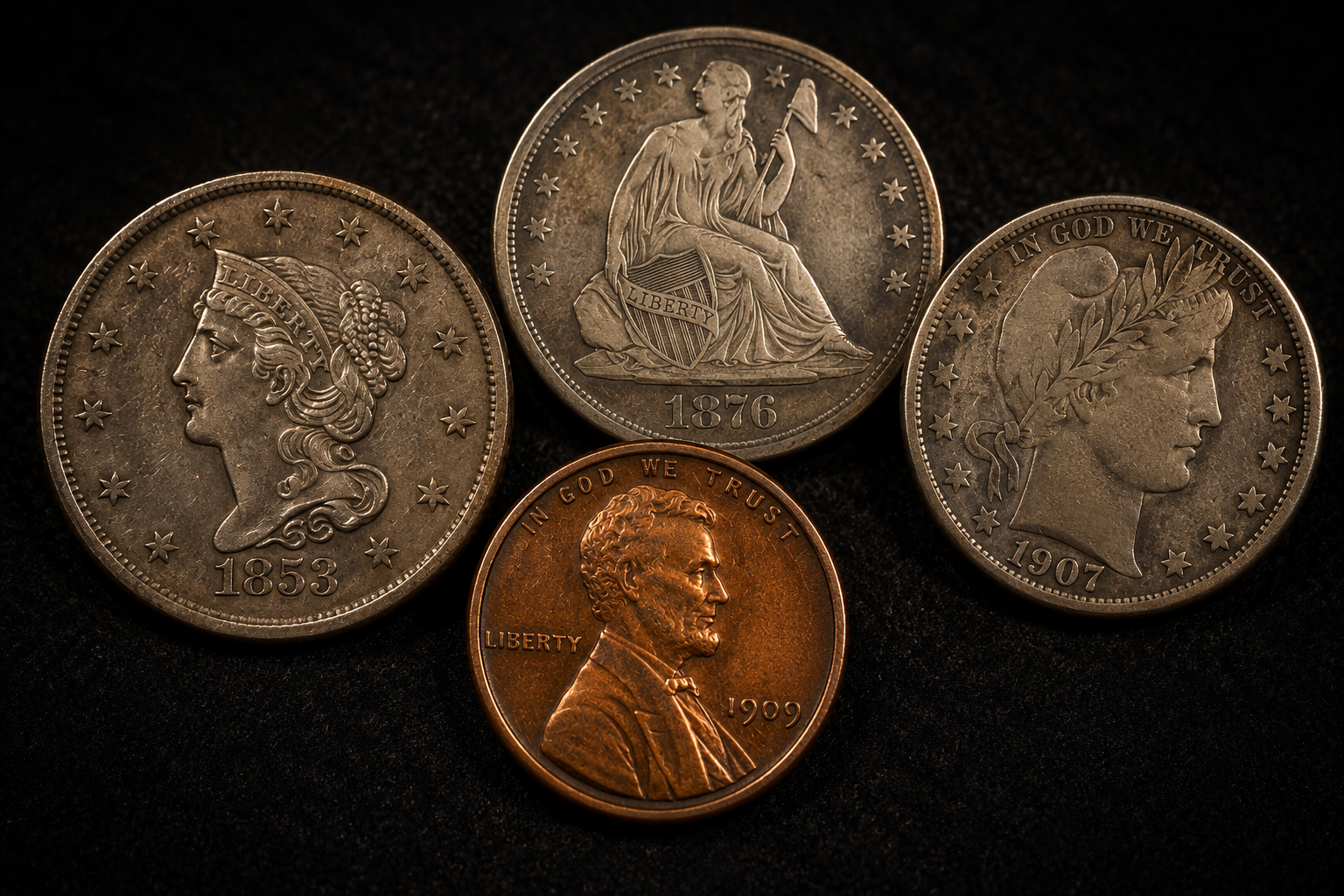
More than a century after its introduction, Brenner’s right-facing portrait remains one of the longest-running designs in American coinage.
Did the Direction Ever Change?
One of the most remarkable aspects of the Lincoln cent is its consistency. While the reverse has changed several times—from the Wheat Ears (1909–1958) to the Lincoln Memorial (1959–2008), the Bicentennial designs in 2009, and the Union Shield introduced in 2010—the portrait of Lincoln has continued to face the same direction.
Minor refinements have been made over the decades to improve die production and maintain design quality, but the overall orientation has never been reversed. This continuity helps explain why Lincoln’s profile is instantly recognizable to generations of Americans.
Very few circulating coins have maintained essentially the same portrait for well over a century. That longevity reflects both the strength of Brenner’s original sculpture and the public’s acceptance of the design.
Why Didn’t the Mint Reverse the Portrait?
Changing the direction of a portrait is far more complicated than simply flipping an image. A coin is a carefully balanced composition where every inscription, curve, and empty space has been intentionally planned.
If Lincoln were turned to face left, the surrounding lettering would also need to be reconsidered. The placement of LIBERTY, the date, the mint mark, and even the visual balance of the coin would change. Designers would effectively be creating a new portrait rather than preserving Brenner’s original work.
There was also no practical reason to make such a change. The portrait struck well, the public recognized it immediately, and the design became closely associated with Lincoln himself. Preserving the original orientation respected both the artist’s work and the history of the coin.
| Question | Answer |
|---|---|
| Was Lincoln required to face right? | No. No U.S. Mint regulation required a right-facing portrait. |
| Who chose the direction? | Victor David Brenner through his original sculptural design. |
| Was the portrait ever reversed? | No. Lincoln has faced right on every Lincoln cent since 1909. |
| Did later reverse designs change the portrait? | No. Only the reverse changed while the obverse portrait remained essentially the same. |
How Collectors View the Portrait Today
Experienced collectors rarely think about the portrait’s direction in isolation. Instead, they study the entire design to evaluate strike quality, wear, and authenticity.
Lincoln’s hair above the ear, the beard, cheek, jawline, bow tie, and coat are among the highest points of the design. Because these areas wear first, they provide valuable clues about how much circulation a coin has experienced.
The portrait also serves as a reference point for identifying cleaning, polishing, environmental damage, and weak strikes. Small details that disappear in circulation often remain visible on well-preserved examples, allowing collectors to distinguish between natural wear and minting quality.
Understanding why Lincoln faces right therefore becomes part of a broader appreciation for Brenner’s artistic achievement. The direction itself is historically interesting, but the portrait as a whole is one of the finest examples of early twentieth-century American medallic art.
More Than an Artistic Choice
Although the right-facing profile originated as an artistic decision, it gradually became part of the Lincoln cent’s identity. Every redesign of the reverse preserved the familiar portrait because changing it would have altered the character of one of America’s most recognizable coins.
This continuity also creates a direct visual connection between different generations of collectors. A child examining a modern Lincoln cent today sees essentially the same profile that Americans first encountered in 1909.
That uninterrupted tradition is rare in circulating coinage and reflects the enduring success of Brenner’s original design.
Reality Check
A common internet myth claims that U.S. presidents always face a particular direction on coins because of a legal requirement or a long-standing Mint tradition. There is no official rule requiring presidents to face either left or right on American coins.
Lincoln faces right because Victor David Brenner’s original sculpture portrayed him that way, and the Mint chose to preserve the composition when adapting it for the 1909 Lincoln cent.
Final Verdict
The direction of Abraham Lincoln’s portrait was never determined by law, tradition, or Mint policy. It originated with Victor David Brenner’s original bronze plaque and was preserved when the design was adapted for the nation’s one-cent coin in 1909.
That decision proved remarkably successful. More than a century later, Lincoln still faces right on every U.S. cent, making his portrait one of the longest-running designs in American coin history.
What appears to be a simple artistic choice actually reflects the careful collaboration between sculpture, history, and coin production. It also reminds collectors that even the smallest design decisions often have fascinating stories behind them.
Frequently Asked Questions
Why does Lincoln face right on the penny?
Lincoln faces right because sculptor Victor David Brenner originally created his bronze Lincoln plaque with a right-facing profile, and that artwork became the basis for the 1909 Lincoln cent.
Was Lincoln required by law to face right?
No. There has never been a U.S. law or Mint regulation requiring presidents to face a particular direction on circulating coins.
Did Victor David Brenner create a new portrait specifically for the penny?
No. Brenner adapted the portrait from an earlier bronze plaque of Abraham Lincoln that had already received widespread praise before the coin was commissioned.
Has Lincoln always faced right on U.S. cents?
Yes. Since the Lincoln cent was introduced in 1909, every regular circulating Lincoln cent has featured a right-facing portrait, even though the reverse designs have changed several times.
Did changing the reverse affect the portrait?
No. The Wheat Ears, Lincoln Memorial, Bicentennial, and Union Shield reverses all retained the same basic obverse portrait designed by Brenner.
Does the direction of the portrait affect a coin’s value?
No. Every genuine Lincoln cent uses the same right-facing portrait. A coin’s value depends on factors such as its date, mint mark, rarity, condition, originality, and overall eye appeal—not the direction of Lincoln’s profile.