The Hidden Story of Canadian Pennies – Design, History, and Daily Use
Estimated reading time: 22 minutes
For generations, Canadian pennies were more than just small copper coins. They were part of daily routines, childhood memories, local markets, and the quiet rhythm of everyday Canadian life. People carried them in pockets, saved them in jars, and used them to complete countless small transactions that shaped daily experiences.
Behind this simple coin lies a deeper story about national identity, design language, minting evolution, and cultural memory. The Canadian penny reflects how a country expresses itself through design and how a small object can become a symbol of an entire era.
- Origins of the Canadian Penny
- Early National Identity and Currency Formation
- Design Language and Symbolism
- The Changing Portrait of the Monarch
- The Maple Leaf as a National Icon
- The Royal Canadian Mint and Coin Production
- Material Evolution and Metal Composition
- Minting Techniques and Die Production
- Everyday Life and the Role of Small Change
- Economic Function of the Penny in Canadian Society
- Retail Pricing and One Cent Psychology
Origins of the Canadian Penny
The Canadian penny emerged as part of a broader effort to create a national monetary system that reflected Canada’s identity. In the early stages of Canadian coinage, there was a strong influence from British currency traditions. This influence was visible in the use of monarch portraits and formal inscriptions.
However, as Canada grew, the need to express a distinct national identity became more important. The penny became one of the first coins where this identity could be expressed through design and symbolism.
From the beginning, the one cent coin was intended for everyday use. It allowed citizens to carry out small purchases and enabled merchants to price goods with precision. Over time, it became one of the most widely circulated coins in the country.
Early National Identity and Currency Formation
Currency plays a critical role in shaping national identity. The Canadian penny became a daily reminder of shared values and economic structure. Each time a person used a penny, they were participating in a system that connected millions of people across the country.
The choice of imagery on the coin reflected this idea of unity. The monarch represented continuity and governance, while the maple leaf represented the land and its people. Together, these elements created a visual story that was uniquely Canadian.
This connection between currency and identity helped the penny become more than just a tool of exchange. It became a cultural symbol.
Design Language and Symbolism
The design of the Canadian penny is a study in balance and clarity. Every element is placed with purpose. The typography is simple and legible. The spacing between letters and numbers is carefully measured. The overall layout ensures that the coin remains easy to recognize even after years of circulation.
The design language used on Canadian pennies emphasizes clarity, dignity, and national pride. It avoids excessive decoration and instead focuses on strong, recognizable symbols.
The Changing Portrait of the Monarch
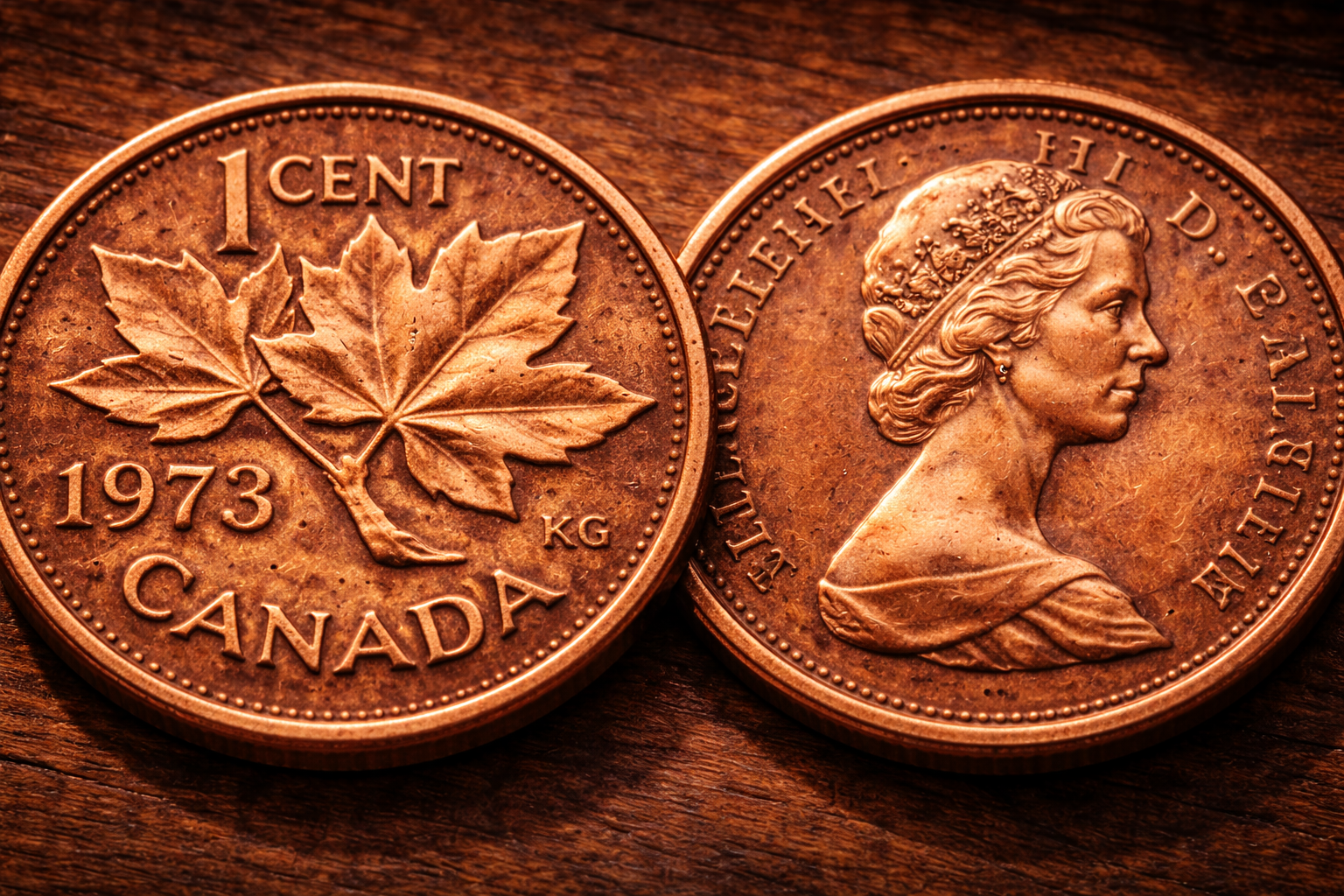
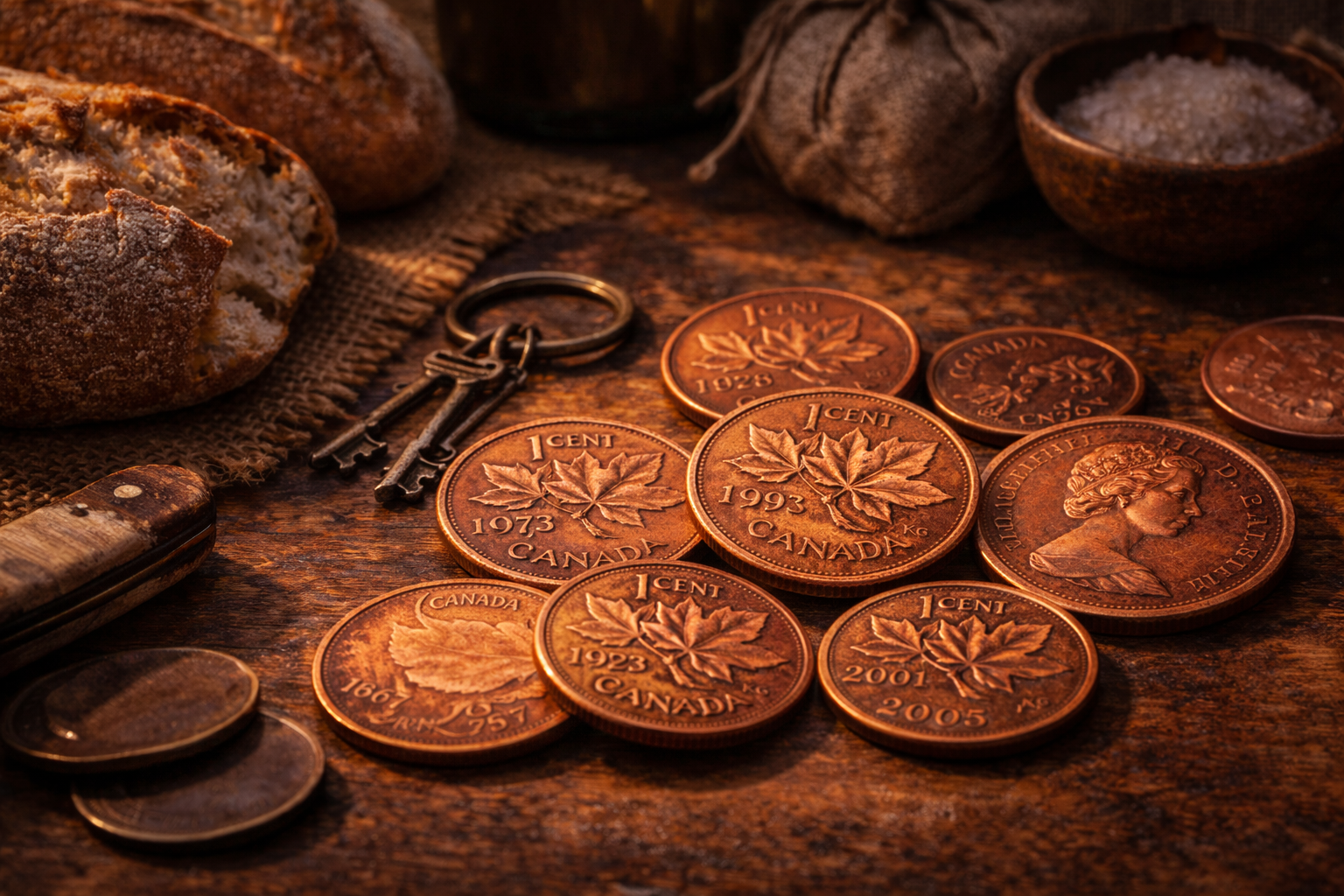
One of the most visible changes across decades is the portrait of the monarch. As different monarchs reigned and artistic styles evolved, new portraits were introduced. Each portrait reflects the style of its time, from more formal engravings to more modern interpretations.
These portraits are not only artistic choices. They also represent historical moments. Each version of the coin connects to a specific period in Canadian history.
The Maple Leaf as a National Icon
The maple leaf is one of the most recognizable symbols of Canada. Its use on the penny ensures that the coin immediately communicates its national origin.
The maple leaf design is simple yet powerful. It reflects the natural environment and the cultural identity of Canada. Over time, the design of the leaf itself has been refined to improve clarity and durability.
The Royal Canadian Mint and Coin Production
The Royal Canadian Mint has been responsible for producing Canadian pennies with a high level of precision and quality. The mint combines traditional engraving techniques with modern technology to ensure that each coin meets strict standards.
The process of coin production involves multiple stages, including design approval, die creation, blank preparation, striking, and inspection. Each step is carefully controlled to maintain consistency.
Material Evolution and Metal Composition
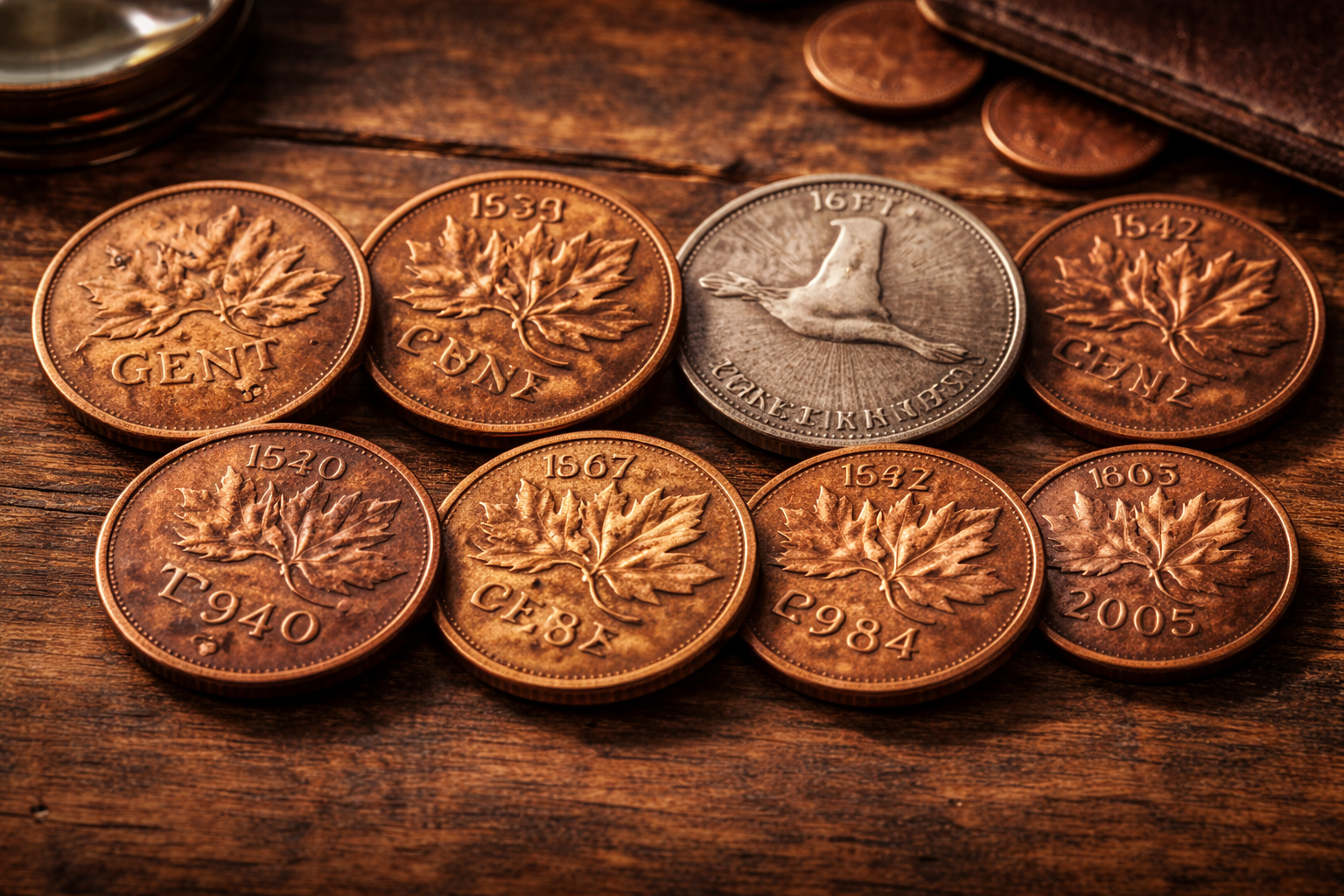
Canadian pennies have undergone changes in material composition over time. Early coins were made primarily from bronze or copper alloys. These materials gave the coins their familiar warm tone and solid feel.
As production costs and technology evolved, the composition of the coins was adjusted to maintain efficiency while preserving appearance. These changes were subtle and did not affect the coin’s role in daily life.
Minting Techniques and Die Production
Minting a coin requires the creation of detailed dies that contain the design. These dies are used to strike the design onto metal blanks under high pressure. The quality of the die determines the clarity of the final coin.
Over time, improvements in die production and striking techniques allowed for more consistent and durable coins. This ensured that the design remained visible even after long periods of circulation.
Everyday Life and the Role of Small Change
The Canadian penny played a central role in everyday transactions. It allowed people to pay exact amounts for goods and services. This made it an essential part of daily life for many decades.
Children often learned about money by collecting pennies. Families saved them in jars and used them for small purchases. This created a cultural connection between the coin and everyday experiences.
Economic Function of the Penny in Canadian Society
The penny allowed for precise pricing and smooth daily transactions. It helped maintain accuracy in small payments and supported the structure of everyday commerce.
Although the value of a single penny was small, the combined effect of millions of pennies in circulation was significant. They formed an important part of the country’s economic system.
Retail Pricing and One Cent Psychology
Retail pricing often relied on one cent increments. Prices ending in ninety nine cents became common because they created a perception of lower cost. The penny made this pricing system possible.
This psychological aspect of pricing became part of the retail culture and influenced consumer behavior for generations.
Transportation, Services, and Micro Payments
Beyond retail environments, the Canadian penny also played a role in transportation and small service systems. Exact fare models in buses, local transit systems, and simple ticket services often relied on the availability of one cent coins to complete precise amounts. This allowed payment systems to function without rounding or approximation.
In many communities, small services such as public telephones, vending machines, and basic automated systems required exact coin values. Pennies ensured that people could complete these interactions without friction. This reinforced the idea that even the smallest coin had a practical purpose within daily life.
These micro payment environments show how the penny operated as part of a larger network of daily activities. It was not isolated to shops and stores. It was integrated into public infrastructure and services that shaped everyday routines.
Decade by Decade Design Changes
Across the twentieth century, Canadian pennies experienced gradual design refinements. These changes were rarely dramatic. Instead, they reflected careful improvements in engraving quality, lettering clarity, and production consistency.
During the early decades of the twentieth century, design elements were more traditional and closely aligned with British engraving styles. As time progressed, the visual language became more distinctly Canadian, especially with the refinement of the maple leaf symbol.
The nineteen seventies represented an important period of adjustment. During this decade, production techniques improved, and the visual clarity of the coin was refined. This period is explored in greater detail in the guide on how Canadian pennies changed during the nineteen seventies.
Later decades focused on maintaining consistency and durability. The goal was to ensure that each coin remained legible and recognizable even after years of circulation.
Small Variations and Subtle Differences
Although the general design of Canadian pennies remained stable, subtle variations appeared across different years of production. These differences can include slight changes in font shape, spacing between letters, and the sharpness of design elements.
These variations often result from the use of different dies during production. As dies wear down or are replaced, small differences can appear in the final coins. These details are valuable for researchers who study coin production history.
One of the most discussed examples is the nineteen seventy three Canadian penny. Its minor design differences have made it an interesting subject of study. The story behind the nineteen seventy three Canadian penny provides a detailed look at how these variations appeared and why they matter in historical research.
Understanding these small differences adds depth to the study of coins. It shows how even a standardized object can carry layers of production history.
How Families and Children Interacted with Pennies
The Canadian penny was deeply connected to family life. Children often learned about money by collecting pennies in jars or containers. This simple activity introduced them to the concept of saving and counting.
Many households used pennies as a teaching tool. Parents would give small amounts of change to children to help them understand basic financial habits. Over time, these small interactions created lasting memories associated with the coin.
Pennies were also used in small family traditions. Some families saved them for specific purposes, while others used them in simple games or activities. These cultural habits helped transform the coin from a practical object into a personal and emotional symbol.
The Transition Period and the End of Everyday Use
As economic conditions and production costs evolved, the role of the penny in daily life began to change. The cost of producing the coin gradually approached or exceeded its practical use in small transactions.
During the transition period, businesses and consumers adapted to new pricing and payment systems. Although the penny became less common in daily transactions, it did not disappear from memory. Instead, it shifted from a practical tool to a cultural object.
Many people chose to keep pennies as souvenirs or as part of personal collections. This transition highlights how an object can move from everyday use into historical significance.
Timeline of Canadian Penny Development
| Period | Main Development | Historical Context |
|---|---|---|
| Early National Period | Introduction of penny influenced by British coinage | Formation of Canadian monetary identity |
| Early 20th Century | Refinement of design and engraving styles | Growth of national symbolism |
| Mid 20th Century | Standardization of maple leaf design | Expansion of national visual identity |
| Nineteen Seventies | Improvements in minting technology and clarity | Modernization of production techniques |
| Late Modern Era | Material efficiency adjustments | Economic and industrial changes |
| Transition Period | Reduction in everyday circulation | Shift toward modern payment systems |
Related HistoraCoin Stories
FAQ
Why were Canadian pennies widely used in daily life
They allowed people to make precise small payments and supported pricing systems that relied on exact one cent values.
What makes the maple leaf important on Canadian pennies
The maple leaf is a national symbol that represents Canada’s natural heritage and identity, making the coin instantly recognizable.
Did Canadian pennies change in design over time
Yes, small changes in engraving, lettering, and material composition occurred across different decades as production methods evolved.
Are there noticeable variations in Canadian pennies
Yes, subtle differences in design details can be found between different production years due to die changes and manufacturing adjustments.
Why did the penny eventually leave everyday circulation
Changes in production cost and modern payment systems reduced the practical need for one cent coins in daily transactions.