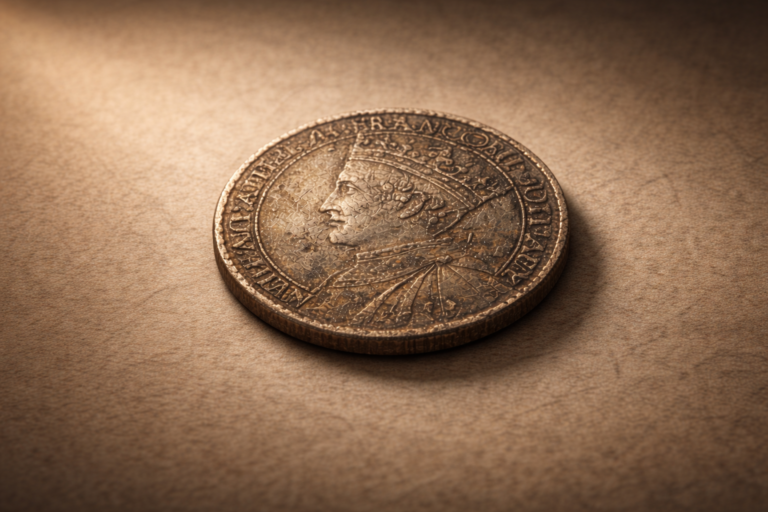
Where Old Coins Travelled Before Disappearing Into Legend
Estimated reading time: 18 minutes
Old coins rarely disappear the way people imagine. They do not simply fall off a table and vanish into the dark. Most of them travel first. They move through hands and pockets and markets, through borders and seasons, through small decisions made by ordinary people. They live a long life as everyday objects before they become something else.
And then, one day, they stop being ordinary.
A coin might be pulled from circulation because the world changes around it. A new design arrives. A new system replaces the old. A metal shortage shifts what mints can afford. A country changes its language, its identity, its symbols, its name. Sometimes a coin is collected intentionally. Sometimes it is tucked away quietly by someone who cannot explain why they kept it. Sometimes it is lost, not dramatically, but gently, as if time itself misplaced it.
This is the journey we rarely talk about. Not the coin as a price. Not the coin as a sale. But the coin as a traveler. Where did it go. What roads did it follow. What kinds of places did it pass through. And how did it fade into legend, not because it was magical, but because memory turned it into a story.
Think of this as a map you cannot see. A map made of exchanges, migrations, shipping routes, wars, weddings, fare payments, market mornings, and quiet nights. A map made of human motion. Coins do not move by themselves. They move because people move.
So let’s follow them. Not to chase them, but to understand how they travelled before disappearing into legend.
Table of Contents
- Coins as Travelers and Why They Rarely Stay Put
- The First Journey From Mint to Daily Life
- Markets Pockets and the Ordinary Roads
- Borders Ports and the Long Distance Leap
- Ancient Routes That Still Echo Today
- Wear Marks as a Map of Movement
- Hoarding Saving and the Quiet Exit From Circulation
- War Change and the Sudden Vanishing
- How Stories Turn Coins Into Legend
- The Last Stop Before a Coin Becomes a Memory
- FAQ
Coins as Travelers and Why They Rarely Stay Put
Every coin is born with a destination it cannot predict. When a coin is struck, it carries a design chosen by authority, but it is immediately released into the most unpredictable system of all, human life.
Coins move because people are constantly trading tiny pieces of their day for tiny pieces of their needs. A loaf of bread. A bus ride. A cup of tea. A repair. A child’s school book. A coin travels like a witness. It is present for scenes that will never be recorded anywhere else.
Most people assume coins belong to one place, one country, one era. But coins rarely behave that neatly. A coin can travel through migration. Through tourism. Through trade. Through conquest. Through work contracts and shipping payments and border crossings. Coins can move through the world quietly, like a language spoken softly, understood by some, ignored by others.
This is why old coins can show up in the most surprising places. Not because of mystery, but because the world is always moving.
The First Journey From Mint to Daily Life
The first journey of a coin is often the least romantic and the most important. The coin leaves the mint in controlled conditions. It is counted, packed, distributed, released. It passes into banks and merchants and official channels. At this stage it is still clean, still sharp, still almost new enough to feel like a promise.
Then it enters daily life and immediately begins to change. It touches other coins. It touches cloth. It touches skin. It falls, it gets picked up, it rattles in drawers, it sits in bowls near doors. The relief begins to soften. The fields collect tiny scratches. The edges lose their crispness.
None of this is failure. This is the coin becoming real.
Coins are not designed to sit in silence. They are designed to work. They are designed to move. They are designed to be trusted without conversation. When a coin enters the rhythm of daily life, it becomes part of a country’s pulse.
Some coins will live long careers in this rhythm. Others will exit early. The reasons vary. But nearly all of them begin the same way, with a simple hand-to-hand exchange.
Markets Pockets and the Ordinary Roads
If you want to imagine how coins travel, forget the grand routes for a moment and picture the ordinary ones. A coin in the morning might be used to buy fruit at a market. By noon it could be in a different pocket. By evening it could be part of change given at a small shop. Two days later it might be in a taxi driver’s coin tray. A week later it might be in a child’s hand, spun on a table, then lost under a sofa.
This is the core of coin travel. Small jumps. Constant movement. Tiny cycles repeated thousands of times. Coins do not teleport across continents. They move one transaction at a time until a long distance is built out of small distances.
These ordinary roads create the most honest wear. The kind of wear that looks like it was earned. The kind of wear that tells you the coin lived through real routines, not just ceremonial handling.
That is why collectors sometimes feel drawn to heavily circulated coins. They look less like objects and more like survivors. They feel like they have been places.
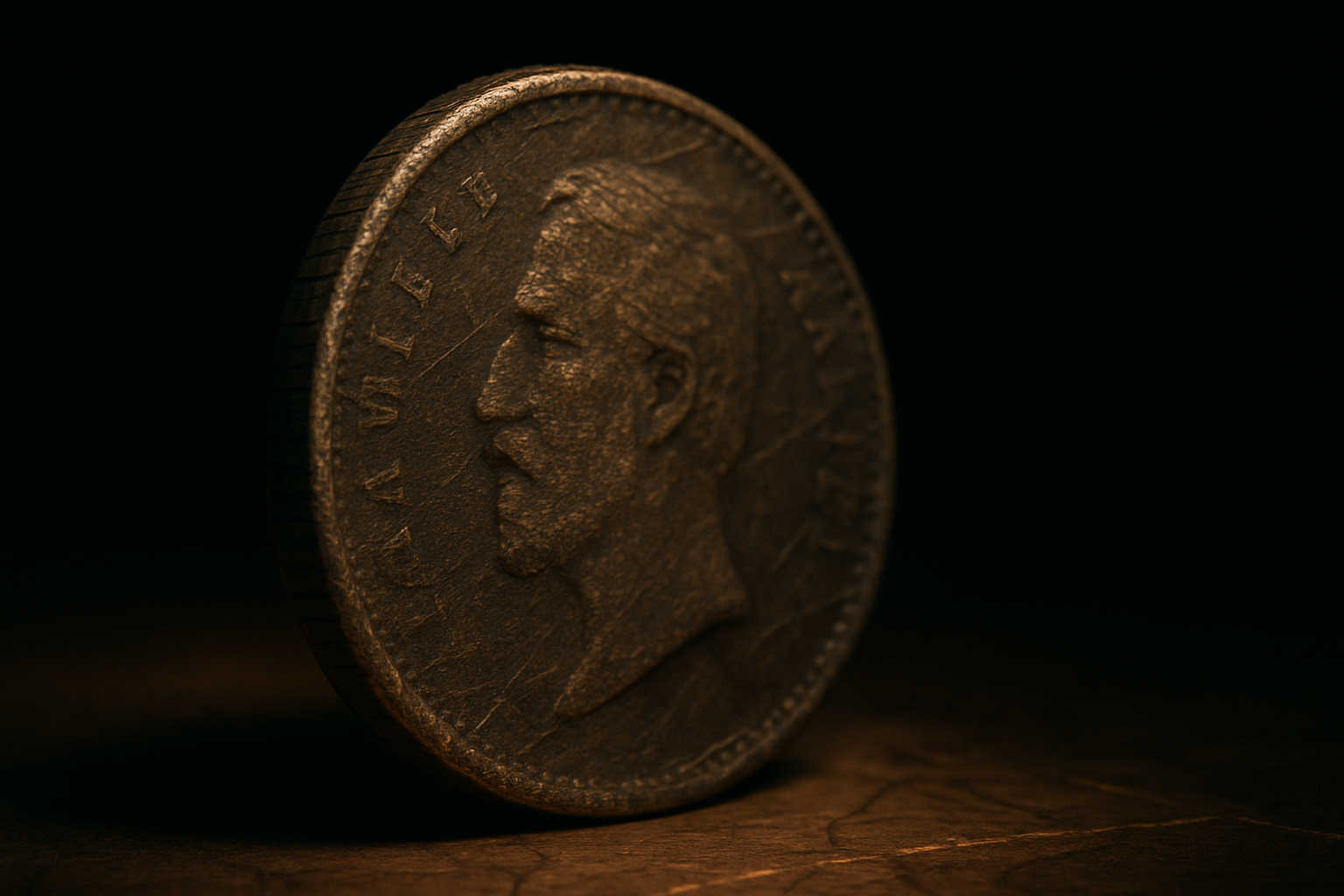
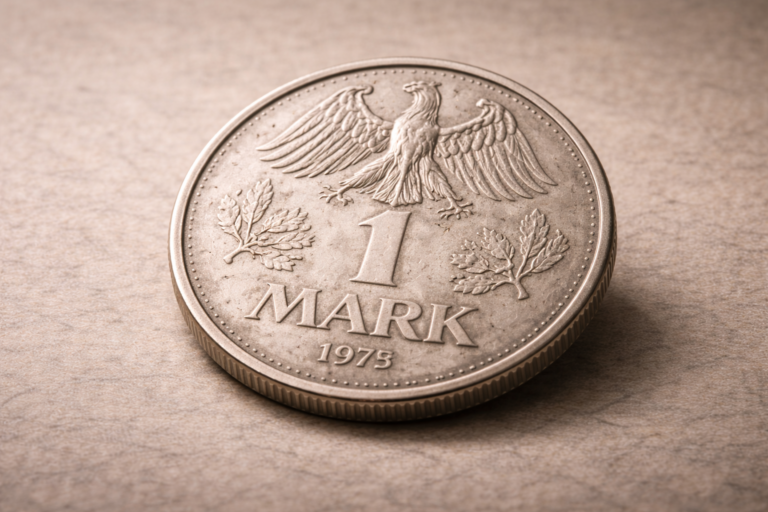
Every scratch marks a step in a forgotten journey
Image credit: HistoraCoin.com
A scratch is a moment. A softened edge is a thousand moments. A coin that looks tired is a coin that worked.
Borders Ports and the Long Distance Leap
Eventually, some coins leave their local cycle and make a larger leap. This can happen in simple ways. A traveler returns home with change they never bothered to exchange. A worker sends money across borders. A sailor spends coins at a port. A merchant receives foreign coins and passes them along. A tourist uses a coin in the wrong place and it gets accepted anyway because nobody wants to slow down a line for a small amount.
Ports are especially important in coin travel. Ports are where currencies meet. They are where money becomes multilingual. Even when official systems are strict, real life finds ways to bend them. Coins can slip through as souvenirs, as mistakes, as convenience, as curiosity.
Over time, this creates a scattered afterlife for many coin types. Long after a coin’s official era ends, it may continue traveling unofficially. It may sit in jars. It may appear in markets. It may become a charm. It may become a memory token. It may become a collector’s quiet treasure.
The border is not always a wall. Sometimes it is just a doorway coins walk through without being noticed.
Ancient Routes That Still Echo Today
When we talk about coin travel, it is tempting to focus on modern movement. Airports, shipping containers, global markets. But coin travel is ancient. Long before modern logistics, coins moved along trade routes that shaped civilization.
These routes were not only about goods. They were about ideas. Spices and textiles moved, but so did symbols. So did languages. So did artistic styles. Coins were part of that exchange because coins were practical proof that value could be carried.
In many places, coins helped standardize trade. When traders did not share language, metal became a shared reference. That does not mean coins were universally accepted everywhere, but it does mean coins often acted as bridges between systems.
Ancient trade routes also created one of the most interesting realities for collectors. A coin from one region can show up far from where it was minted, not as a miracle, but as the residue of commerce. The coin becomes a footprint of movement.
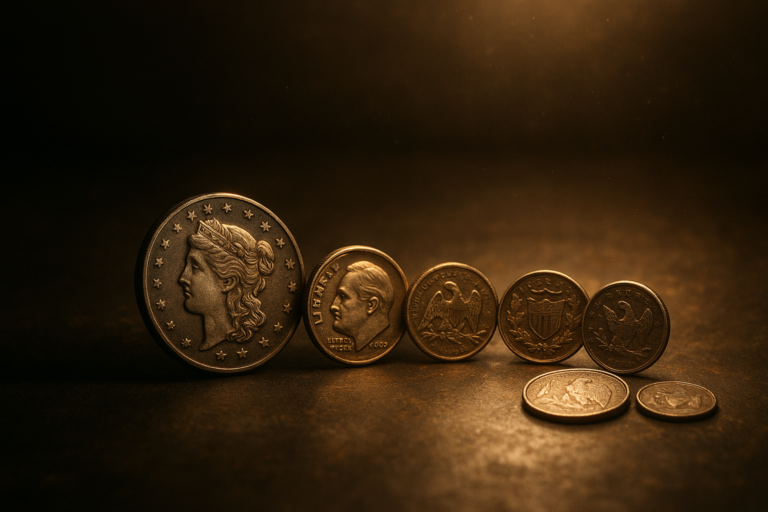
When you see coins arranged along routes, you can almost feel the human motion behind them.
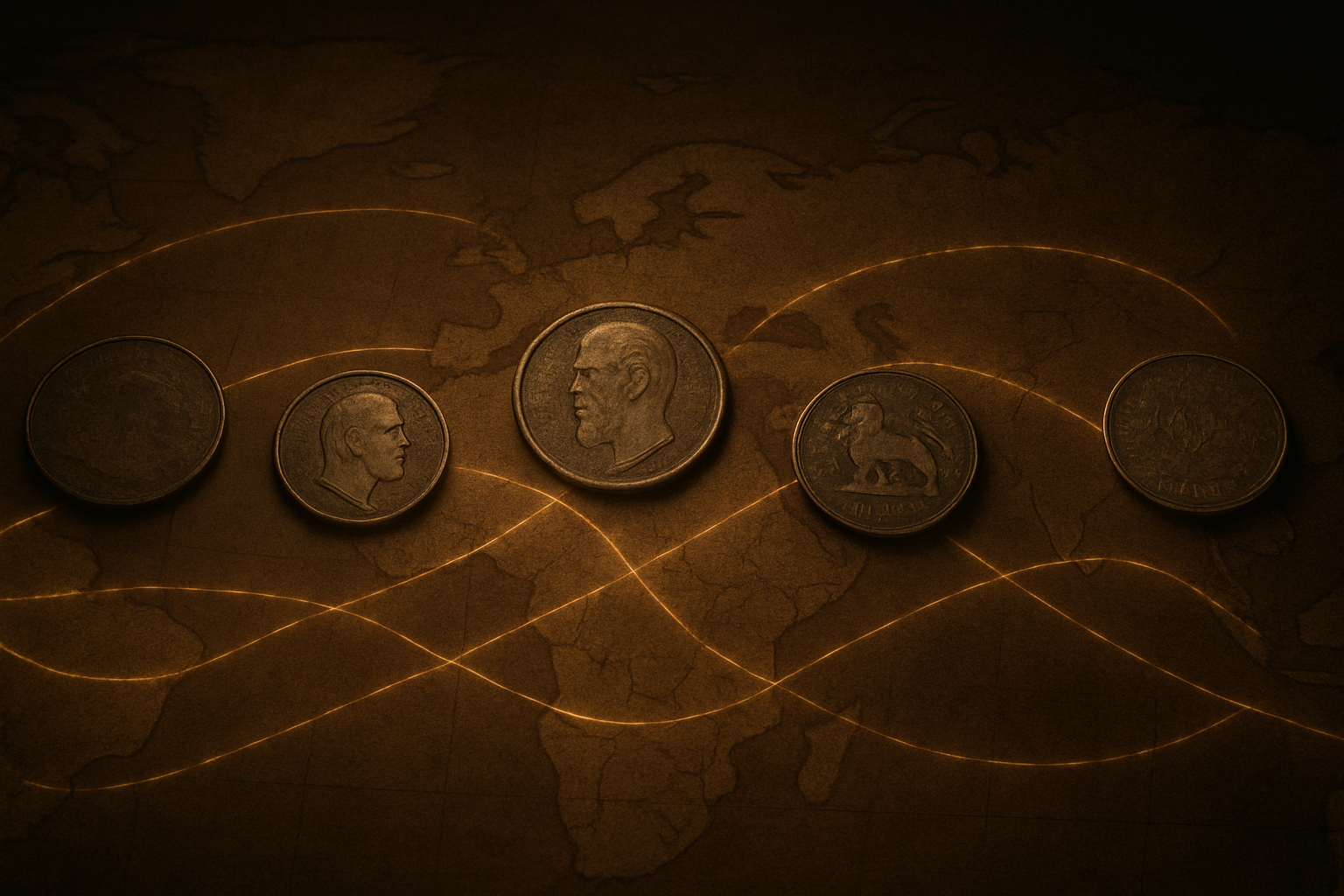
Coins crossed borders long before borders had names
Image credit: HistoraCoin.com
Trade routes do not only move metal. They move identity. Coins carry both.
Wear Marks as a Map of Movement
If a coin could speak, it would speak through wear. And if you learn how to read wear, you begin to read travel.
Different environments leave different signatures. Humid places can create certain types of toning. Dry environments can preserve surfaces differently. Coins stored with other metals can develop faint marks. Coins carried daily can show smoothing in predictable places. Coins used in certain types of commerce can develop small repeated contact points.
None of this requires fantasy. It is simply material history. It is the coin responding to the world it lived in.
This is why coin collectors often develop a kind of intuition. They look at a coin and feel that it lived a certain life. Not because they know every detail, but because patterns repeat. A coin that lived in a pocket looks different from a coin that lived in a drawer. A coin that circulated for decades looks different from one that circulated for a year and then vanished into a jar.
Wear is not just aging. Wear is geography plus habit. It is the story of where the coin spent most of its time.
Hoarding Saving and the Quiet Exit From Circulation
Not every coin disappears because it is lost. Many disappear because they are saved.
People save coins for countless reasons. Some save because they sense change coming and want stability in tangible form. Some save as a habit passed down in families. Some save because they like the sound of coins. Some save because a coin reminds them of a place, a year, a person, or a moment.
When coins are saved in bulk, they create hoards. Hoards are not always dramatic discoveries. Many are simple collections hidden away, then forgotten. A tin under a bed. A jar in a cupboard. A box in an attic. Over time, these quiet hoards become time capsules.
The strange thing about hoards is that they remove coins from circulation without removing them from existence. The coin is still there, but it is no longer part of daily movement. It becomes still. It waits.
And sometimes, decades later, it returns to the world in a different role. Not as money. As memory.
War Change and the Sudden Vanishing
Sometimes coins vanish quickly. Not because people saved them, but because circumstances made them disappear.
Wars disrupt supply chains. Political shifts change symbols. Economic pressures change metal composition. Entire currencies can be replaced. When that happens, coins often leave circulation rapidly. People exchange them, melt them, discard them, hide them. Some disappear because they are no longer accepted. Others disappear because the society is moving too quickly to care about old metal.
These moments create the kind of coin disappearance that feels dramatic. A coin that was common one year becomes scarce in the next decade. Not because it was rare at birth, but because history accelerated and left it behind.
Collectors often chase coins from these transitional moments because they are emotional objects. They represent the edge between eras. They hold the feeling of change.
How Stories Turn Coins Into Legend
Legend is not created in a mint. Legend is created in conversation.
A coin becomes legendary when people attach a story to it. Sometimes that story is accurate. Sometimes it is exaggerated. Sometimes it is entirely invented. But the emotional core is often real. People use stories to make objects meaningful. A coin found in a wall becomes a symbol of hidden past. A coin passed down from a grandparent becomes a symbol of lineage. A coin from a vanished regime becomes a symbol of a chapter closed.
Even when a coin is not physically special, the story can make it feel special. That is the power of memory. Memory turns metal into meaning.
This is also why certain coins are remembered even if few people can describe their design. They are remembered because they represent an era. A hardship. A migration. A moment of triumph. A period of fear. A period of rebuilding.
When a coin disappears from daily life, it enters a new life in the imagination. It becomes the kind of object people talk about as if it holds a secret. Sometimes it does. Sometimes the secret is simply that it survived.
The Last Stop Before a Coin Becomes a Memory
There is usually a last stop. A place where a coin stops traveling and starts resting.
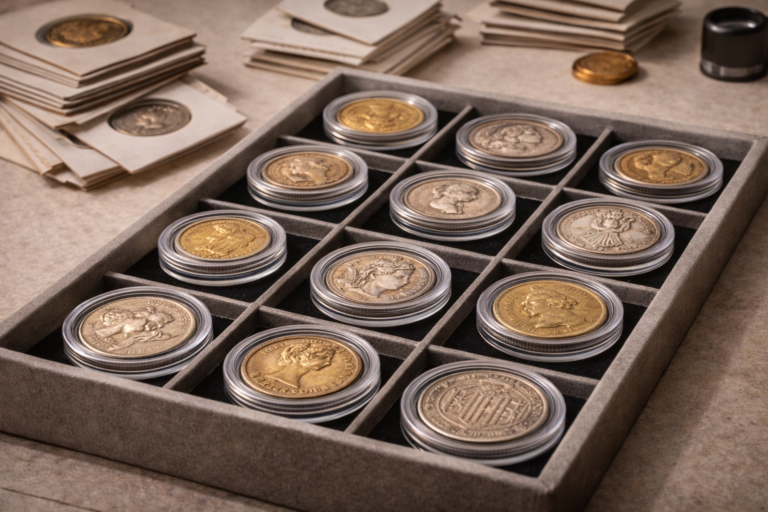
Sometimes that last stop is a collection album. Sometimes it is a small pouch in a drawer. Sometimes it is a jar that nobody opens anymore. Sometimes it is a marketplace where the coin is finally recognized as old and separated from ordinary change. Sometimes it is a museum. Sometimes it is the ground.
But regardless of where it ends up, the emotional shift is the same. The coin changes category in the human mind. It stops being something you spend. It becomes something you keep.
That is the moment legend begins. The moment a coin becomes an object of attention instead of an object of routine. The moment someone says, wait, this is not just a coin.
In that moment, the coin becomes a bridge between the world that made it and the world that finds it later.
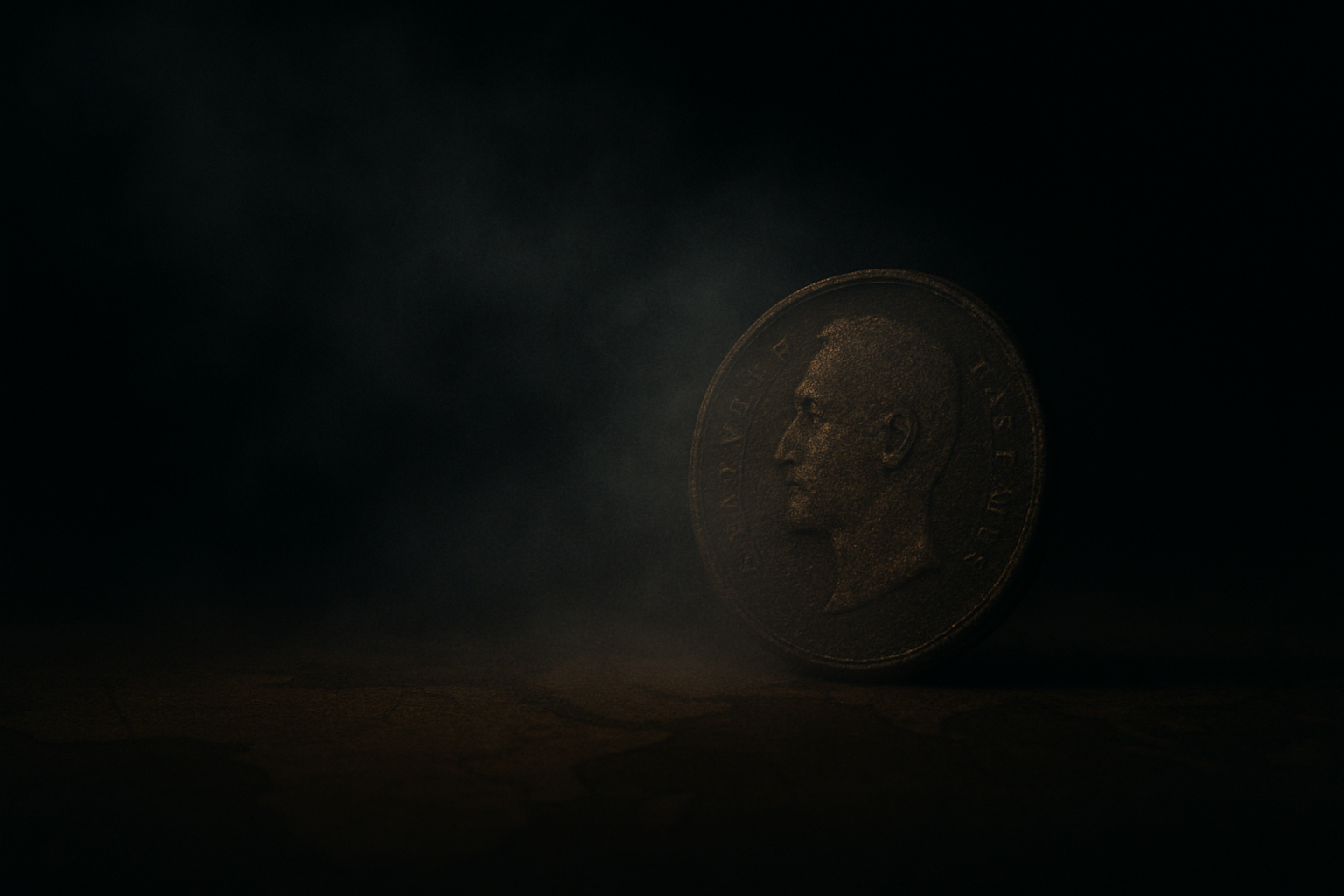
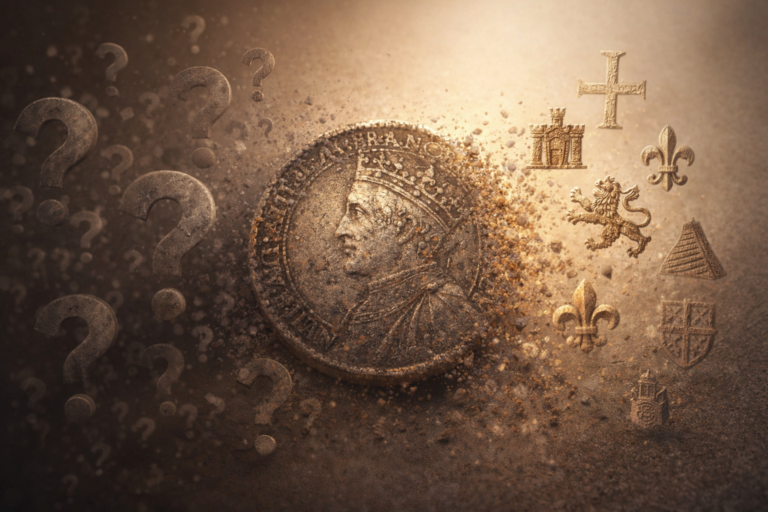
Some coins vanished not because they were lost but because history moved on
Image credit: HistoraCoin.com
And once it becomes a bridge, it belongs to everyone who is willing to listen.
FAQ
Why do old coins show up far from where they were minted
Because coins travel through human movement. Trade, migration, tourism, and everyday exchanges can carry coins far beyond their origin over time.
Do coins disappear mainly because they are lost
Not always. Many coins disappear because they are saved in jars, drawers, or collections, or because currencies change and old coins are removed from circulation.
What makes a coin feel legendary
Usually the story attached to it. Coins become legendary when they represent a moment in history, a personal memory, or an era that people feel connected to.
Can wear on a coin reveal anything meaningful
Yes. Wear patterns can hint at how long a coin circulated and how it was handled. Wear is not just age. It is evidence of lived use.
Reality Check
Old coins often become fascinating because of the journeys they represent, not because of quick labels. Most coin stories are shaped by movement, context, and everyday life. The most reliable understanding comes from learning where a coin fits historically and how it lived in circulation.
Final Verdict
Where old coins travelled before disappearing into legend is ultimately a story about people. Coins moved because lives moved. They crossed markets and borders, survived change, and exited circulation quietly into drawers and memory. When you find an old coin today, you are not holding a shortcut. You are holding a traveler.
Share This Story
If this journey stayed with you, feel free to share it with others who love the quiet side of history.


Explore More on HistoraCoin
Keep Exploring
If you enjoy stories shaped by movement and memory, take your time exploring more coin journeys on HistoraCoin. Each article reveals another path where history quietly meets metal.
About the Author
HistoraCoin Team
The HistoraCoin Team explores the hidden stories behind coins from every era and culture. Our focus is history, symbolism, and the human moments quietly preserved in metal.
For more historical coin stories, visit HistoraCoin.