Why Early Americans Distrusted Coins at First
Estimated reading time: 18 to 20 minutes.
Coins did not automatically inspire confidence in early America. They entered a society that had already learned to live with uncertainty.
Before trust became routine, people tested money the way they tested promises. Quietly, carefully, and with long memory.
Quick Context
If you want the meaning behind early U.S. coin imagery, continue with Who Was on the 1793 Penny. If you want the bigger pattern of how people judge significance over time, see How People Decide Which Coins Matter.
A country used to mixed money.
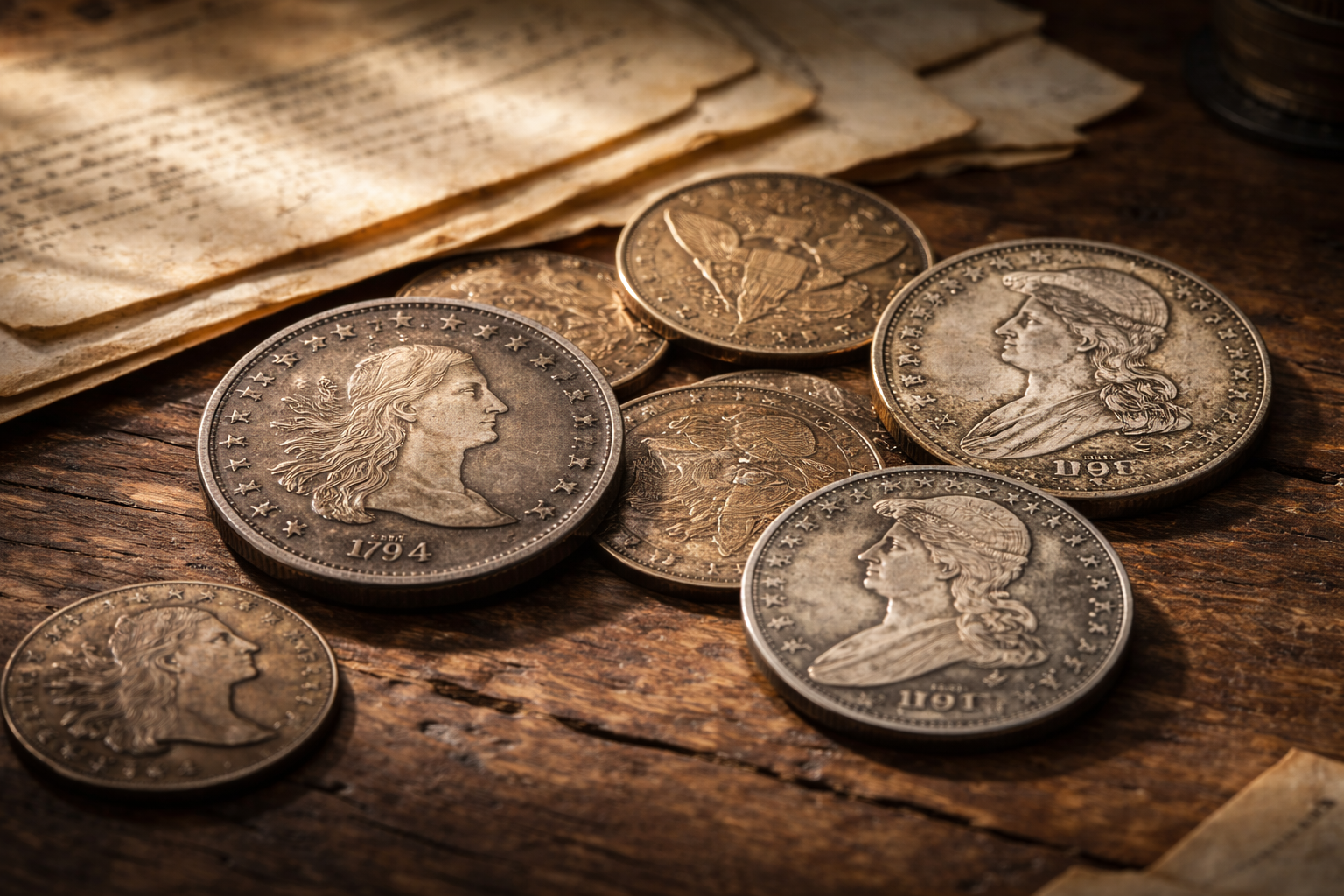
Early America did not begin with a clean, uniform system of money. Daily exchange had been built on whatever could work. Foreign coins appeared in pockets and tills. Paper notes circulated with varying credibility. Barter and informal credit filled gaps when coin supply was thin.
That reality shaped behavior. People learned flexibility instead of blind trust. They learned to ask practical questions before accepting money. Would the next merchant take it. Would it hold steady. Would it cause an argument later.
So when American made coins began to appear, they did not enter a neutral world. They entered a market trained by experience, and experience had taught caution.
The memory of unstable value.
Distrust did not come from stubbornness. It came from memory. Many communities had seen money disappoint them before. Some paper issues had lost credibility. Some circulating pieces had been clipped, worn down, or counterfeited. Even honest coins could vary enough to create confusion.
When a society has lived through unreliable value, it develops instincts. People begin to verify what they are handed. They compare. They weigh. They listen to what others say. Trust becomes something earned rather than assumed.
This is the overlooked foundation of early American money culture. The country did not reject the idea of currency. It rejected the risk of being fooled by it.
In early America, suspicion was not negativity. It was protection learned from lived experience.
Why early U.S. coins felt uncertain.
A new coin carries more than metal. It carries the reputation of the institution behind it. In the earliest years of the United States, that reputation was still forming.
For many people, national authority was real in principle but distant in practice. They might believe in the republic while still doubting the consistency of its systems. A coin stamped with national imagery could look official, yet still feel unfamiliar.
This is why early acceptance was uneven. Some merchants welcomed coins as progress. Others treated them as an experiment that needed proof.
Weight, wear, and daily suspicion.
In real markets, money is judged by what it does, not by what it claims. People examined coins because they had to. A worn surface could mean long use. It could also mean questionable quality. Variation could be normal in a young system, but normal still produces doubt.
Copper coins in particular invited inspection. They were practical for everyday exchange, but they were also more vulnerable to visible wear. When people see change on a coin, they wonder if the coin is changing in value too.
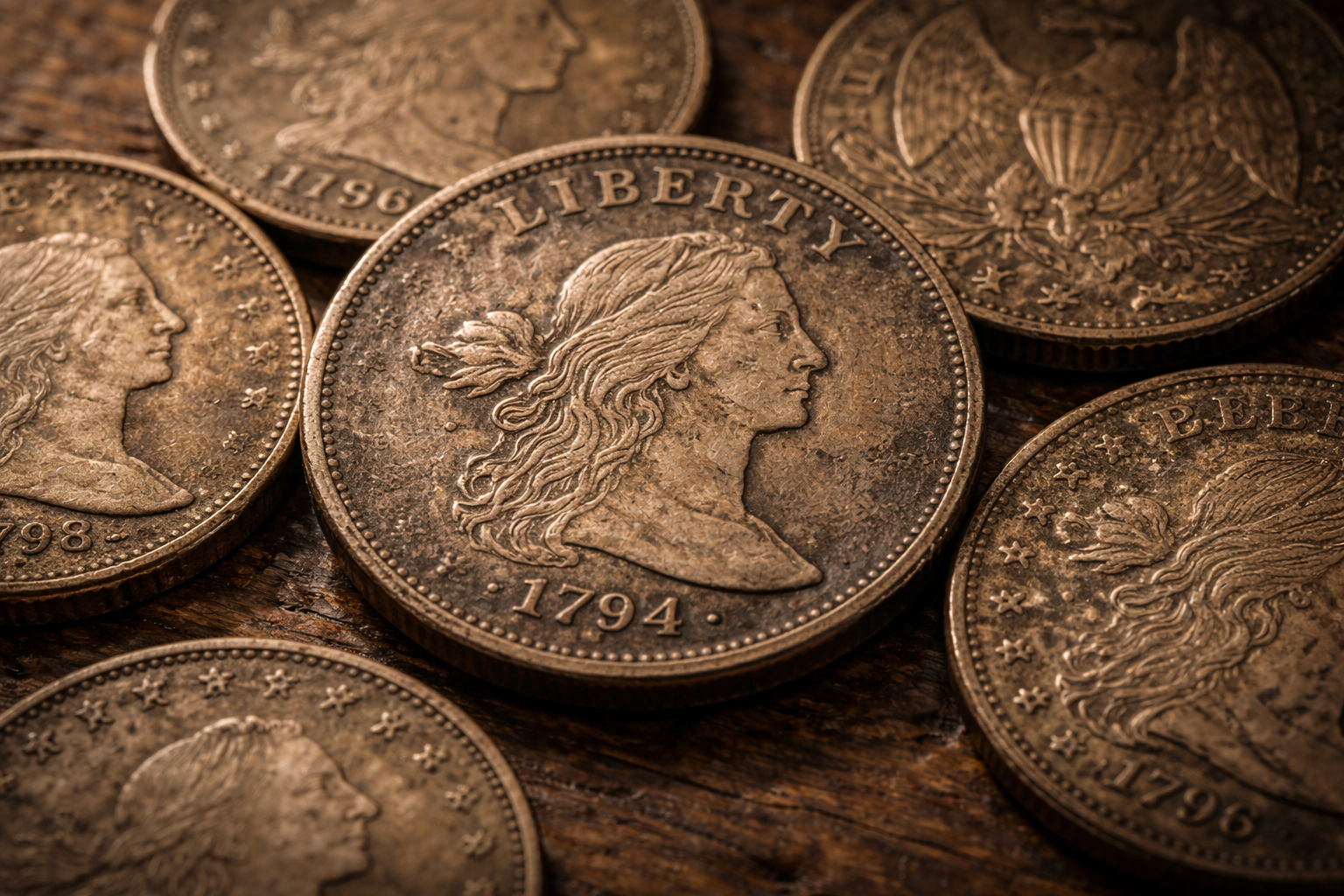
This is also why communities developed habits of testing and confirming. The coin had to pass through the social world of trust before it could function smoothly.
How trust actually formed.
Trust did not arrive with a proclamation. It arrived with repetition. When a coin was accepted once, it was a trial. When it was accepted again, it began to feel normal. When it moved through many hands without conflict, it became part of routine.
Merchants played a major role here. If shopkeepers accepted coins consistently, customers learned confidence. If shopkeepers hesitated, doubt spread. Money is social. The most important question is rarely whether the coin exists. The question is whether others will accept it.
This is the same human mechanism explored in how people learned value before money existed. Before systems become stable, people depend on shared behavior to decide what counts.
What symbolism could and could not do.
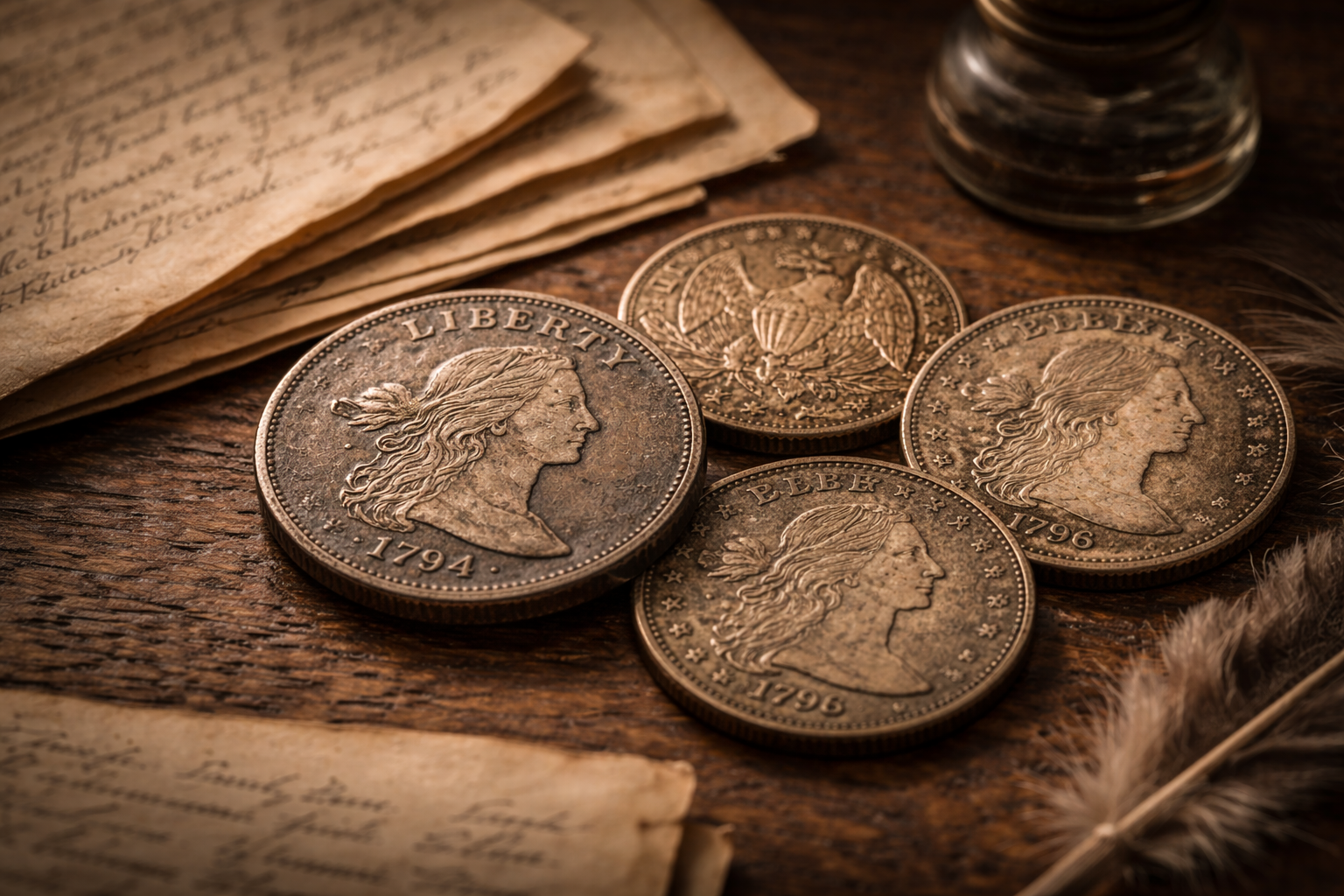
Symbols matter. They tell people what the system wants to be. Early American coin imagery helped express identity and ideals. But symbols cannot replace reliability. They can only reinforce it after it exists.
A Liberty portrait could communicate purpose, as explained in Who Was on the 1793 Penny. Yet even strong imagery could not stop the basic questions. Will this coin be accepted. Will it hold steady. Will it create conflict at the counter.
In a young nation, the emotional message of money had to be supported by consistent practice. Without that, the most beautiful design would still feel uncertain.
The long shift from doubt to habit.
Over time, production improved and familiarity grew. Markets adjusted. People saw coins circulate without constant dispute. A pattern formed. Habit softened suspicion.
The story is not about a sudden moment when Americans began to trust coins. It is about a slow process in which everyday success replaced everyday worry.
This is also why the question remains relevant. It shows how trust forms in any system of value. People accept what works repeatedly. They reject what fails, even if it is official.
Early Americans distrusted coins at first because they understood how easily money can fail. Their caution forced the system to earn legitimacy through consistency, not symbolism alone.
FAQ.
Why did early Americans hesitate to trust coins.
Because people had lived through unstable paper issues, uneven foreign coinage, and daily uncertainty. Acceptance had to be proven through repeated use.
Was distrust mainly about coin design.
No. Design could communicate identity, but reliability mattered more. People focused on whether the coin worked smoothly in real exchanges.
Did wear make people suspicious.
Yes. Visible wear and variation encouraged inspection. People often used surface clues to judge consistency and trustworthiness.
How did trust eventually form.
Through habit. When coins repeatedly moved through markets without conflict, confidence became routine and doubt faded.
What is the main lesson from early American skepticism.
Trust in money is social and practical. It grows from consistent experience, not from authority or symbolism alone.