How Canadian Pennies Changed in the 1970s – Design, Metal, and Everyday Life
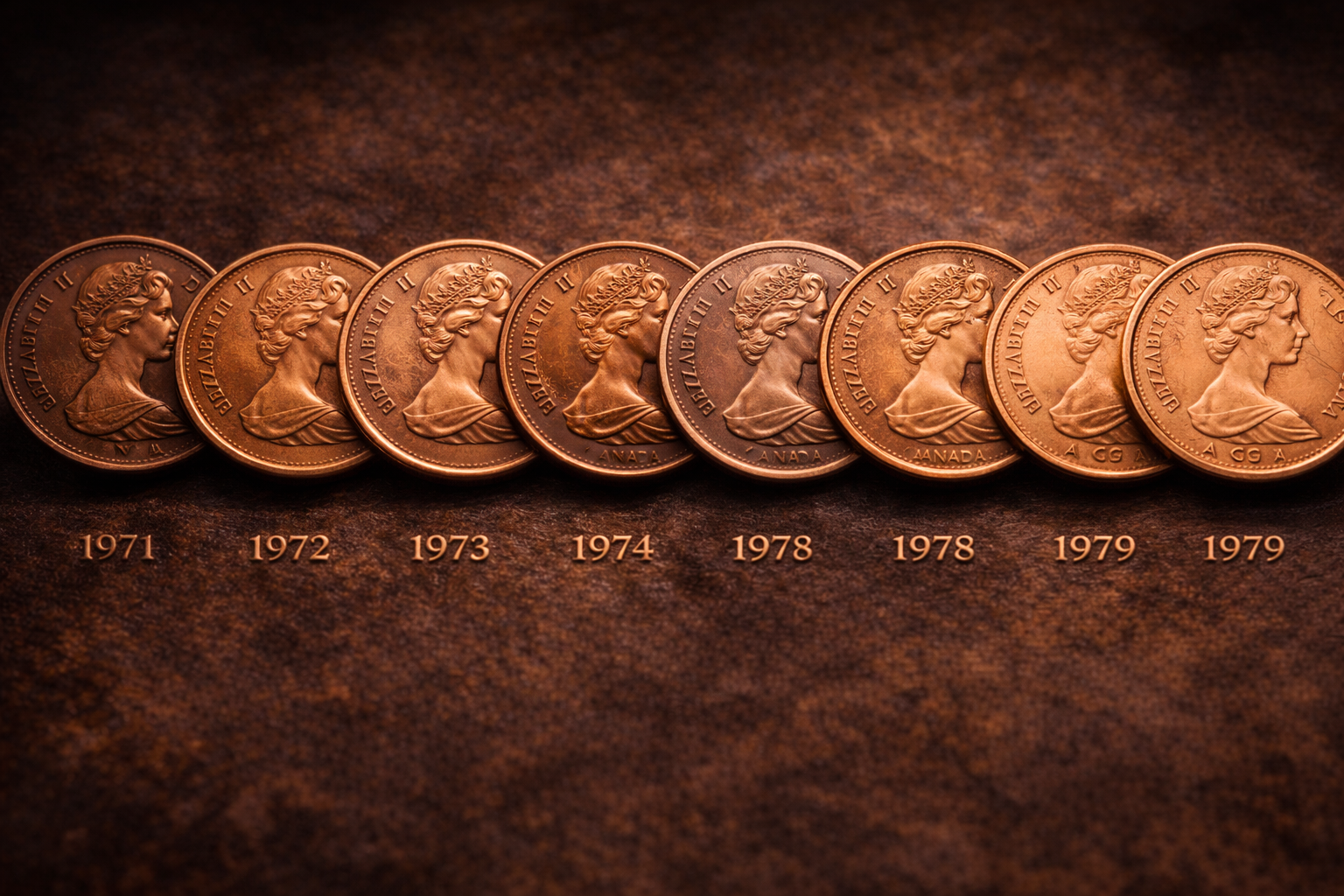
The Canadian penny in the nineteen seventies was not a “new coin.” It was a familiar tool of daily life. But that decade still shaped the coin in quiet ways. Not through dramatic redesign, but through small shifts that collectors notice when they line up multiple years side by side. Design sharpness, surface character, and the way coins survived everyday use all tell the story.
This article completes our mini cluster around the nineteen seventy-three Canadian cent. If you have not read the earlier parts, begin with rare 1973 Canadian penny , then continue with 1973 Canadian penny variations . Here, we zoom out to the full decade and explain what actually changed, and what only appears to change when coins age.
Table of contents.
- Why the nineteen seventies matter for the Canadian cent.
- The penny in everyday Canadian life.
- Design continuity. What stayed the same.
- Strike and die state. Why details look different.
- Surfaces and tone. How coins changed after minting.
- How to compare early and late decade pennies.
- Mid-article table. What changed vs what aged.
- What to keep if you collect the decade.
- Storage habits that preserve detail.
- Related HistoraCoin stories.
- FAQ.
Why the nineteen seventies matter for the Canadian cent.
When collectors study a decade, they are not always hunting for a rare date. They are often building a visual timeline. The nineteen seventies are perfect for this because the penny was still an everyday tool, yet the world around it was moving fast. Inflation, changing consumer habits, and a modernizing economy all influenced the pace of circulation.
Coins move differently in different decades. A penny that circulates hard becomes a storyteller. It carries marks, tone, and wear that reflect how people used money. This is why a row of nineteen seventies cents can look like a set of siblings. Similar design, but each one carries a slightly different life.
The penny in everyday Canadian life.
In the nineteen seventies, cash was still central. Pennies were used in small purchases, change, and rounding habits that people barely thought about. The cent was common in pockets, coin purses, school lunch counters, and household jars. That daily movement is why so many pennies from the decade still survive today.
Survival, however, does not mean sameness. Coins that lived in drawers stayed calmer. Coins that lived in circulation picked up contact marks. And coins that lived in humid environments often developed deeper tone. Those differences can create the illusion of “major change” when the design itself stayed largely consistent.
Design continuity. What stayed the same.
The Canadian cent of this era kept the familiar identity people recognized. The portrait side remained a stable visual anchor, while the reverse carried the maple leaf symbol that defines Canadian bronze cents. This continuity matters because it allows a clean comparison. When the design stays stable, you can focus on the changes created by minting and time.
Think of the design as the language, and the surfaces as the accent. The language stays the same. The accent shifts depending on how the coin was struck, handled, and stored. That is why collectors often study this decade through side-by-side comparison rather than by reading a single date.
Strike and die state. Why details look different.
One of the most visible “changes” across the decade comes from strike and die state. A fresh die can produce crisp leaf veins and sharp lettering. A worn die can produce softer detail. And small differences in strike pressure can add to the effect.
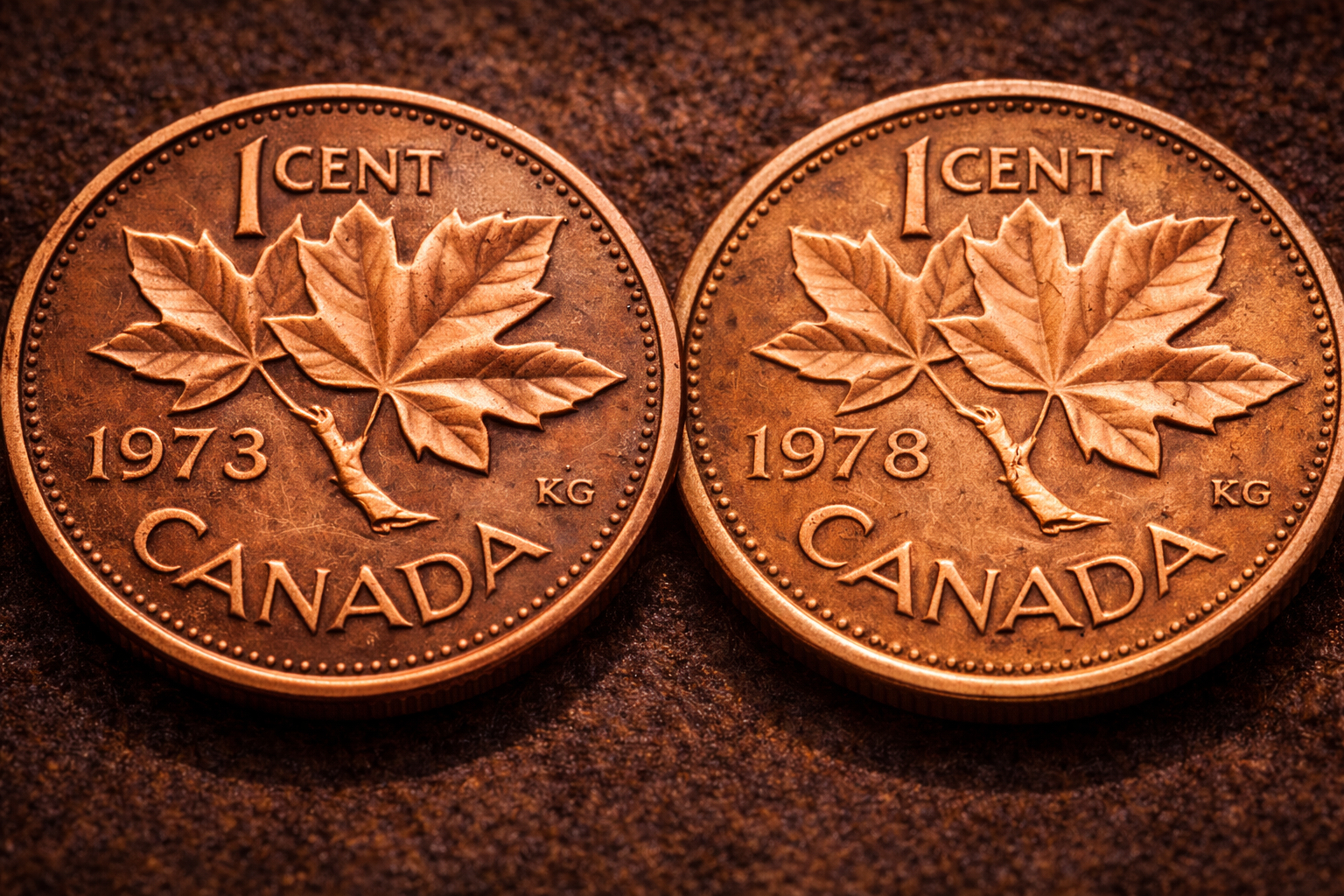
When you line up an early-decade cent next to a later-decade cent, you might see sharper edges on one and softer edges on another. That does not automatically mean the design changed. It often means the manufacturing conditions, die wear, and circulation history differ.
Surfaces and tone. How coins changed after minting.
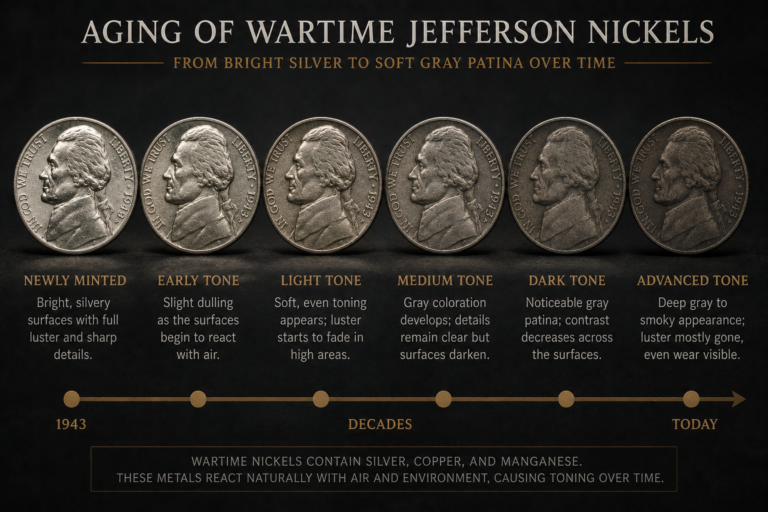
Copper-based coins react to time. Tone deepens. Brightness fades. Surfaces pick up marks. This is why the nineteen seventies can look like a decade of “different pennies” when you sort them.
The most common mistake is to treat tone as a mint-made change. In many cases, tone is a storage story. A coin stored in a dry, stable place can age evenly. A coin exposed to humidity can darken faster. A coin that was handled often can show streaky tone or uneven color.
How to compare early and late decade pennies.
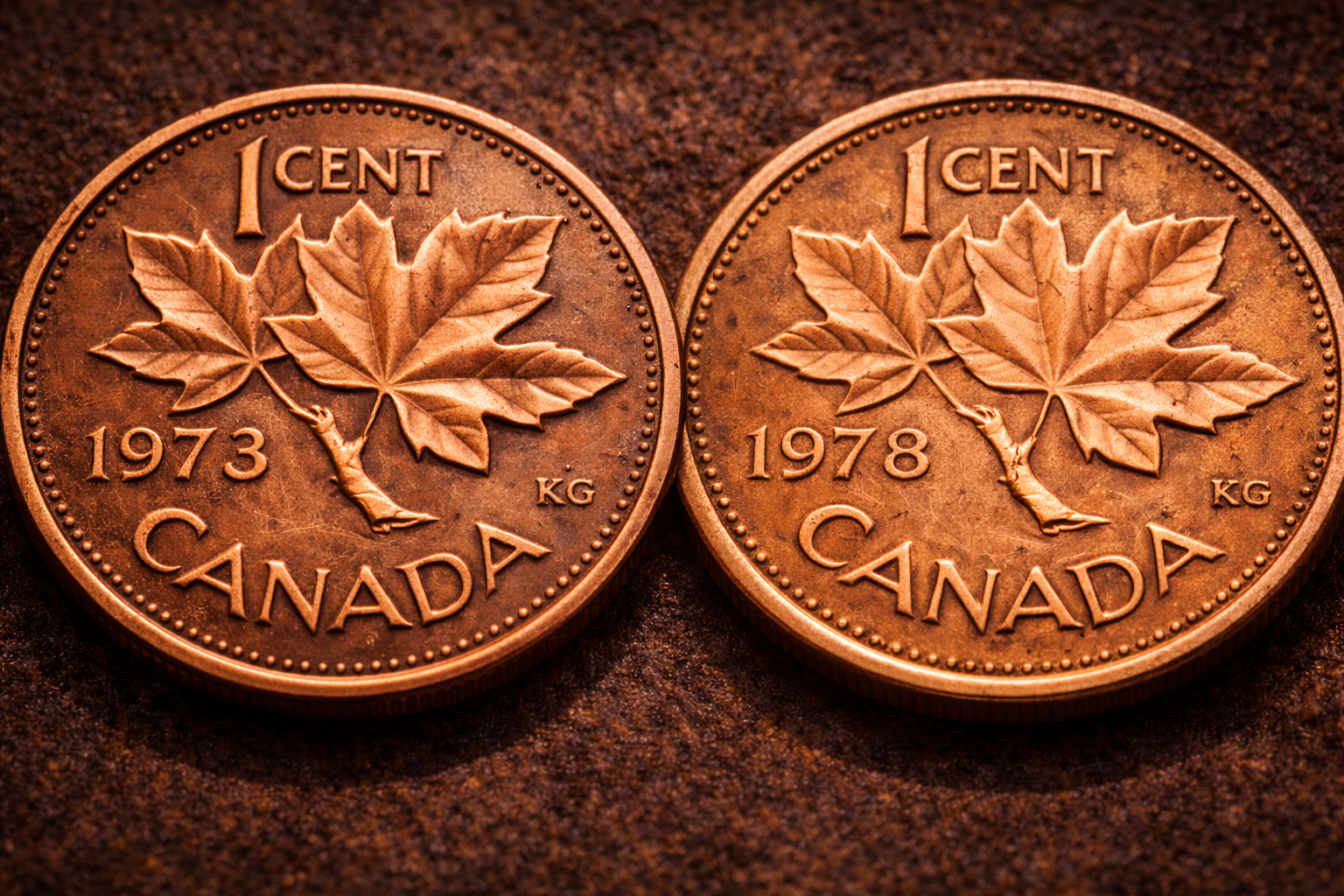
If you want to see what changed in the nineteen seventies, do this simple exercise. Pick one penny from the early part of the decade and one from the late part. Compare the same checkpoints every time. Letter edges, portrait sharpness, leaf veins, and field cleanliness.
If both coins have similar wear but one looks dramatically sharper, strike and die state may be the reason. If the biggest difference is color and surface texture, storage and handling may be the reason. This method keeps you grounded in evidence instead of assumptions.
Mid-article table. What changed vs what aged.
| What you notice. | Looks like a “change.” | Often the real reason. |
|---|---|---|
| Sharper leaf veins on one coin. | Design changed. | Stronger strike or fresher die state. |
| Softer lettering edges on another coin. | Different variety. | Die wear or circulation wear. |
| Darker overall tone. | Different metal. | Storage environment and aging. |
| More surface marks. | Lower quality minting. | Heavier circulation and contact marks. |
| Fields look cleaner and smoother. | Special issue. | Less handling, calmer storage, or lighter circulation. |
Mobile note. This table scrolls horizontally on phones to keep the layout readable.
What to keep if you collect the decade.
If you collect Canadian pennies from the nineteen seventies, the smartest approach is to keep examples that teach you something. One early-decade coin with strong detail. One mid-decade coin with typical circulation. One late-decade coin with noticeably different tone or surface character.
This creates a small educational set. It also makes it easier to spot coins that truly stand out. When you know what “typical” looks like for the decade, unusual details become obvious.
Storage habits that preserve detail.
Store pennies separately if you want to preserve surfaces. Use a simple coin flip or protective sleeve. Avoid humidity. Avoid rubbing coins together. And avoid cleaning.
The goal is to keep the coin honest. Honest surfaces carry history. Once surfaces are altered, the timeline becomes harder to read.
Final takeaway.
The Canadian penny did not dramatically reinvent itself in the nineteen seventies. What changed most was how coins were struck, used, and preserved. Study the decade by comparison, focus on strike and surfaces, and you will understand what is truly different and what simply aged.
Related HistoraCoin stories.
Read the full cluster in order.
Start with rare 1973 Canadian penny , then continue with 1973 Canadian penny variations . This article completes the decade-wide context.
FAQ.
Did the design change in the nineteen seventies.
The core design identity stayed consistent. Many visible differences across the decade come from strike strength, die wear, circulation, and storage rather than official redesign.
Why do some pennies look sharper than others from the same decade.
A fresher die and stronger strike can produce sharper detail. Condition and handling also affect how much detail survives.
Why do some pennies look darker.
Copper tone changes naturally with time and storage environment. Dark tone is often normal aging, not a mint-made change.
Should I clean pennies to compare them.
It is best not to. Cleaning changes surfaces and removes original clues that help you understand strike, wear, and aging.