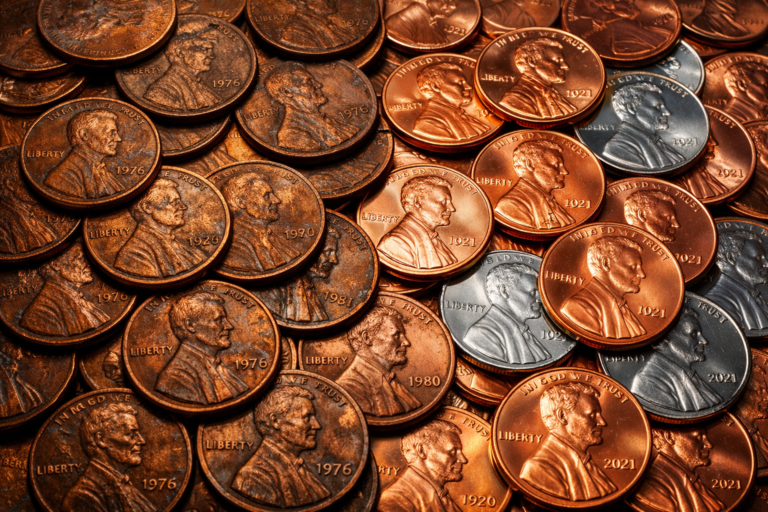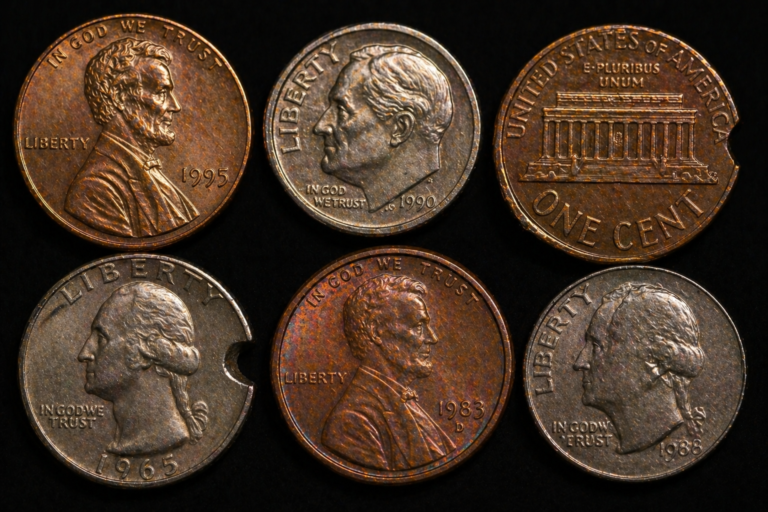
Why the 1982 Penny Exists in So Many Different Versions
Estimated reading time: 25 minutes
Most pennies from the same year look identical. But the 1982 penny is different. In fact, it exists in so many variations that even experienced collectors sometimes stop and double-check what they are looking at.
Some versions are heavier. Some have different number shapes. Some are made from copper while others contain mostly zinc. And all of these changes happened in the same year. That is what makes the 1982 penny one of the strangest transition coins in modern U.S. history.
Why 1982 Changed the Penny Forever
For decades, U.S. pennies were made mostly from copper.
That material became part of the coin’s identity. Pennies looked copper-colored, felt solid, and aged in a recognizable way.
But by the early nineteen eighties, copper prices had risen dramatically.
The cost of producing pennies was becoming a serious problem.
As a result, the U.S. Mint introduced a major change in 1982. Pennies would no longer be made primarily from copper. Instead, they would use a zinc core coated with a thin copper layer.
This transition permanently changed the structure of the penny. ([en.wikipedia.org](https://en.wikipedia.org/wiki/Penny_%28United_States_coin%29?utm_source=chatgpt.com))
The Shift From Copper to Zinc
One of the biggest reasons the 1982 penny exists in multiple versions is because both copper and zinc pennies were produced during the same year.
That means some 1982 pennies are mostly copper, while others are mostly zinc inside.
Even though they look similar at first glance, they feel different in the hand.
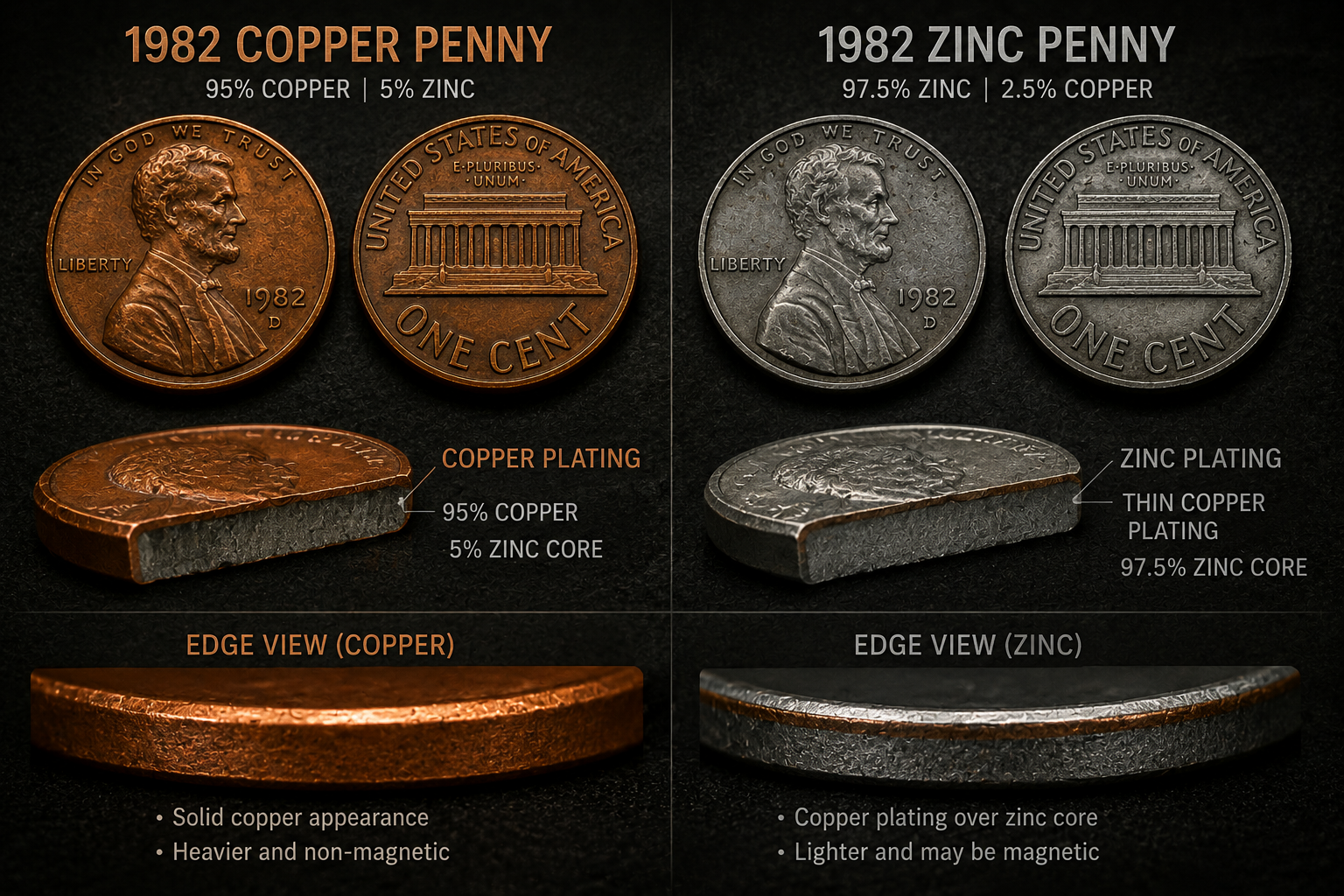
Copper pennies have a denser feel and a slightly different sound when dropped on a surface.
Zinc pennies feel lighter and often age differently over time.
If you want to understand this transition more deeply, see what happened to copper pennies after 1982.
Large Date vs Small Date Differences
The metal composition was not the only thing changing in 1982.
The shape of the date itself also changed.
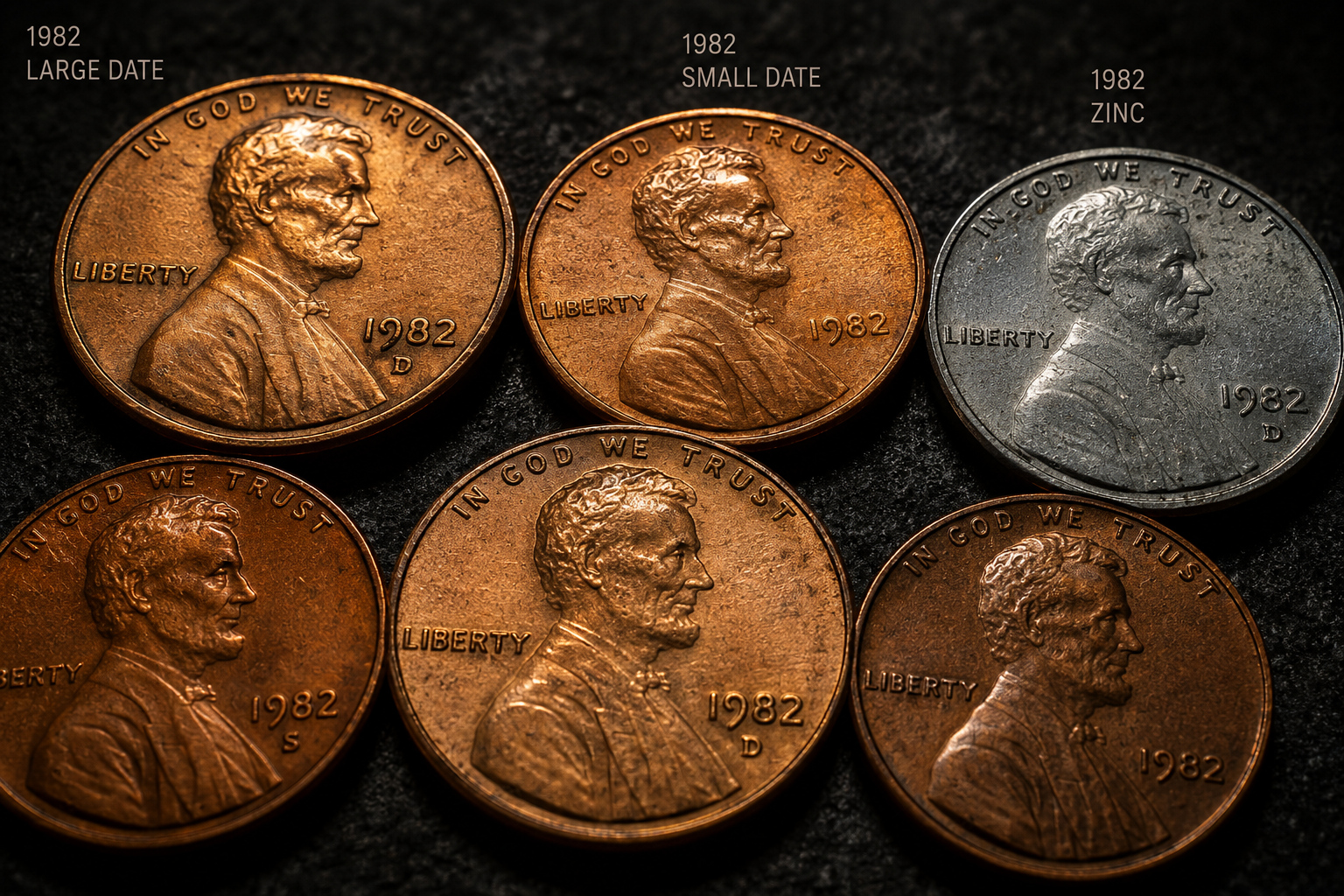
Some pennies show a large date design, while others use a smaller and more delicate style.
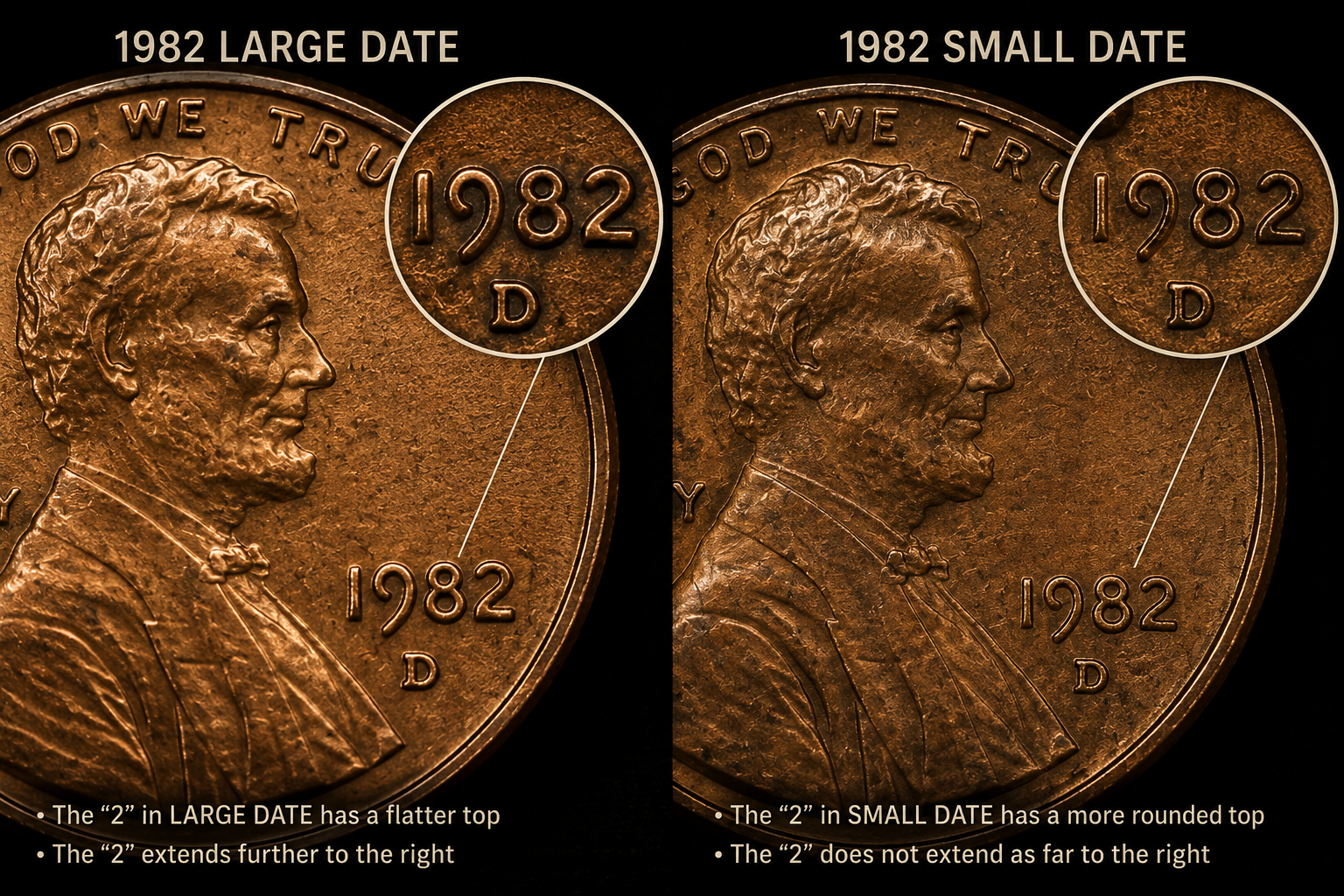
The difference becomes easiest to notice in the number “2”.
On large date coins, the numbers appear thicker and more balanced.
On small date coins, the numbers look sharper and more compressed.
Once you learn to recognize the difference, the two styles become surprisingly easy to separate.
Why So Many Versions Exist
The reason there are so many 1982 penny varieties is simple.
Multiple changes were happening at the same time.
Different mint facilities produced different combinations of:
- Copper composition
- Zinc composition
- Large date style
- Small date style
This created a confusing mix of variations within a single year.
That is why collectors often treat the 1982 penny as a transition series rather than a single coin.
The Weight Difference Most People Miss
One of the easiest ways to tell the difference between copper and zinc versions is by weight.
| Type | Approximate Weight |
|---|---|
| Copper Penny | 3.11 grams |
| Zinc Penny | 2.5 grams |
That difference may sound small, but it becomes noticeable when comparing coins side by side.
This is also why many collectors use scales when checking 1982 pennies.
You can learn more about identifying compositions in how to tell if a penny is copper or zinc.
Visual Details That Make the Coins Feel Different
There are also subtle visual differences.
Copper pennies often develop darker brown tones over time.
Zinc pennies can show bubbling, corrosion, or uneven surfaces when the copper coating becomes damaged.
These small details affect how the coins age and how they reflect light.
Even when the designs are identical, the coins can feel surprisingly different.
Why the 1982 Penny Confuses So Many People
Most years follow a predictable pattern. One year. One composition. One design.
The 1982 penny breaks that expectation completely.
Collectors suddenly have to think about metal type, date style, mint location, and weight all at the same time.
That complexity is what makes this coin so interesting.
It also explains why people continue searching for information about it decades later.
Why This Transition Still Matters
The 1982 penny represents much more than a simple design variation.
It marks the moment when the U.S. penny fundamentally changed.
The coin still looked familiar, but internally it became something completely different.
That transformation makes the 1982 penny one of the most important transition coins in modern American coinage.
It also connects directly to the broader story told in the history of U.S. copper pennies.
FAQ
Why are there so many versions of the 1982 penny
Because the U.S. Mint changed both the composition and date style during the same year.
What is the difference between large date and small date 1982 pennies
The shape and thickness of the numbers are different, especially the number 2.
How can I tell if my 1982 penny is copper or zinc
The easiest method is checking the weight.
Why did the U.S. Mint switch from copper to zinc
Because rising copper prices made pennies too expensive to produce.