Why the 1976 Quarter Looks Different From Every Other Quarter
Estimated reading time: 24 minutes
Most Washington quarters follow the same pattern. The same portrait. The same eagle on the reverse. The same general appearance year after year.
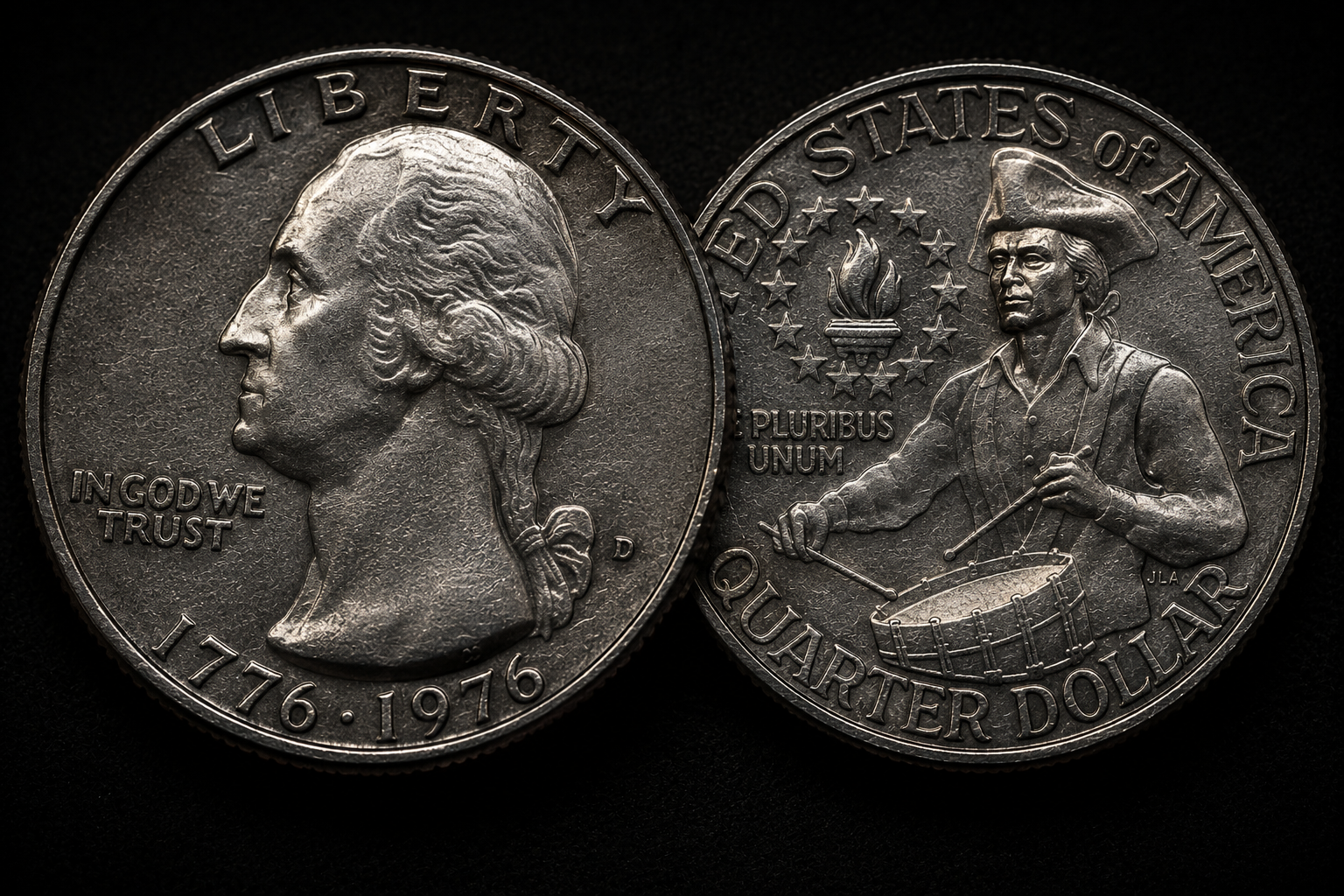
Then suddenly, the 1976 quarter appears and everything changes. The eagle disappears. Two dates appear together. A drummer replaces the traditional design. And the coin instantly feels different from every other quarter people were used to seeing.
Why the 1976 Quarter Has Two Dates
One of the first things people notice is the unusual date.
Instead of showing a single year, the coin displays “1776–1976”.
This was done to celebrate the Bicentennial of the United States, marking two hundred years since the Declaration of Independence.
Rather than creating a completely separate commemorative coin, the U.S. Mint redesigned the quarter for circulation. ([usmint.gov](https://www.usmint.gov/learn/coin-and-medal-programs/bicentennial-coins?utm_source=chatgpt.com))
That decision instantly made the coin stand out from every other quarter.
The Story Behind the Drummer Boy Design
The biggest visual difference appears on the reverse side.
For decades, Washington quarters featured an eagle design.
The 1976 version replaced that eagle with a colonial drummer boy holding a torch surrounded by stars.
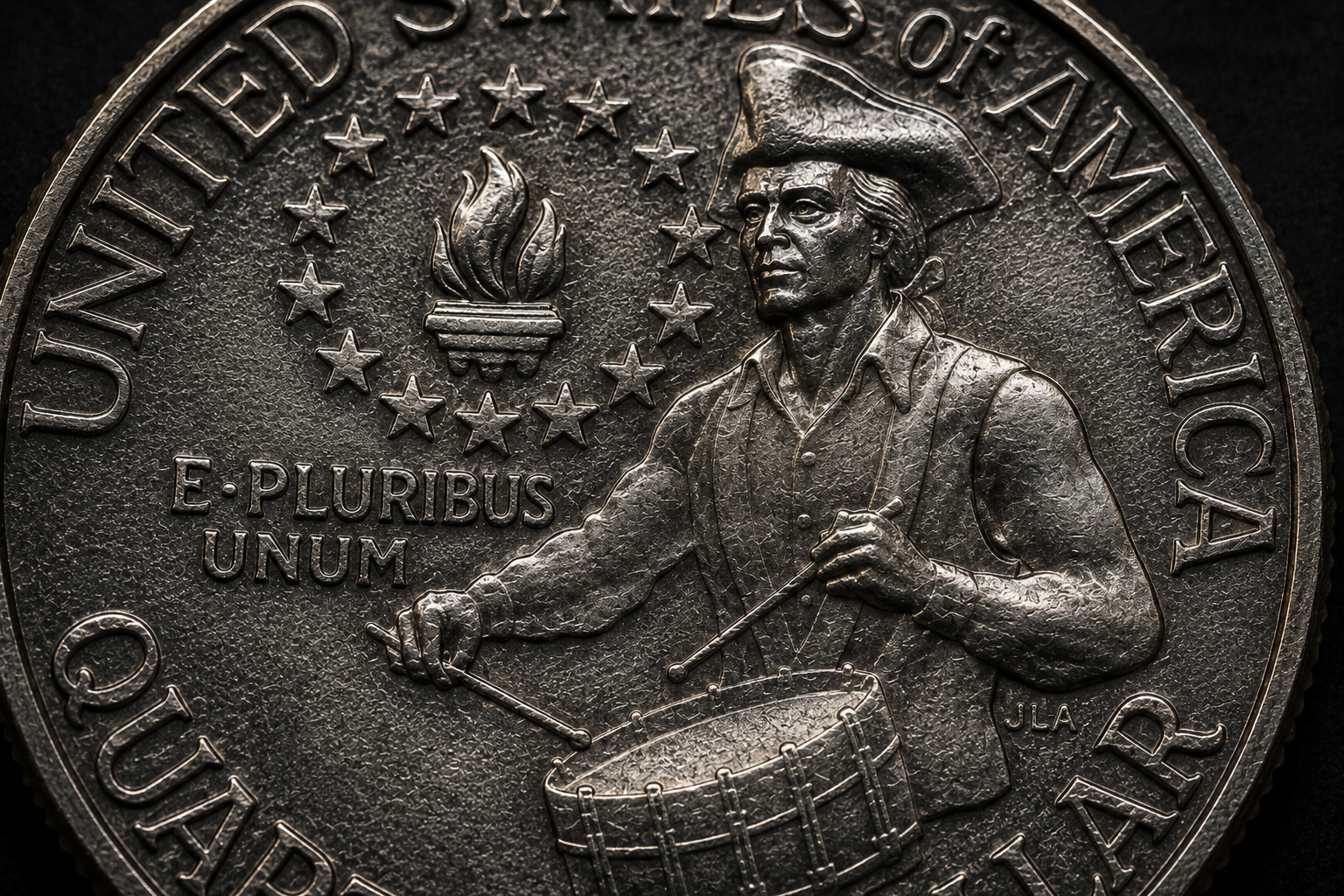
This design was created by Jack L. Ahr and chosen through a national competition. ([usmint.gov](https://www.usmint.gov/learn/coin-and-medal-programs/bicentennial-coins?utm_source=chatgpt.com))
The drummer symbolized the Revolutionary War era and connected the coin directly to early American history.
Why the Coin Feels So Different
The difference is not only visual.
The entire balance of the coin feels unusual compared to traditional quarters.
Most people were used to seeing a symmetrical eagle design on the reverse.
The drummer introduces motion, depth, and more complex detail.
This changes how the coin reflects light and how the eye moves across the surface.
Even people who know nothing about coins often notice immediately that this quarter feels “different”.
How the Reverse Design Changed Completely
The Bicentennial quarter represents one of the largest reverse design changes ever made to a circulating Washington quarter.
The traditional eagle design disappeared entirely during the celebration.
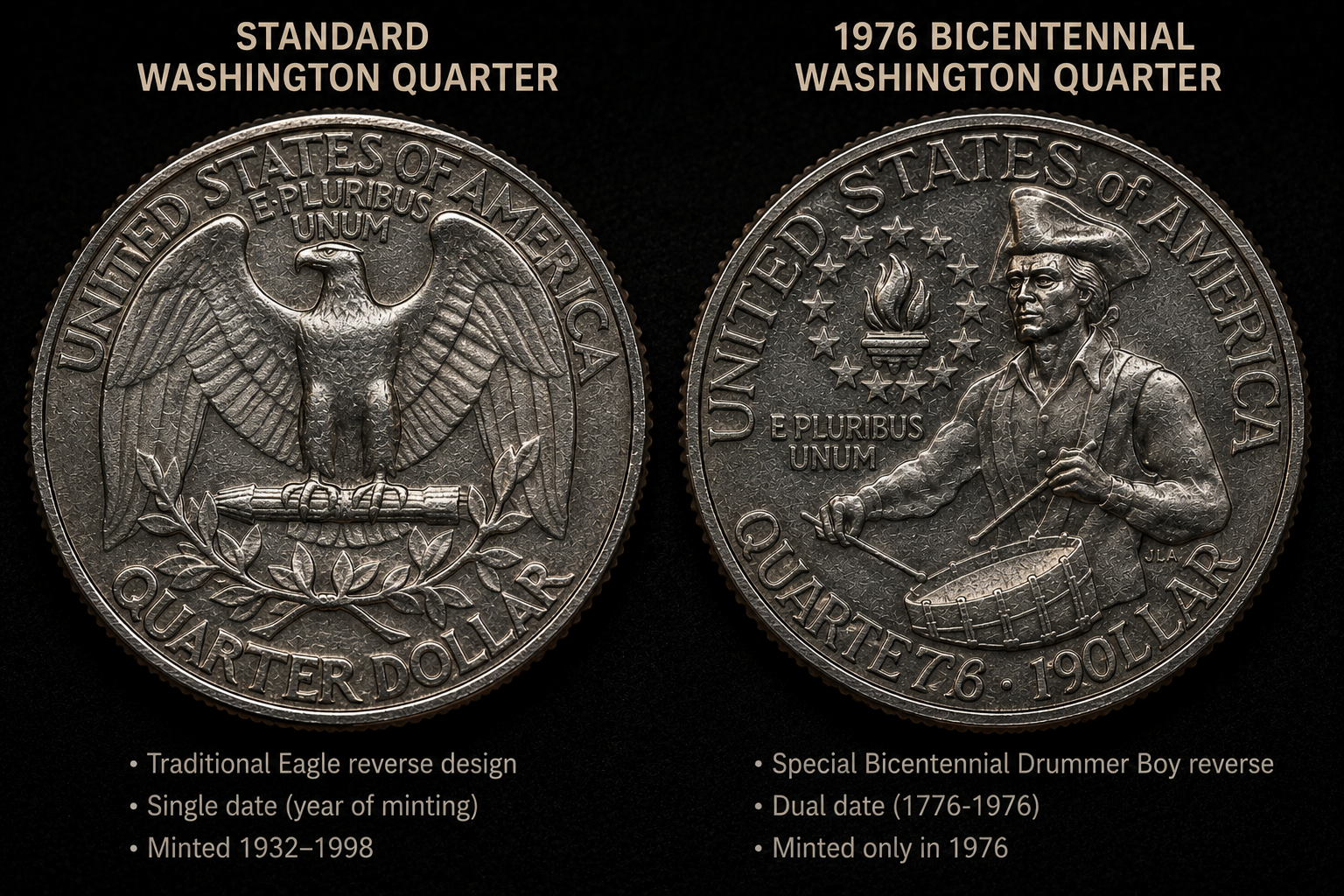
When placed beside a standard Washington quarter, the contrast becomes obvious.
The Bicentennial version appears more artistic and historical rather than formal and traditional.
Silver vs Clad Bicentennial Quarters
Another reason this coin confuses people is because not all Bicentennial quarters were made the same way.
Most circulating examples used the normal copper-nickel clad composition.
However, special collector versions were also produced using forty percent silver. ([usmint.gov](https://www.usmint.gov/learn/coin-and-medal-programs/bicentennial-coins?utm_source=chatgpt.com))
| Type | Main Composition |
|---|---|
| Circulation Version | Copper-Nickel Clad |
| Collector Version | 40 Percent Silver |
This connection to silver also links the coin to the broader history discussed in quarters made of silver.
Why So Many People Think It Is Rare
The unusual appearance of the coin causes many people to assume it is rare.
The dual date, special design, and historical theme make it feel different from normal pocket change.
For many people, it is the first quarter that ever looked “special”.
That emotional reaction helped make the coin memorable for generations.
Small Details Most People Miss
Most people focus only on the drummer boy.
But several smaller details are easy to overlook.
The torch behind the drummer represents victory and freedom.
The surrounding stars connect the design visually to the American flag and Revolutionary symbolism.
Even the spacing of the lettering was adjusted to balance the more complex reverse design.
These subtle changes are part of what makes the coin feel visually richer than a standard quarter.
If you enjoy analyzing unusual design changes, you may also like hidden details on the 1965 Washington quarter.
Why the Coin Still Matters Today
The 1976 quarter was not just a redesign.
It was a national celebration placed directly into everyday circulation.
Millions of people handled these coins during a historic moment in American culture.
That connection between history and daily life is what continues to make the Bicentennial quarter memorable decades later.
It also explains why people still stop and look twice when they see one.
FAQ
Why does the 1976 quarter have two dates
It was created to celebrate the two hundredth anniversary of American independence.
Why is there a drummer on the reverse side
The drummer symbolizes the Revolutionary War era and the Bicentennial celebration.
Are all 1976 quarters silver
No, most are clad coins, while special collector versions contain forty percent silver.
Why does the 1976 quarter look unusual
Because the reverse design, date format, and symbolism were all changed for the Bicentennial celebration.