Why Some Wheat Pennies Turn Red, Brown, or Almost Black
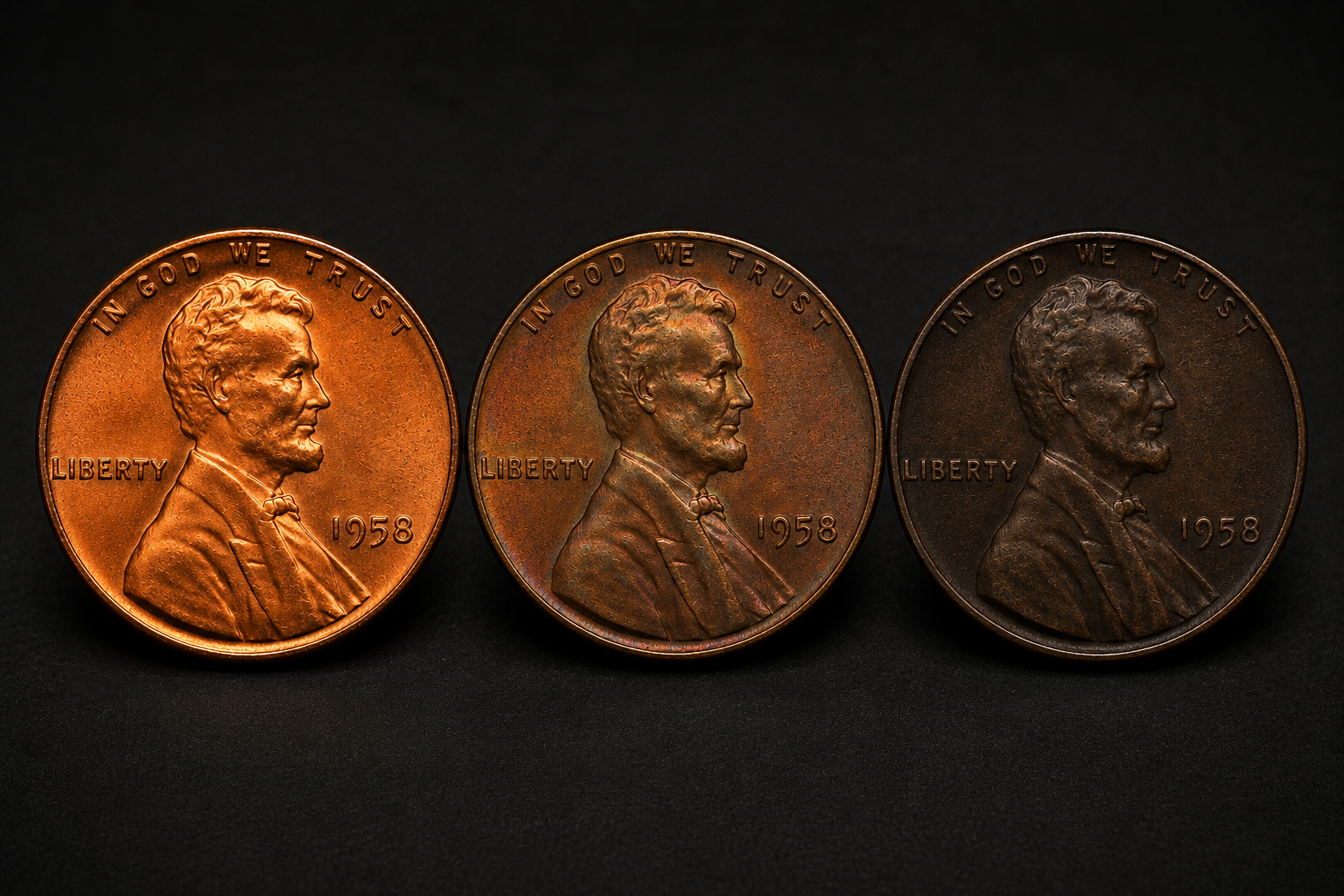
Place three Lincoln Wheat Pennies from the same era beside one another and they may barely look like the same metal. One can glow with warm red-orange color, another may be reddish brown, while a third can appear chocolate brown or so dark that it looks almost black. Yet all three may have started life with much more similar surfaces.
What happened between the moment they left the Mint and the way they look today? The answer is written across decades of exposure, storage, handling, and copper chemistry. For collectors, understanding those color changes matters because a Wheat Penny’s appearance can reveal something about its preservation, but color alone never tells the whole story.
Quick Context
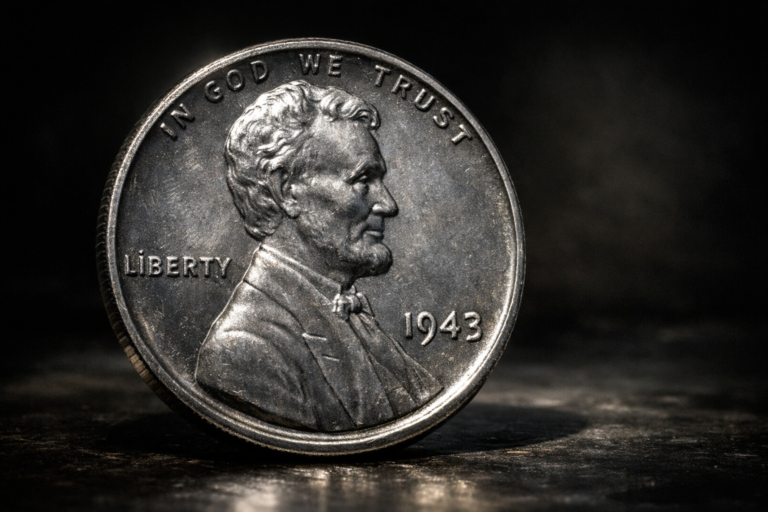
Most Lincoln Wheat cents were struck in bronze compositions dominated by copper, although important composition changes occurred during the series, most famously the zinc-coated steel cent of 1943. Copper-rich surfaces can change color as they react with their environment. Collectors commonly encounter Wheat Pennies ranging from bright reddish examples to red-brown and fully brown coins. Major grading services use the designations RD, RB, and BN when describing qualifying copper coins.
Table of Contents
- What Color Was a Wheat Penny When It Was New?
- Why Copper Changes Color
- Why Some Wheat Pennies Stay Red
- How a Penny Becomes Brown
- Why Some Pennies Look Almost Black
- What RD, RB, and BN Actually Mean
- Does Color Affect Value?
- Why Cleaning Doesn’t Bring Mint Red Back
- How Two Pennies From the Same Year Become Different
- Reality Check
- Related Stories
- Final Verdict
- Frequently Asked Questions
What Color Was a Wheat Penny When It Was New?
A freshly struck copper-rich Lincoln cent did not originally have the dark brown appearance many people associate with an old penny. Fresh surfaces could display bright reddish copper color and mint luster.
That appearance comes from the metal itself and from the microscopic surface created during striking. When a planchet is pressed between the dies under tremendous pressure, metal flows into the recessed portions of the dies and forms the coin’s design. The newly created surface reflects light in a distinctive way.
That fresh appearance begins changing once the coin enters the outside world. Copper is reactive enough that its surface does not remain visually unchanged forever.
This means the dark brown color of an old Wheat Penny is not necessarily what the coin looked like when someone first received it in change decades ago.
Why Copper Changes Color
Copper interacts with its surroundings. Oxygen, moisture, sulfur-containing compounds, contaminants, handling, and storage materials can all contribute to chemical changes at the surface.
These reactions create extremely thin layers of compounds on the metal. As those layers develop, they change the way light reflects from the surface, and the color visible to our eyes changes with them.
The process is often broadly described by collectors as toning or oxidation, although the chemistry of an individual coin can involve more than a single reaction.
Environment is crucial. A penny stored for decades in relatively stable, dry conditions can age differently from another coin exposed to humidity, skin oils, reactive paper, soil, or other contaminants.
This is why age alone cannot predict color.
Why Some Wheat Pennies Stay Red
A Wheat Penny that retains much of its original reddish copper appearance has generally experienced conditions that slowed visible surface change.
Many strongly red survivors were removed from circulation early or were never heavily circulated at all. Some spent decades in rolls, collections, or relatively protective storage where exposure to reactive substances was limited.
Preserving red color for many decades can be difficult. A coin does not need to circulate heavily to tone. Even an untouched cent can gradually change color while sitting in storage if the surrounding environment encourages chemical reactions.
This helps explain why collectors can place special emphasis on genuinely original red examples of older Lincoln cents, particularly when the surfaces are also well preserved.
Bright color alone, however, does not prove originality. A coin can look unnaturally bright because it has been cleaned, dipped, polished, or otherwise altered.
How a Penny Becomes Brown
For many Wheat Pennies, gradual surface change moves the appearance away from bright red and toward brown. Intermediate coins may show both colors at once, with reddish areas remaining around lettering or protected portions of the design while more exposed areas have become brown.
Given enough time and the right environmental conditions, brown can become the dominant appearance.
This is normal for old copper. In fact, many circulated Wheat Pennies encountered today are naturally brown.
Brown itself covers a wide visual range. A coin can be light tan, warm chocolate, deep mahogany, or very dark brown. Two coins both described as brown may therefore look dramatically different when placed side by side.
Collectors also care about how attractive and even the color appears. Smooth, natural brown surfaces can have strong eye appeal, while blotchy staining, corrosion, or damaged surfaces are a different matter.
Why Some Pennies Look Almost Black
Very dark Wheat Pennies often cause confusion. Some collectors assume that a nearly black coin must be extremely old, rare, or badly damaged. None of those conclusions can be made from darkness alone.
A copper surface can become progressively darker after long-term interaction with its environment. Under some lighting, a deeply toned brown cent may appear almost black even though brown remains visible when the coin is tilted under stronger neutral light.
But very dark color can also accompany environmental damage. Coins exposed to moisture, soil, chemicals, or corrosive conditions may develop roughness, deposits, pits, or unnatural patches along with dark coloration.
The key is therefore to examine the surface, not merely name the color.
“Almost black” is also not a standard grading-service color designation equivalent to RD, RB, or BN. It is simply a useful visual description.
What RD, RB, and BN Actually Mean
Professional grading services use color designations for qualifying copper coins. The three terms collectors encounter most frequently are Red, Red Brown, and Brown.
| Designation | Meaning | General Appearance |
|---|---|---|
| RD | Red | Retains a high proportion of the original reddish mint color |
| RB | Red Brown | Shows a mixture of original red and brown surface color |
| BN | Brown | Most of the original red appearance has transitioned to brown |
These labels should not be treated as three exact paint colors. Copper can display complex shades, and grading services evaluate the overall amount and distribution of original red color when assigning a designation.
The standards used by major services also matter. For example, PCGS describes Red as retaining at least 95 percent of the original red color, Red Brown as retaining between 5 and 95 percent, and Brown as having less than 5 percent original red color.
That is why two coins carrying the same broad designation can still look noticeably different.
Does Color Affect Value?
Yes, color can matter substantially, especially on high-grade uncirculated copper coins.
When the date, mint, grade, and other characteristics are comparable, an original Red example can command stronger collector demand than an equivalent Red Brown or Brown coin. On some scarce issues, that difference can be significant because surviving coins with extensive original red color are much harder to find.
But color does not operate independently.
A red coin with distracting spots, scratches, poor eye appeal, or altered surfaces is not automatically more desirable than an attractive naturally toned example. Rarity, grade, strike, surface preservation, authenticity, and overall eye appeal all contribute to how collectors evaluate a coin.
The details on a Lincoln Wheat Penny need to be considered together rather than reducing the entire coin to a single characteristic.
Why Cleaning Doesn’t Bring Mint Red Back
A dark Wheat Penny can tempt an owner to reach for metal polish, vinegar, an abrasive cloth, or another cleaning method. If the goal is to restore the original mint-red appearance, this is a serious mistake.
Original color is part of the coin’s surviving surface. Once decades of chemical change have occurred, removing the darkened outer layer does not reverse time. It removes or alters material from the surface.
A cleaned cent may become brighter, but bright is not the same as original.
Cleaning can also leave hairline scratches, unnatural color, patchy surfaces, or a polished appearance that experienced collectors recognize quickly.
For collectible coins, the safest approach is generally to leave the surface alone. If a potentially valuable coin has contamination that may require professional conservation, that is different from ordinary household cleaning.
How Two Pennies From the Same Year Become Different
Imagine two Wheat Pennies struck at roughly the same time. One enters circulation, passes through thousands of hands, spends years in humid environments, and eventually sits in a drawer. The other is placed into a roll shortly after production and remains in relatively stable storage for decades.
Eighty years later, their dates may match, but their surfaces can tell completely different stories.
One may be smooth and brown from circulation. The other may retain reddish color and mint luster. Another example from the same year could have spots, fingerprints, or dark environmental toning caused by entirely different storage conditions.
This is why two Wheat Pennies from the same year can look completely different. The date tells you when the coins were struck. It does not tell you what happened to them afterward.
Some particularly fresh copper cents can even develop a vivid orange appearance under certain lighting. We examine that separately in What Makes Some Wheat Pennies Look Almost Orange.
Reality Check
Dark color does not automatically mean a Wheat Penny is rare, and bright red color does not automatically mean it is valuable. Color is only one part of evaluating a copper coin.
A naturally dark brown cent can be completely normal, while a bright coin may have been cleaned or altered. Likewise, an almost black appearance can result from deep toning or may accompany genuine environmental damage. The underlying surface must be examined before drawing conclusions.
RD, RB, and BN are numismatic color designations. “Almost black” is not a fourth official category.
Final Verdict
The changing colors of Lincoln Wheat Pennies are the visible result of decades of history happening at the surface of the metal. Copper that once appeared bright and reddish can gradually become red-brown, chocolate brown, or extremely dark depending on its environment and preservation.
That makes color useful, but it must be interpreted carefully. A red Wheat Penny may have exceptional original surfaces or may have been altered. A brown penny may be perfectly natural and attractive. An almost black coin may simply be deeply toned, or its darkness may accompany environmental damage.
The most interesting part is that every surface followed its own path. The Mint made the coins, but the decades that followed created the colors collectors see today.
Frequently Asked Questions
Why do Lincoln Wheat Pennies turn brown?
Copper-rich surfaces react gradually with substances in their environment. Over time, these reactions change how the surface reflects light and can transform the original reddish appearance into brown tones.
What does RD mean on a Wheat Penny?
RD means Red. It is a grading-service designation used for qualifying copper coins that retain a very high proportion of their original red mint color.
What does RB mean?
RB means Red Brown. It describes a copper coin showing a mixture of original reddish color and areas that have transitioned toward brown.
What does BN mean?
BN means Brown. It is used when little of the coin’s original red color remains and brown has become the dominant appearance.
Is an almost black Wheat Penny rare?
Not because of its color alone. Very dark toning can occur naturally, while some dark coins have environmental damage. The date, mint mark, variety, grade, surfaces, and authenticity are much more important for determining rarity.
Are red Wheat Pennies worth more?
They can be. For otherwise comparable high-grade copper coins, original Red examples often receive stronger collector demand because retaining extensive original color becomes increasingly difficult with age. The effect varies greatly by date, rarity, grade, and overall quality.
Can I clean a brown Wheat Penny to make it red?
You should not. Cleaning may make copper brighter, but it cannot recreate the original Mint surface. Abrasive or chemical cleaning can permanently alter the coin and reduce its collector appeal.
Why can two Wheat Pennies from the same year have different colors?
Their environments after leaving the Mint may have been completely different. Circulation, humidity, storage materials, handling, contaminants, and decades of exposure can produce very different surfaces on coins struck in the same year.