What Makes Some Wheat Pennies Look Almost Orange?
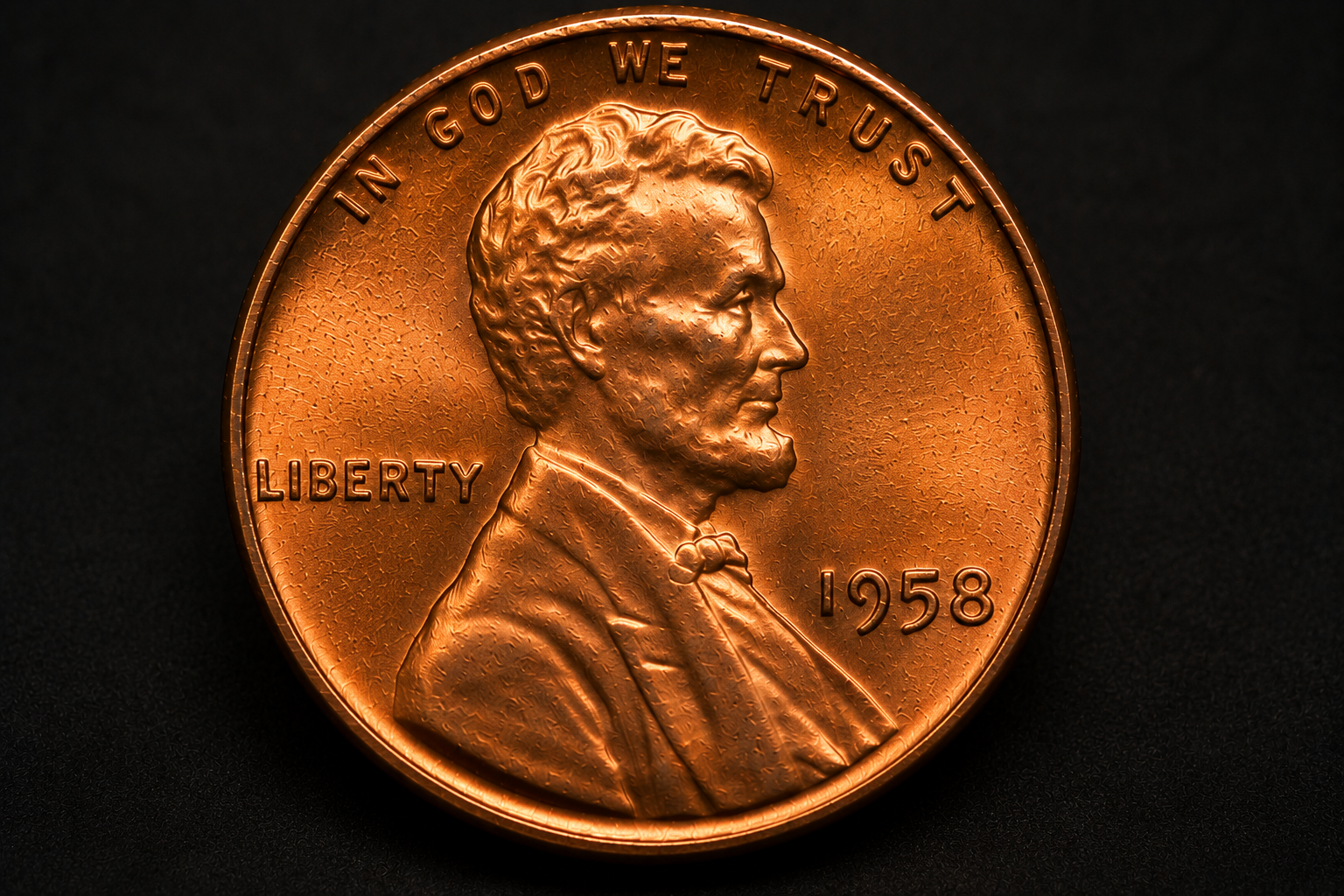
A Lincoln Wheat Penny can be 70, 90, or even more than 100 years old and still appear surprisingly orange. Put it beside an ordinary brown Wheat Penny and the contrast can be dramatic. The brighter coin may look newer, warmer, and almost too colorful for its age.
But “orange” is not a secret fourth category of Wheat Penny, and it does not automatically mean the coin is rare. What you are seeing can result from preserved copper color, original mint luster, gradual toning, and the way light reflects from the surface. In other cases, an unusually bright orange appearance can be a warning that the surface has been cleaned or altered. The challenge is learning how to tell those possibilities apart.
Quick Context
Most Lincoln Wheat cents were struck in bronze compositions dominated by copper, with the famous 1943 zinc-coated steel cents being the major exception. Fresh copper-rich coin surfaces can show warm reddish and orange-red tones. As those surfaces react with their environment, they commonly become red-brown and eventually brown. Professional grading services describe qualifying copper coins using RD, RB, and BN. “Orange” is a visual description, not a separate grading designation.
Table of Contents
- Fresh Copper Was Never Dark Brown
- Where the Orange Appearance Comes From
- Mint Luster Can Make Orange Look Stronger
- How Can That Color Survive for Decades?
- Does Orange Mean RD?
- Why Lighting Can Completely Change the Color
- Orange Can Be Part of the Toning Process
- When Bright Orange Becomes a Warning Sign
- Are Orange Wheat Pennies More Valuable?
- How to Examine an Orange Wheat Penny
- Reality Check
- Related Stories
- Final Verdict
- Frequently Asked Questions
Fresh Copper Was Never Dark Brown
One reason orange Wheat Pennies look strange today is that collectors are surrounded by old brown copper coins. After decades of circulation and environmental exposure, brown feels like the natural color of an old cent.
It was not necessarily the color when the coin was struck.
Fresh copper-rich surfaces can have a much warmer appearance, ranging through reddish copper, orange-red, and other bright copper tones. The exact appearance depends on the metal, surface, and lighting.
When the dies strike a planchet, the metal flows under pressure and develops microscopic surface characteristics that reflect light in a distinctive way. On a well-preserved coin, that fresh surface can remain remarkably vibrant.
So when an old Wheat Penny appears orange, the first possibility is surprisingly simple: you may be seeing an appearance related to the copper color that was much more common when the coin was new.
Where the Orange Appearance Comes From
There is no single pigment inside a Wheat Penny that suddenly turns orange. What we perceive as color depends on the surface and how it interacts with light.
A relatively well-preserved copper surface can reflect warm red-orange tones. Small changes in surface chemistry can shift those tones, while lighting can emphasize one part of the color more than another.
This is why collectors should be careful with simple descriptions. One person may call a coin red. Another may call the same coin orange-red. A photograph may make it look almost orange even though the physical coin appears more reddish under neutral light.
“Orange” is therefore best treated as an observation about appearance, not a diagnosis of the coin’s condition.
Mint Luster Can Make Orange Look Stronger
Color becomes even more interesting when original mint luster is present.
Mint luster comes from the microscopic surface created during striking. Under directional light, an uncirculated coin can display a flowing reflection that appears to move around the surface as the coin is tilted.
That moving reflection can make copper look dramatically different from one angle to another. Warm highlights may become bright orange-red, while another part of the same coin looks darker or more reddish.
Luster does not actually add orange coloring to the metal. It changes how light reaches your eyes from the coin’s surface.
This distinction is important because a coin can be bright without having original luster. Polishing can create shine too, but polished shine and natural mint luster are not the same thing.
On an original high-grade Wheat Penny, the combination of preserved copper color and mint luster can produce the vivid appearance that makes some examples look almost orange.
How Can That Color Survive for Decades?
Copper reacts with its surroundings, so preserving substantial original color for many decades requires favorable conditions.
A coin that circulated heavily was repeatedly handled and exposed to different environments. Friction also disrupted its original surface. A coin saved early in its life had a better opportunity to preserve its original appearance.
Storage matters just as much. Moisture, contaminants, reactive materials, fingerprints, and other environmental factors can accelerate visible surface changes.
A Wheat Penny that spent decades in relatively stable conditions can therefore look dramatically different from another example struck in the same year.
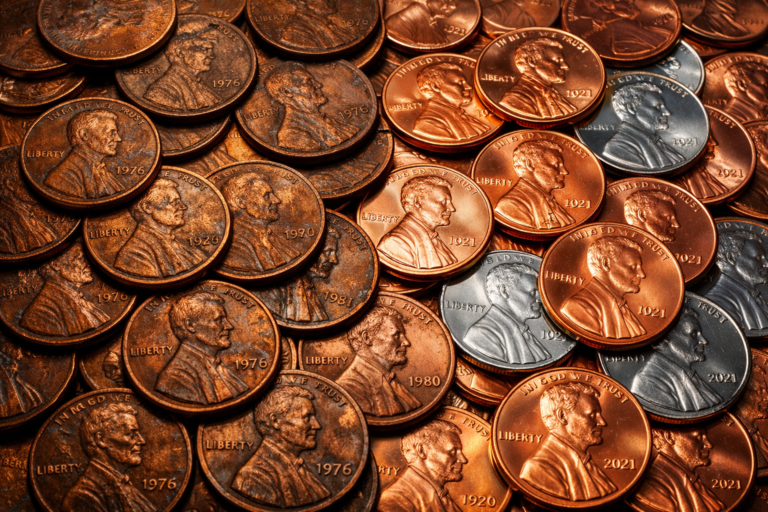
This connects directly with why two Wheat Pennies from the same year can look completely different. The Mint date records only the beginning of the story. Preservation determines much of what collectors see today.
Does Orange Mean RD?
No, and this distinction is essential.
Major grading services use three familiar color designations for qualifying copper coins: RD for Red, RB for Red Brown, and BN for Brown.
| Designation | Meaning | General Idea |
|---|---|---|
| RD | Red | A high proportion of original red copper color remains |
| RB | Red Brown | Original reddish color and brown toning are both present |
| BN | Brown | Brown has become the dominant appearance |
There is no standard “OR” designation for Orange.
A coin that looks orange-red to your eye may qualify as RD if its surfaces meet the grading service’s standards. Another orange-looking coin might be RB. A photograph alone may not accurately represent either one.
This is one reason collectors should avoid assigning a professional color designation from a single phone image.
Why Lighting Can Completely Change the Color
If you want to understand an orange Wheat Penny, change the light before you change your opinion.
Warm household bulbs can make copper appear more orange or golden. Cooler lighting can reduce that warmth. Strong directional lighting can intensify reflective highlights, while flat lighting can make the same coin appear darker and duller.
Photography introduces additional variables. A smartphone can automatically adjust white balance, exposure, contrast, and other settings. Those adjustments can change the apparent copper color considerably.
This explains why a coin purchased online may look different when it arrives. It also explains why two photographs of the same coin can seem to show two different colors.
For a more useful examination, view the coin under a neutral light and gently change its angle. Do not rely entirely on one photograph or one fixed viewing position.
Orange Can Be Part of the Toning Process
Copper color does not always move from bright red directly to dark brown in one clean step.
Aging surfaces can display mixtures of reddish, orange, tan, and brown tones. Different parts of the same coin may also change at different rates depending on exposure and surface conditions.
That is why an older Wheat Penny can show orange-red around protected areas while other portions are already turning brown.
As discussed in our guide to why Wheat Pennies change color, the final appearance is the result of decades of interaction between copper and its environment.
An orange tone can therefore be completely natural. It does not automatically mean anything unusual happened at the Mint.
When Bright Orange Becomes a Warning Sign
Unfortunately, not every bright copper Wheat Penny preserved that appearance naturally.
Old cents are frequently cleaned by people hoping to make them look newer. Abrasive rubbing, metal polish, acidic household products, and other treatments can remove or disturb the naturally aged surface.
The result can sometimes be an extremely bright copper or orange appearance.
That does not mean every bright orange coin is cleaned. Color alone cannot establish that conclusion. Instead, examine the entire surface.
Possible warning signs include fine hairlines, an unnaturally uniform brightness, polished-looking fields, unusual color patterns, or a surface that looks bright but lacks convincing original mint luster.
Context matters too. If a heavily worn coin has an aggressively bright surface, the combination deserves closer examination. Heavy circulation wear and untouched original mint-red appearance are not normally expected to coexist in the same way they would on a well-preserved uncirculated coin.
The safest rule is simple: never clean a Wheat Penny in an attempt to create a brighter copper color. Cleaning cannot recreate the microscopic original surface produced during striking.
Are Orange Wheat Pennies More Valuable?
Not simply because they look orange.
For collectible copper coins, original color can matter considerably, especially in higher grades. An older Lincoln cent retaining substantial original red color may be much scarcer in that state of preservation than a typical brown example of the same issue.
But value depends on far more than visual warmth.
Collectors consider the date, mint mark, variety, grade, original surfaces, color designation, strike, marks, eye appeal, and overall rarity. A common Wheat Penny photographed under warm light does not become valuable because it appears orange.
Likewise, an artificially brightened coin can lose collector appeal even if its color initially looks impressive.
Originality matters more than simple brightness.
How to Examine an Orange Wheat Penny
Instead of immediately asking whether an orange cent is rare, examine what is actually creating the appearance.
| What You See | Possible Explanation |
|---|---|
| Warm red-orange color with natural flowing luster | Potentially well-preserved original copper surface |
| Color changes noticeably as the coin is tilted | Interaction between surface luster and lighting |
| Coin looks orange mainly in photographs | Lighting, white balance, exposure, or camera processing |
| Orange mixed naturally with brown areas | Possible normal progression toward red-brown toning |
| Extremely bright, uniform surface with fine lines | Possible cleaning or surface alteration |
| Bright orange color on a clearly worn coin | Requires closer examination for possible surface alteration |
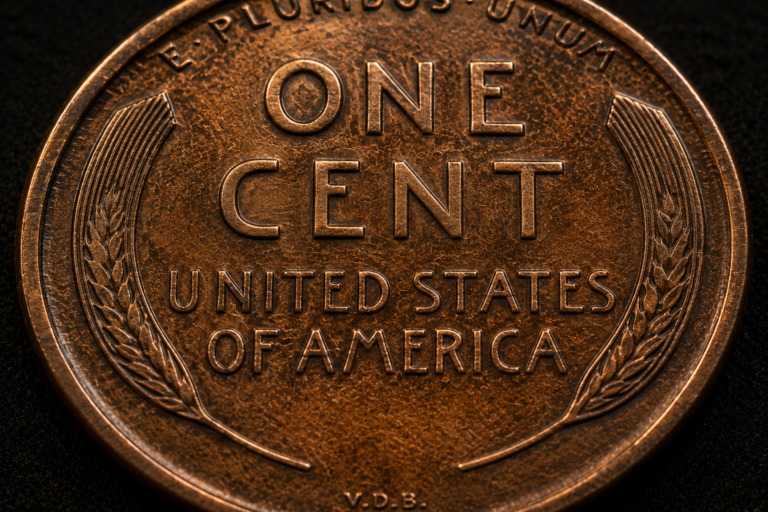
Look beyond color. Examine Lincoln’s high points, the fields, lettering, wheat ears, and other details on a Lincoln Wheat Penny. Watch how light moves across the surface and look for evidence of wear, marks, cleaning, or environmental problems.
The goal is not to find the brightest coin. It is to understand whether the surface appears consistent with the coin’s history and state of preservation.
Reality Check
Orange is a clue, not a grade.
An orange-looking Wheat Penny is not automatically rare, valuable, uncirculated, or professionally classifiable as RD. The appearance may result from original copper color, mint luster, natural toning, lighting, camera settings, or surface alteration.
The most useful evaluation considers color together with luster, wear, surface texture, marks, strike, and originality. A single photograph, especially under warm lighting, can easily give the wrong impression.
Final Verdict
A Wheat Penny can look almost orange because copper does not begin life as the dark brown metal we often associate with old cents. Well-preserved copper surfaces can retain warm reddish and orange-red tones for decades, and original mint luster can make those colors appear even stronger as the coin moves under light.
But appearance must be interpreted carefully. Lighting and photography can exaggerate orange tones, natural toning can create transitional colors, and cleaning can produce artificial brightness that has nothing to do with original preservation.
That is why the most important question is not, “Why is this penny orange?” It is, “What does the entire surface tell me?”
When color, luster, wear, texture, and originality are examined together, that unusual orange Wheat Penny becomes much easier to understand.
Frequently Asked Questions
Why does my Wheat Penny look orange?
A Wheat Penny may look orange because preserved reddish copper surfaces can produce warm orange-red tones, especially when original mint luster interacts with directional light. Toning, photography, and surface alteration can also affect the appearance.
Is orange an official Wheat Penny color designation?
No. Major grading services use RD for Red, RB for Red Brown, and BN for Brown on qualifying copper coins. Orange is an informal visual description rather than a separate grading category.
Can a 100-year-old Wheat Penny still have original red-orange color?
Yes. Some older copper coins can retain substantial original color when they were preserved under favorable conditions. Such preservation becomes increasingly challenging over long periods, which is why originality is important to collectors.
Does an orange Wheat Penny mean it is uncirculated?
No. Color alone cannot establish whether a coin is uncirculated. The surfaces must be examined for circulation wear and the presence or absence of original mint luster.
Why does my Wheat Penny look orange in a photo but brown in person?
Lighting, camera white balance, exposure, reflections, and automatic image processing can all alter the apparent color of copper. Neutral lighting and viewing the physical coin from multiple angles provide a better basis for evaluation.
Can cleaning make a Wheat Penny look orange?
Yes. Cleaning or other surface alteration can expose brighter-looking copper or change the coin’s color. However, orange color by itself does not prove cleaning. Other surface evidence must also be considered.
Are orange Wheat Pennies valuable?
Not because they are orange. Value depends on the specific date, mint mark, variety, grade, originality, surface quality, color designation, rarity, and collector demand.
Should I clean a brown Wheat Penny to make it orange again?
No. Cleaning cannot restore the original Mint surface and may permanently alter the coin. A naturally brown original coin is generally preferable to one made artificially bright through improper cleaning.