2026 Penny: Why the U.S. Mint Is Still Making Cents After Production Ended
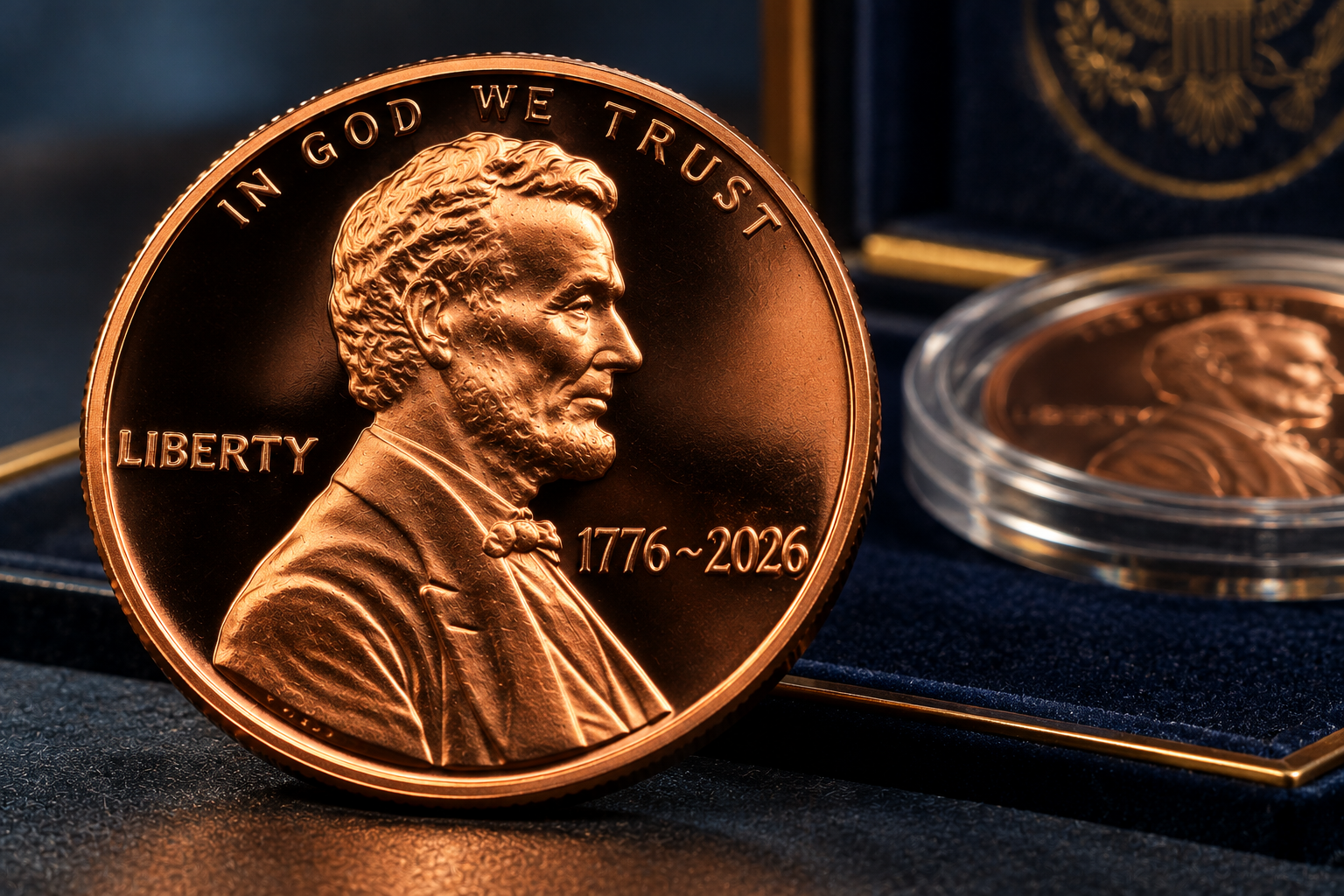
Updated October 2026: This article distinguishes the end of circulating penny production from the continued production of collectible Lincoln cents.
The U.S. Mint struck its final circulating penny on November 12, 2025. After more than two centuries, production of the one-cent coin for everyday commerce had come to an end. But something unexpected happened next: the Mint continued making Lincoln cents dated 2026.
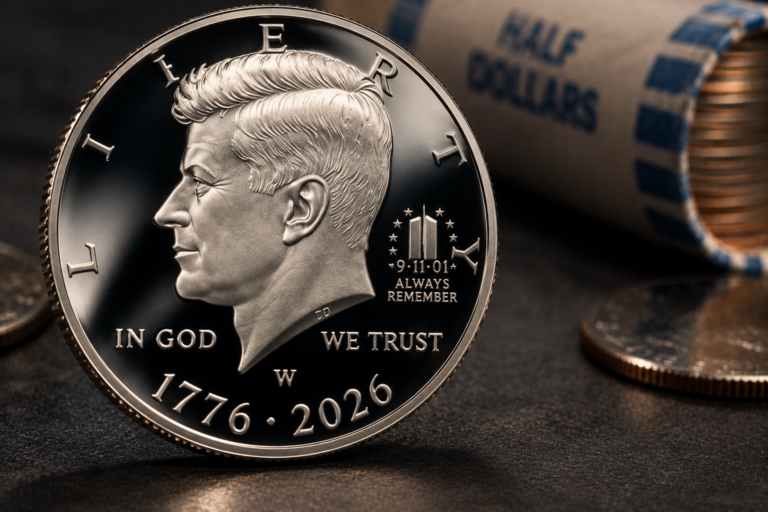
These are not ordinary pennies being produced for banks and cash registers. They belong to the Mint’s collector program, and their special 1776 ~ 2026 anniversary date makes them instantly different from the last circulating pennies of 2025. So why does a 2026 penny exist, which versions can collectors obtain, and does the end of circulating production make these coins rare?
Quick Answer: Why Does a 2026 Penny Exist?
The United States Mint ended penny production for general circulation in November 2025, but it did not discontinue every form of Lincoln cent production.
For 2026, the Mint continues producing pennies specifically for numismatic products, including annual Proof and Uncirculated Coin Sets.
- Last circulating penny production: November 12, 2025
- 2026 pennies: Produced for collectors
- Special date: 1776 ~ 2026
- Obverse: Abraham Lincoln
- Reverse: Union Shield
- Standard composition: 97.5% zinc and 2.5% copper
- Weight: 2.50 grams
The important distinction: Ending production for circulation does not mean the Mint is legally or physically unable to produce additional pennies for collectors.
Table of Contents
- What Actually Happened to the Penny in 2025?
- Why Is the Mint Still Making Pennies in 2026?
- What Makes the 2026 Lincoln Penny Different?
- Which 2026 Penny Mint Marks Exist?
- How Can Collectors Get a 2026 Penny?
- Can You Find a 2026 Penny in Pocket Change?
- 2025 vs. 2026 Lincoln Penny
- Is the 2026 Penny Made of Copper?
- Is the 2026 Penny Rare or Valuable?
- Why This Change Matters to Collectors
- Reality Check
- Final Verdict
- Frequently Asked Questions
What Actually Happened to the Penny in November 2025?
On November 12, 2025, the United States Mint held a ceremonial final strike for the circulating one-cent coin at its Philadelphia facility.
That event marked the end of a denomination that had been part of American daily life since the earliest years of federal coinage.
The penny had become increasingly expensive to manufacture relative to its face value. In its final years as a circulating product, producing and distributing a one-cent coin cost substantially more than one cent.
At the same time, changing payment habits and the enormous quantity of existing pennies raised questions about whether the country needed to keep manufacturing additional pieces for commerce.
The decision addressed future production, not the legal status of pennies already in existence.
Existing pennies remain legal tender. Ending production does not suddenly make the billions of Lincoln cents already held by Americans invalid or unusable.
It also does not mean that every penny disappeared from circulation in November 2025. Coins already in circulation can continue changing hands, and banks and businesses may still handle existing supplies.
That distinction becomes especially important when examining what the Mint decided to do in 2026.
Why Is the U.S. Mint Still Making Pennies in 2026?
The answer lies in two different functions of the United States Mint.
One function is manufacturing coins for general circulation. These coins enter the monetary system through established distribution channels and are intended to support everyday transactions.
The other function is producing numismatic coins for collectors. These include Proof coins, Uncirculated Coin Sets, commemorative issues, and other specially marketed products.
The Mint ended the first activity for the penny but continued the second.
That is why a genuine 2026 Lincoln cent can exist even though the last circulating cent was struck in 2025.
A 2026 penny is not evidence that the Mint secretly restarted normal production. Nor does it automatically indicate a mint error or an unauthorized coin.
It is part of a continuing collector program.
There is also a historical reason 2026 is an especially notable year for this transition: the United States is celebrating the 250th anniversary of independence, and its coinage carries special anniversary features.
What Makes the 2026 Lincoln Penny Different?
At first, a 2026 Lincoln cent may look familiar. Abraham Lincoln remains on the obverse, and the Union Shield remains on the reverse.
The most immediately noticeable change is the date.
Instead of displaying only 2026, the anniversary issue carries the dual date 1776 ~ 2026, connecting the coin to the Semiquincentennial celebration.
This does not mean the penny was manufactured in 1776. It is a commemorative date format recognizing 250 years since American independence.
It is also not a doubled date, a repunched date, or another minting error. The anniversary inscription is intentional.
The Lincoln portrait itself has a much longer history. Victor David Brenner’s original design first appeared on the cent in 1909, replacing the Indian Head design.
The reverse changed significantly in 1959 when the Wheat Ears design gave way to the Lincoln Memorial. You can explore that transition in our article on how the Lincoln cent changed in 1959.
Another major reverse redesign followed in 2010 with the introduction of the Union Shield, which continues on the 2026 collector penny.
The result is an unusual combination: a familiar Lincoln portrait, a modern shield reverse, and a date marking both America’s anniversary and a new phase in the denomination’s history.
Which 2026 Penny Mint Marks Exist?
For collectors, the mint mark is one of the most useful details on a 2026 Lincoln cent. It helps distinguish where the coin was produced and, together with its finish, which type of collector issue it represents.
The U.S. Mint’s 2026 annual-set program includes Proof coins from San Francisco and Uncirculated coins associated with Philadelphia and Denver.
There is one important detail to remember: Philadelphia cents traditionally do not carry a P mint mark, apart from the special 2017-P anniversary issue. A Philadelphia cent without a mint mark is therefore not automatically an error.
| 2026 Penny Version | Mint | Identifying Feature | Collector Product |
|---|---|---|---|
| 2026 Philadelphia cent | Philadelphia | Normally no mint mark | Uncirculated Coin Set |
| 2026-D cent | Denver | D mint mark | Uncirculated Coin Set |
| 2026-S Proof cent | San Francisco | S mint mark and Proof finish | Proof Set and Silver Proof Set |
Collectors should not confuse these collector-set coins with ordinary circulating issues. Even when a 2026 cent resembles an earlier business-strike penny, its original distribution channel is different.
The Mint has not identified a standard 2026-W Lincoln cent as part of these annual sets. Claims about unusual mint marks should be checked against official Mint documentation rather than social media photographs alone.
How Can Collectors Get a Genuine 2026 Penny?
The most straightforward method is through the United States Mint’s official annual collector sets.
These products provide an established source of authentic coins and allow collectors to identify the original issue and packaging.
2026 Semiquincentennial Proof Set
The regular 2026 Proof Set contains ten coins struck at San Francisco, including an S-mint Lincoln cent. The coins feature special Proof surfaces and are packaged as an official collector product.
The set also contains the anniversary quarters, Emerging Liberty dime, Enduring Liberty half dollar, Jefferson nickel, and Native American dollar.
Our guide to the 2026 U.S. Proof Set coins explains how those designs fit into the 250th anniversary program.
2026 Semiquincentennial Silver Proof Set
The Silver Proof Set also includes a Lincoln cent from San Francisco.
Despite the product’s name, the penny itself is not a silver coin. The set’s silver specifications apply to the designated silver denominations, including the dime, quarters, and half dollar.
That distinction matters when comparing products or evaluating descriptions from third-party sellers.
2026 Uncirculated Coin Set
The Uncirculated Coin Set offers a different collecting experience, featuring coins from Philadelphia and Denver rather than San Francisco Proof strikes.
For Lincoln cent collectors, this provides an opportunity to obtain 2026 cents associated with those two Mint facilities without confusing them with the S-mint Proof version.
Availability and release schedules can change. Collectors should consult the official U.S. Mint annual sets page for current product details.
Can You Find a 2026 Penny in Pocket Change?
Not through the normal production-and-distribution process used for earlier circulating pennies.
The Mint stopped producing cents for general circulation in 2025. Its 2026 pennies are made for collector products, not shipped as ordinary new penny supplies to the Federal Reserve for routine circulation.
However, there is a subtle distinction.
A genuine 2026 collector penny could theoretically enter everyday circulation if someone removed it from its original set and spent it.
That would not mean the Mint had resumed circulating penny production. It would simply mean an individual coin originally sold to collectors had later been introduced into commerce by its owner.
These are two very different situations.
If someone reports finding a 2026 penny in change, the first step should be to examine the coin carefully and verify its date, design, and mint characteristics.
A photograph or unusual claim alone is not enough to establish that a new circulating issue exists.
2025 vs. 2026 Lincoln Penny: What’s Different?
The contrast between these two dates captures the significance of the transition.
| Feature | 2025 Lincoln Penny | 2026 Lincoln Penny |
|---|---|---|
| Circulating production | Final year | Not produced for general circulation |
| Date format | 2025 | 1776 ~ 2026 |
| Lincoln portrait | Yes | Yes |
| Union Shield reverse | Yes | Yes |
| Collector-set production | Yes | Yes |
| Historical distinction | End of circulating penny production | Continuation as a collector-only issue |
For someone assembling a date-and-mint-mark collection of Lincoln cents, the change is more significant than a routine new date.
The 2025 cent represents the end of one production era. The 2026 cent represents the beginning of another, at least under the Mint’s current program.
Is the 2026 Penny Made of Copper?
The 2026 Lincoln cent retains the familiar modern copper-plated zinc composition.
Its standard specifications are approximately 97.5% zinc and 2.5% copper, with a weight of 2.50 grams.
This is different from the predominantly copper cents produced before the composition change in 1982.
The copper-colored appearance can be misleading. Although the outer surface looks like copper, most of the coin’s mass is zinc.
The 2026 anniversary date does not mean the penny was struck in solid copper, silver, or another special precious metal.
Collectors should also avoid treating differences in brightness or color as evidence of a new composition. Lighting, surface preservation, fingerprints, and environmental exposure can change how a copper-plated coin appears.
Proper identification depends on documented specifications and physical diagnostics, not color alone.
Is the 2026 Penny Rare or Valuable?
The 2026 penny has an unusual distribution status, but that does not automatically make every example rare.
A coin can be historically significant without being difficult to obtain. Conversely, a coin with a relatively large original production quantity can become challenging to find in a particular condition.
Several factors will influence how collectors view 2026 cents over time.
Production quantities: The number of coins made for each collector product matters, but product limits should not automatically be treated as total coin mintages across every available set.
Collector demand: Interest may come from Lincoln cent specialists, modern U.S. coin collectors, and people assembling Semiquincentennial collections.
Condition: Proof quality, original surfaces, contact marks, and proper storage can distinguish individual examples.
Original packaging: Some collectors prefer complete Mint sets, while others collect individual coins. Those are different collecting markets.
It is too early to make dependable claims about the long-term value of the 2026 penny.
The most useful approach is to understand what the coin is, how it was issued, and how it differs from ordinary circulation strikes before considering market prices.
Why the 2026 Penny Matters to Lincoln Cent Collectors
The Lincoln cent has survived remarkable changes since its introduction in 1909.
Its original Wheat Ears reverse lasted until 1958. The Lincoln Memorial appeared in 1959. The Bicentennial brought four different reverse designs in 2009, followed by the Union Shield in 2010.
Collectors have also followed changes in metal composition, mint marks, surface color, and production methods.
The 2026 transition is different because it changes the coin’s relationship with everyday commerce.
For generations, people could build Lincoln cent collections by examining pocket change, searching rolls, or saving coins from circulation.
With 2026, the denomination continues through collector products even though regular circulating production has ended.
That changes the way a new date enters a collection.
It also creates a direct connection between modern collectors and the earlier history of the denomination. Readers interested in how the series began can explore the hidden details of the Lincoln Wheat Penny, including the design features that helped make the cent one of America’s most recognizable coins.
Whether the Mint continues producing collectible pennies in future years will depend on its subsequent programs and decisions. The 2026 issue establishes what the Mint is doing now, not an indefinite guarantee about future production.
Reality Check
Several claims about the 2026 penny can be misleading when important details are left out.
- “The penny was discontinued, so a 2026 penny cannot exist.” Incorrect. Circulating production ended, but collector production continues.
- “Every 2026 penny is a mint error.” Incorrect. Official 2026 collector cents are intentional Mint products.
- “The 1776 ~ 2026 date is an error.” Incorrect. It commemorates America’s 250th anniversary.
- “The Silver Proof Set penny is silver.” Incorrect. The Lincoln cent retains its specified copper-plated zinc composition.
- “No mint mark means a rare 2026 error.” Not necessarily. Philadelphia cents traditionally lack a P mint mark.
- “Collector-only automatically means valuable.” Incorrect. Distribution method alone cannot establish future market value.
The strongest evidence for identifying a genuine 2026 cent comes from official Mint specifications, its production facility, its finish, and its original collector-product context.
Final Verdict
The 2026 Lincoln penny tells a story that is easy to misunderstand.
America ended production of pennies for everyday circulation in November 2025, but the denomination did not disappear from the U.S. Mint’s collector program.
Instead, the 2026 cent continues in annual numismatic sets, carrying the distinctive 1776 ~ 2026 anniversary date while preserving the familiar Lincoln portrait and Union Shield reverse.
For collectors, the important questions are not simply whether the coin exists or whether it might become valuable. They are which Mint produced it, what finish it has, and which official product originally contained it.
The 2025 penny marks the end of circulating production. The 2026 penny marks the continuation of a historic American denomination in a different form.
That is what makes the 2026 issue worth understanding.
Frequently Asked Questions
Why is there a 2026 penny if penny production ended?
The U.S. Mint ended production of pennies for general circulation in November 2025 but continues making Lincoln cents for official collector products in 2026.
Are 2026 pennies being made for circulation?
No. The Mint’s 2026 Lincoln cents are produced for numismatic sets rather than routine distribution into general circulation.
Where can I get a 2026 Lincoln penny?
Official U.S. Mint annual collector products include the regular Proof Set, Silver Proof Set, and Uncirculated Coin Set. Availability depends on the Mint’s release schedule and inventory.
Does a 2026 penny have a P mint mark?
Philadelphia cents traditionally do not display a P mint mark, with the notable exception of the 2017-P cent. A 2026 Philadelphia collector cent should not be assumed to be an error simply because it lacks a mint mark.
Is there a 2026-D penny?
The Mint’s 2026 Uncirculated Coin Set program includes Denver-produced coins, providing collectors with a D-mint Lincoln cent.
Is there a 2026-S Proof penny?
Yes. The 2026 Semiquincentennial Proof Set includes an S-mint Lincoln cent struck at San Francisco. The Silver Proof Set also includes an S-mint penny.
Does a 2026 penny have a W mint mark?
The Mint’s announced 2026 annual-set penny lineup does not identify a standard West Point W-mint cent. Claims about unusual mint marks should be verified against official documentation.
What does 1776 ~ 2026 mean on a penny?
The dual date commemorates the 250th anniversary of American independence. It is an intentional anniversary design feature, not a minting error.
Is the 2026 penny made of solid copper?
No. The standard modern Lincoln cent composition is copper-plated zinc, approximately 97.5% zinc and 2.5% copper, weighing 2.50 grams.
Can a 2026 penny appear in pocket change?
A collector could remove a genuine 2026 penny from a Mint set and spend it, but that would not mean the Mint produced 2026 pennies for routine circulation.
Is the 2026 penny rare?
It is a collector-only issue, but rarity depends on production quantities, availability, demand, and condition. Its distribution status alone does not establish that every example is rare.
Was 2025 the last year of the penny?
2025 was the final year of regular circulating penny production. The Mint continued producing collectible Lincoln cents dated 2026, so it is more accurate to call 2025 the final circulating-production year rather than the final date of every penny.