Why Some Jefferson Nickels Look Gray Instead of Silver
Estimated reading time: 15 minutes
Some Jefferson nickels look bright, clean, and almost silvery under the light. Others look completely different. They appear gray, smoky, dull, or even slightly dark, as if something unusual happened to the surface after the coin left the Mint. For many people, that gray color is confusing because wartime Jefferson nickels are often described as silver nickels.
The truth is that silver inside a coin does not always mean the surface will stay bright. Wartime Jefferson nickels were made from a special alloy during World War II, and that alloy aged in a way ordinary nickels did not. Their gray appearance can tell a quiet story about wartime metal shortages, unusual chemistry, storage conditions, and the long life of a coin after decades of circulation.
Wartime Jefferson nickels produced from 1942 through 1945 used a special alloy made of silver, copper, and manganese. Because this mixture aged differently from standard nickel metal, many examples developed gray surfaces, darker tones, or cloudy textures over time.
Table of Contents
- Why The Gray Color Surprises People
- Why Silver Does Not Always Look Silver
- The Wartime Metal Change Behind The Color
- The Special Alloy Inside Wartime Jefferson Nickels
- The Forgotten Role Of Manganese
- How Decades Of Aging Change The Surface
- Why Gray Toning Appears On Some Nickels
- A Closer Look At A Gray Wartime Nickel
- Why Storage Conditions Matter
- Why Two Wartime Nickels Can Look Completely Different
- Why Gray Does Not Always Mean Damage
- The Historical Story Behind The Color
- Reality Check
- Related HistoraCoin Stories
- Final Verdict
- FAQ
Why The Gray Color Surprises People
The gray wartime Jefferson nickel creates a very simple question.
If the coin contains silver, why does it not look silver?
That question makes sense because most people imagine silver as bright, clean, and reflective. They picture a shiny surface. They imagine a coin that should catch the light easily. So when a wartime Jefferson nickel appears dull gray instead, the first reaction is often doubt.
Some people assume the coin must be dirty. Others think it was damaged. Some wonder if the coin was buried, cleaned, or exposed to harsh chemicals. In a few cases, those explanations may be true. Coins can be damaged by moisture, soil, cleaning products, and poor storage.
But with wartime Jefferson nickels, gray color can also be completely normal.
The reason is that these coins were not made like ordinary nickels. They were wartime coins created under pressure, using a temporary metal recipe that behaved differently as it aged.
That is what makes them so interesting.
Their color is not just a surface detail. It is connected to the circumstances that created the coin in the first place.
Why Silver Does Not Always Look Silver
One of the biggest misunderstandings about old coins is the belief that silver should always remain bright.
In real life, silver changes.
It reacts slowly with the environment. Air, humidity, sulfur compounds, storage materials, skin oils, and small traces of chemicals can all influence the way a silver surface appears over time.
This process does not happen dramatically overnight. It works slowly. A coin may sit quietly for years while tiny reactions develop across the surface. After decades, those reactions can become visible as gray, brown, gold, blue, or even dark toning, depending on the conditions.
So a silver-containing coin does not have to look bright to be real.
In fact, many older silver coins develop gray surfaces naturally.
Wartime Jefferson nickels take this idea even further because they were not pure silver coins. They contained silver, but silver was only part of the alloy.
That makes their appearance more complicated than many beginners expect.
The Wartime Metal Change Behind The Color
Before World War II, Jefferson nickels used a traditional composition based on copper and nickel. That alloy was strong, practical, and familiar. It worked well for coins that needed to survive years of daily use.
Then the war changed the priorities of American manufacturing.
Nickel metal became important for military production. It was needed in industrial and defense-related uses where strength and resistance mattered. As the United States moved deeper into wartime production, the government looked for ways to conserve strategic materials.
That included the metal inside everyday coins.
The country still needed five-cent coins. People still bought food, paid fares, used vending machines, and made small purchases every day. The Mint could not simply stop producing nickels without creating problems in normal commerce.
So the Mint made a temporary wartime change.
The Jefferson nickel kept its familiar design, but the metal inside changed.
That decision created one of the most unusual periods in American coinage. The nickel still looked like a nickel, still circulated as a nickel, and still carried the same denomination, but it was no longer made from the same metal mixture people had known before the war.
The Special Alloy Inside Wartime Jefferson Nickels
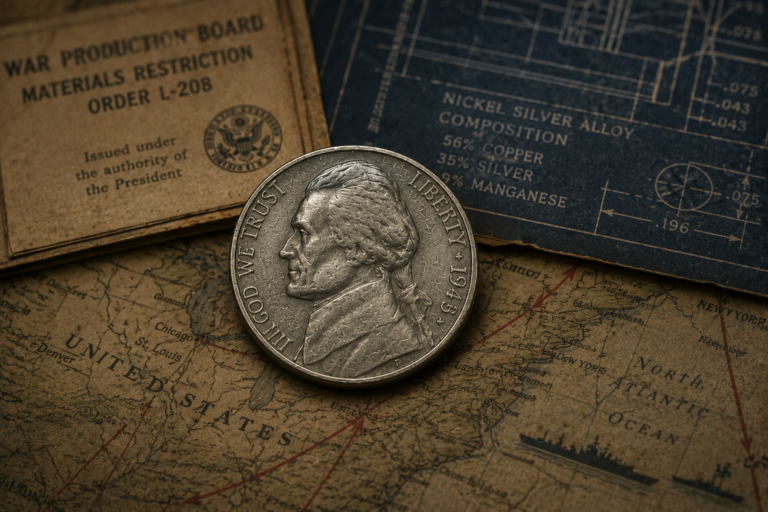
From late 1942 through 1945, wartime Jefferson nickels were struck using a special alloy made of silver, copper, and manganese.
| Metal | Percentage | Why It Matters |
|---|---|---|
| Silver | 35% | Helped replace nickel metal during wartime production. |
| Copper | 56% | Provided structure and helped the coin remain practical for circulation. |
| Manganese | 9% | Contributed to the unusual way many wartime nickels aged over time. |
Most people focus on the silver immediately.
That is understandable. Silver is the word that catches attention. It sounds familiar, valuable, and historically important.
But the full alloy matters more than the silver alone.
A wartime Jefferson nickel is not simply a small silver coin. It is a wartime mixture designed to solve a material shortage problem. The three metals worked together to create a coin that could function in circulation while reducing the use of nickel metal.
That same mixture also influenced how the coins looked decades later.
Some stayed relatively light. Some became cloudy. Some developed a soft gray tone. Others darkened more dramatically.
Those differences are part of the long story of the alloy.
The Forgotten Role Of Manganese
If silver gets the attention, manganese is the quiet character in the background.
Most casual coin holders never think about manganese. They may not even know it was part of the wartime nickel alloy. Yet it is one of the reasons these coins can age in such unusual ways.
Manganese was included as part of the wartime metal recipe, but it did not behave like traditional nickel metal. Over long periods, the interaction between silver, copper, and manganese helped create a wider range of surface appearances than people often expect.
That is one reason wartime Jefferson nickels can look so different from each other.
Two coins can share the same date, the same basic alloy, and the same general design, yet one may appear lighter while the other looks gray or smoky.
The difference is not always a mystery.
It is often the result of how the alloy responded to time, air, moisture, and storage.
How Decades Of Aging Change The Surface
A coin does not stop changing when it leaves the Mint.
That idea is easy to overlook because coins feel solid and permanent. They seem like fixed objects. But every coin surface continues interacting with the world around it.
A coin carried in a pocket is exposed to skin oils, air, fabric, and friction.
A coin stored in a drawer may react to wood, paper, dust, or humidity.
A coin kept in an album can develop different tones depending on the materials around it.
A coin left in a damp environment may change more aggressively.
Over a few days, these effects may be invisible.
Over eighty years, they can become part of the coin’s appearance.
That is why wartime Jefferson nickels often feel visually unpredictable. Their surfaces record decades of contact with the world.
Why Gray Toning Appears On Some Nickels
Gray toning forms when the surface of the coin slowly reacts with its environment.
This does not always mean the coin has been mistreated. Natural toning can happen under ordinary storage conditions. The final appearance depends on many factors, including humidity, air quality, storage material, temperature, and circulation history.
For wartime Jefferson nickels, the special alloy makes the result especially interesting.
The silver content can tone.
The copper can influence surface color.
The manganese can contribute to darker or duller appearances.
Together, those metals can create a gray surface that looks very different from a standard Jefferson nickel.
This is why some wartime nickels seem to carry a quiet, smoky appearance. They do not look shiny in the modern sense. They look aged, historical, and sometimes almost industrial.
That gray tone is part of what gives them character.
A Closer Look At A Gray Wartime Nickel
When you look closely at a gray wartime Jefferson nickel, the surface can reveal more than just color.
The gray tone may settle across the fields, around the devices, and inside the protected areas of the design. Raised details may catch light differently from the lower parts of the coin. Under angled light, the surface can shift from dull gray to soft silver highlights.
That changing appearance is one of the reasons these coins photograph so dramatically.
They do not always look the same from every angle.
A small movement of light can reveal texture, age, and depth that a flat view might hide.
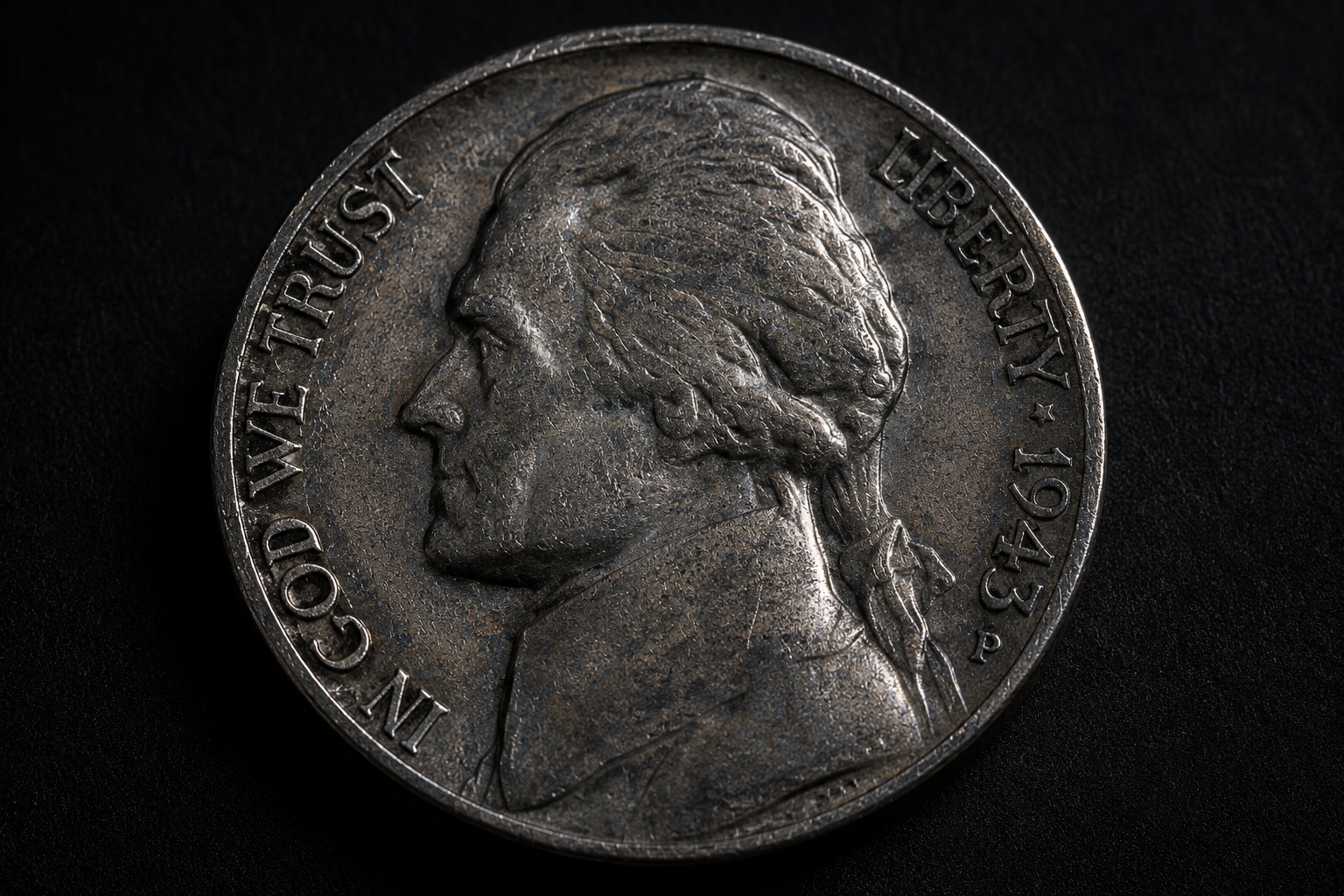
Many wartime Jefferson nickels gradually develop gray surfaces as their silver, copper, and manganese alloy reacts to decades of environmental exposure.
Why Storage Conditions Matter
One of the most important reasons wartime Jefferson nickels age differently is that no two coins experience exactly the same environment.
A coin that spent decades inside a dry collection album may look completely different from a coin that sat in a coffee can, a wooden drawer, or an old family box. The alloy remains the same, but the surroundings change the way the surface develops over time.
Humidity is especially important.
Moisture can accelerate certain chemical reactions and influence how the metals interact with the environment. Temperature changes can also play a role. Even the materials stored near the coin may affect its appearance over long periods.
That is why collectors sometimes encounter two wartime nickels from the same year that appear dramatically different.
One may remain relatively bright.
Another may develop deep gray toning.
A third may show a combination of gray and silver highlights across the surface.
The difference is not necessarily rarity. It is often history.
Each coin followed a different path through the decades.
Why Two Wartime Nickels Can Look Completely Different
This is one of the most fascinating aspects of the wartime Jefferson nickel series.
The coins began life with the same basic alloy. They left the Mint with similar appearances. Yet many of them no longer look alike today.
That transformation happened gradually.
One coin may have circulated heavily before entering storage. Another may have been set aside almost immediately. One may have spent years in a humid environment. Another may have remained protected from most environmental influences.
Every choice, every location, and every decade left its mark.
The result is a series where appearance can vary far more than many beginners expect.
This variation often surprises people who assume all wartime nickels should look similar because they contain the same metals.
In reality, the alloy is only the starting point.
The decades afterward complete the story.
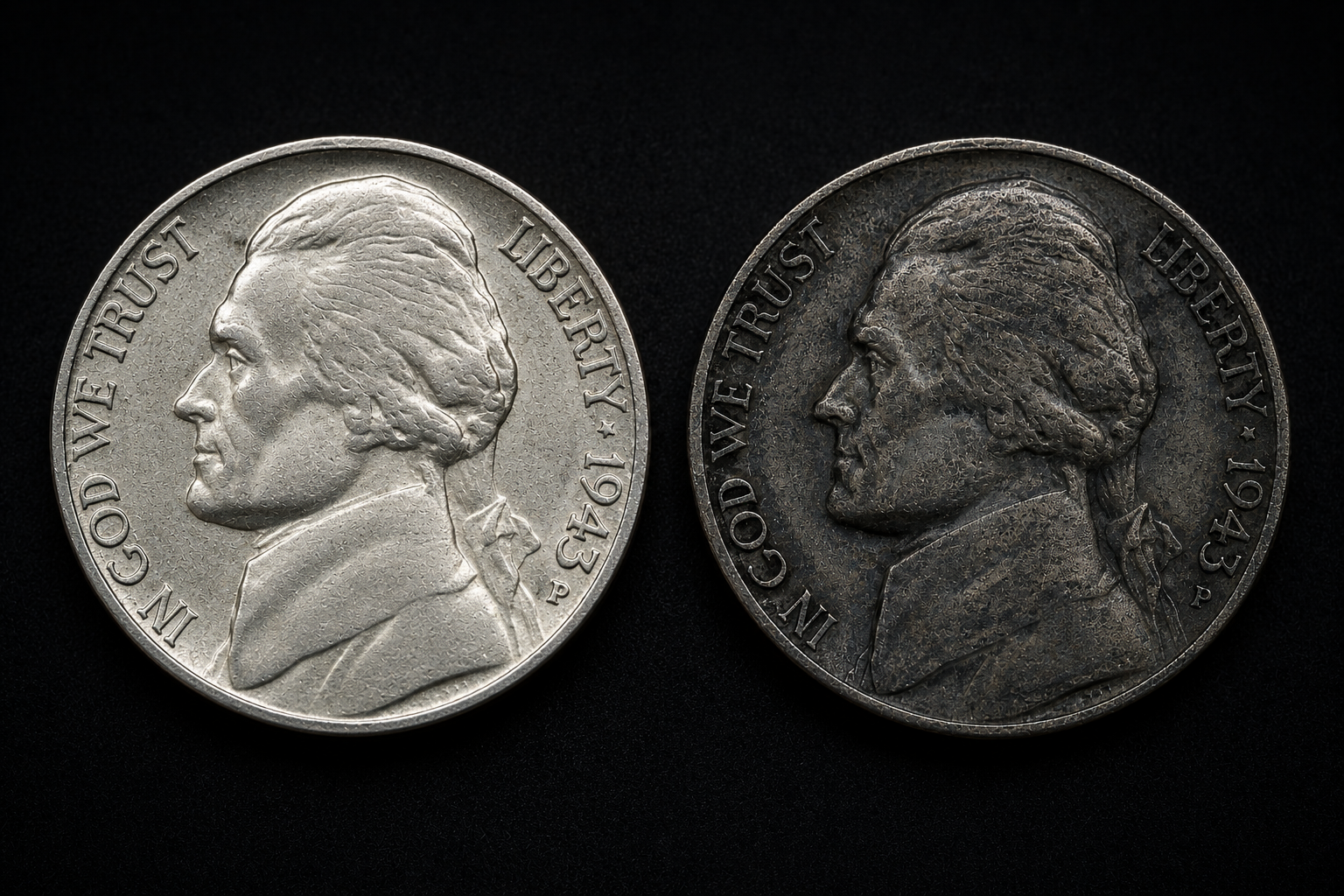
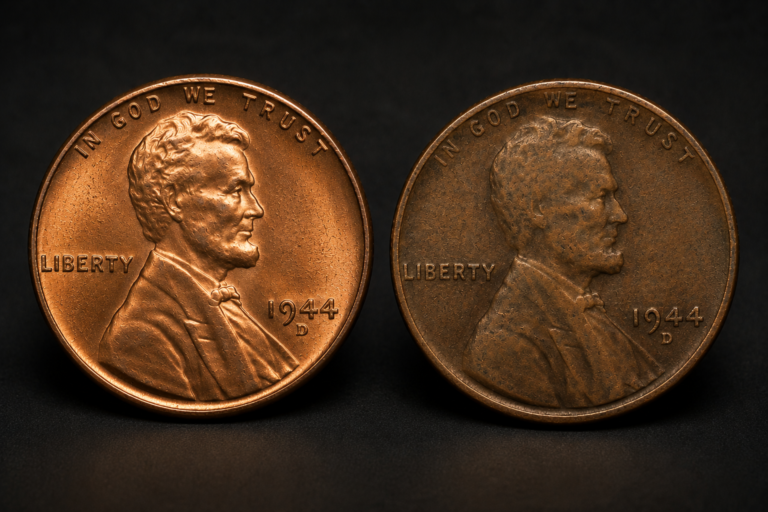
Two wartime nickels can look remarkably different depending on how their alloy reacted to decades of circulation, storage, and environmental exposure.
Why Gray Does Not Always Mean Damage
One of the biggest mistakes people make when examining wartime Jefferson nickels is assuming that every gray surface represents damage.
Damage certainly exists. Coins can be cleaned, scratched, corroded, or exposed to harmful conditions. Those situations leave visible evidence.
But natural toning is different.
Natural aging often creates surfaces that appear softer, more even, and more integrated with the design. The color develops gradually rather than appearing as an isolated problem.
That distinction matters because many wartime nickels are judged too quickly.
A collector sees gray color and immediately assumes something is wrong.
In many cases, nothing is wrong at all.
The coin is simply showing the long-term effects of the alloy and the environment working together for decades.
Understanding that difference helps people appreciate the series more accurately.
The gray color is often part of the story, not evidence that the story was damaged.
The Historical Story Behind The Color
What makes the gray wartime nickel particularly interesting is that its appearance connects directly to a specific historical moment.
The color exists because the alloy exists.
The alloy exists because World War II changed American manufacturing priorities.
The government needed nickel metal for military production, so the Mint adopted a temporary solution. That solution created a coin that looked ordinary at first but aged in unusual ways over the decades.
Every gray wartime Jefferson nickel is a reminder of that decision.
The coin carries visible evidence of a period when even everyday objects were influenced by global events.
Most people never think about wartime metal shortages when they see a five-cent coin.
Yet those shortages helped create the very appearance that attracts attention today.
That is what makes the color meaningful.
It is not merely a visual characteristic.
It is a reflection of history.
The gray tone links the coin to wartime production, material conservation, industrial priorities, and the extraordinary circumstances that shaped the early 1940s.
A small change in metal composition eventually became a visible change in appearance.
And that appearance still tells the story more than eighty years later.
Reality Check
Not every gray Jefferson nickel is a wartime nickel, and not every wartime nickel will appear gray. Color alone cannot identify a coin.
The gray appearance often results from natural aging, toning, and environmental exposure interacting with the wartime silver, copper, and manganese alloy. Some wartime nickels remain relatively bright, while others become noticeably darker over time.
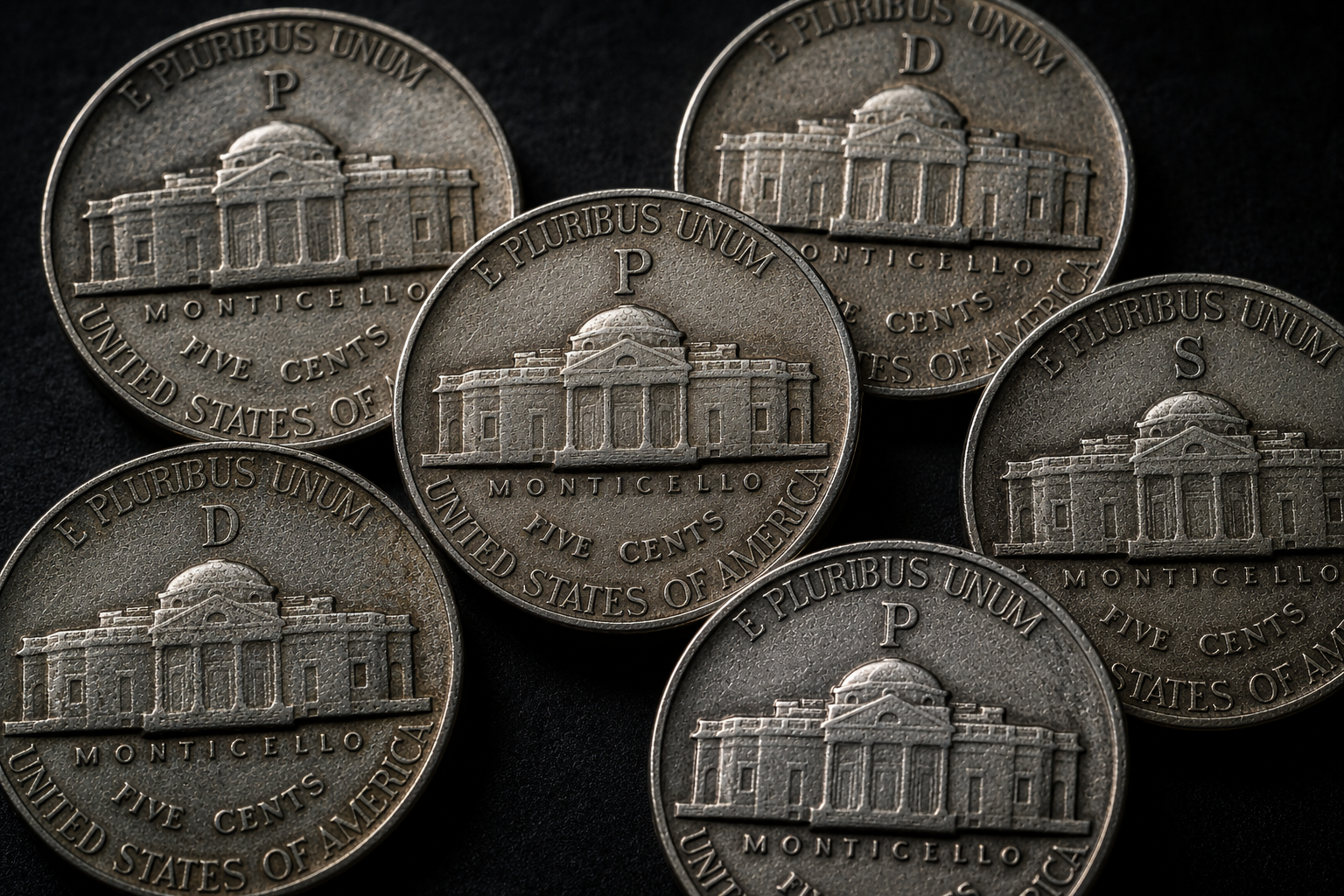
The most reliable identification features remain the date and the large wartime mint mark above Monticello found on wartime issues from 1942 through 1945.
Related HistoraCoin Stories
Final Verdict
Some Jefferson nickels look gray instead of silver because the wartime alloy inside them aged differently from ordinary coin metals.
The combination of silver, copper, and manganese created a coin that responded to decades of environmental exposure in unique ways. Over time, many examples developed gray surfaces, smoky tones, and subtle color variations that make them stand out from standard Jefferson nickels.
What appears unusual today is often completely natural.
The gray color is not always damage. It is frequently the visible result of history, chemistry, and time working together.
That is what makes these wartime nickels so fascinating.
Their appearance is more than a color difference. It is a reminder of World War II, a temporary change in American coinage, and the long journey each coin has taken since leaving the Mint more than eighty years ago.
FAQ
| Question | Answer |
|---|---|
| Why do some Jefferson nickels look gray? | Many wartime Jefferson nickels develop gray surfaces because their silver, copper, and manganese alloy ages differently from ordinary nickel compositions. |
| Are gray wartime nickels damaged? | Not necessarily. Natural toning and aging often create gray appearances without any damage occurring to the coin. |
| Did wartime Jefferson nickels contain silver? | Yes. Wartime nickels produced between 1942 and 1945 contained 35 percent silver along with copper and manganese. |
| Why do some wartime nickels stay bright while others turn gray? | Different storage conditions, circulation histories, humidity levels, and environmental exposure can cause coins to age differently. |
| Can color alone identify a wartime nickel? | No. The most reliable identifiers are the date and the large wartime mint mark above Monticello. |
| What metal besides silver affects the appearance of wartime nickels? | Manganese and copper both contribute to the way wartime nickels tone and age over long periods. |