Why Wartime Nickels Age So Differently
Estimated reading time: 12 minutes
Two wartime Jefferson nickels can come from the same short period in American history and still look completely different today. One may appear bright and silvery. Another may look gray, smoky, dull, or deeply toned. At first, that difference feels confusing because both coins were made with the same wartime alloy.
The answer is hidden in the way metal, time, storage, and environment work together. Wartime nickels were not ordinary Jefferson nickels. Their silver, copper, and manganese composition reacted to decades of circulation and storage in ways that created a wide range of surfaces. That is why no two wartime nickels seem to age exactly the same.
Wartime Jefferson nickels from 1942 through 1945 used a special alloy made of silver, copper, and manganese. Because each metal reacts differently over time, these coins often develop different colors, tones, and textures depending on how they were stored and handled.
Table of Contents
- Why Two Coins From The Same Year Can Look Different
- The Wartime Alloy Changed Everything
- How Silver Ages Inside The Alloy
- Why Copper Affects The Surface
- The Quiet Role Of Manganese
- Why Natural Toning Happens
- Different Aging Patterns On Wartime Nickels
- Why Storage Conditions Matter So Much
- Air, Humidity, And Temperature
- Natural Aging Versus Damage
- Reality Check
- Related HistoraCoin Stories
- Final Verdict
- FAQ
Why Two Coins From The Same Year Can Look Different
One of the most surprising things about wartime Jefferson nickels is how different they can look from one another.
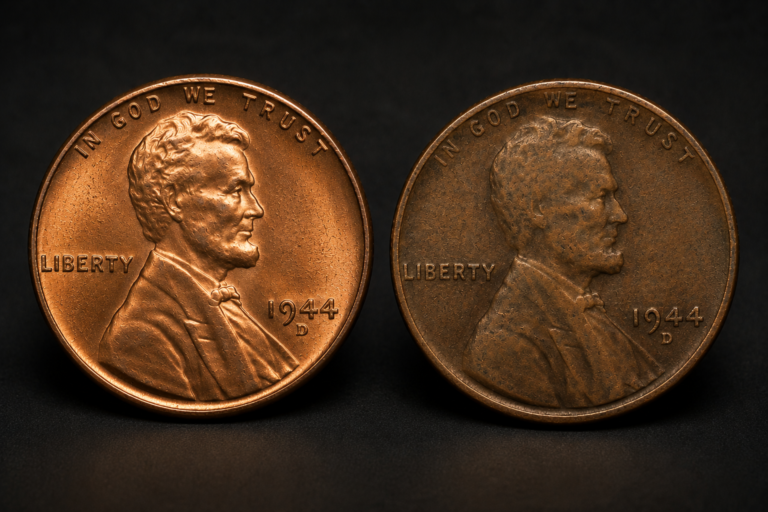
A collector may place several wartime nickels side by side and notice that they almost seem to come from different worlds. One coin may have a soft silver-gray surface. Another may appear darker and more muted. A third may still show brighter areas under the light.
This can feel strange because the coins share the same basic composition.
But metal composition is only the beginning of the story.
After a coin leaves the Mint, its life becomes unpredictable. It may circulate for years, sit in a drawer, rest inside a paper envelope, remain inside an album, or pass through many different environments before someone finally studies it carefully.
Every one of those experiences affects the surface.
That is why two wartime nickels from the same period can age in completely different ways. They began with the same wartime alloy, but they did not live the same life.
The Wartime Alloy Changed Everything
Ordinary Jefferson nickels used a traditional copper and nickel alloy. Wartime Jefferson nickels did not.
During World War II, nickel metal became important for military and industrial uses. To conserve that metal, the United States Mint changed the five-cent coin temporarily.
The wartime alloy contained silver, copper, and manganese.
| Metal | Percentage | Effect On Aging |
|---|---|---|
| Silver | 35% | Can tone and darken over long periods. |
| Copper | 56% | Can influence surface color and warmth. |
| Manganese | 9% | Can contribute to unusual gray or dull appearances. |
This mixture gave wartime nickels a different personality from ordinary nickels.
It also explains why their surfaces often tell a more complicated story. These coins were not simply silver coins. They were a wartime blend of three metals, each reacting in its own way across decades.
How Silver Ages Inside The Alloy
Silver is the ingredient people usually notice first when they learn about wartime nickels.
That makes sense. Silver feels familiar and important. Many older U.S. coins contained silver, and collectors often associate silver with bright surfaces.
But silver does not always stay bright.
Over time, silver can react with air and environmental compounds. The result may be soft gray toning, darker surfaces, or subtle color changes. This does not always mean the coin is damaged.
In wartime nickels, silver is only part of the alloy, so its aging behavior is influenced by the copper and manganese around it.
That is one reason these coins can develop surfaces that look different from traditional silver dimes or quarters.
Why Copper Affects The Surface
Copper was the largest part of the wartime nickel alloy.
That detail is easy to overlook because silver gets most of the attention. But copper made up more than half of the coin.
Copper is important because it can influence the tone and character of a coin’s surface over time. Depending on storage and exposure, it may contribute to darker, warmer, or more uneven appearances.
In a wartime nickel, copper works quietly in the background.
It does not announce itself the way silver does, but it helps explain why wartime nickels do not all age in a simple, predictable way.
The Quiet Role Of Manganese
Manganese is the ingredient most people forget.
Yet it is one of the reasons wartime nickels can look so unusual today.
The manganese content was part of the special wartime formula, and it helped complete the alloy that replaced traditional nickel metal. Over decades, its presence contributed to the way many wartime nickels developed gray or dull surfaces.
This does not mean every wartime nickel will look dark.
It means the alloy had more aging possibilities than an ordinary Jefferson nickel.
The combination of silver, copper, and manganese created a coin that could respond to the environment in many different ways.
Why Natural Toning Happens
Natural toning is the slow change that happens when a coin’s surface reacts with its surroundings.
It can happen in a pocket, a drawer, a coin album, a paper envelope, or almost any storage environment. It may be light and even, or it may become darker and more dramatic.
For wartime Jefferson nickels, toning can be especially noticeable because the alloy is unusual.
The same coin may show silver highlights on raised areas and darker gray tones in protected parts of the design. Another coin may tone more evenly across the whole surface.
These differences are part of what makes wartime nickels so visually interesting.
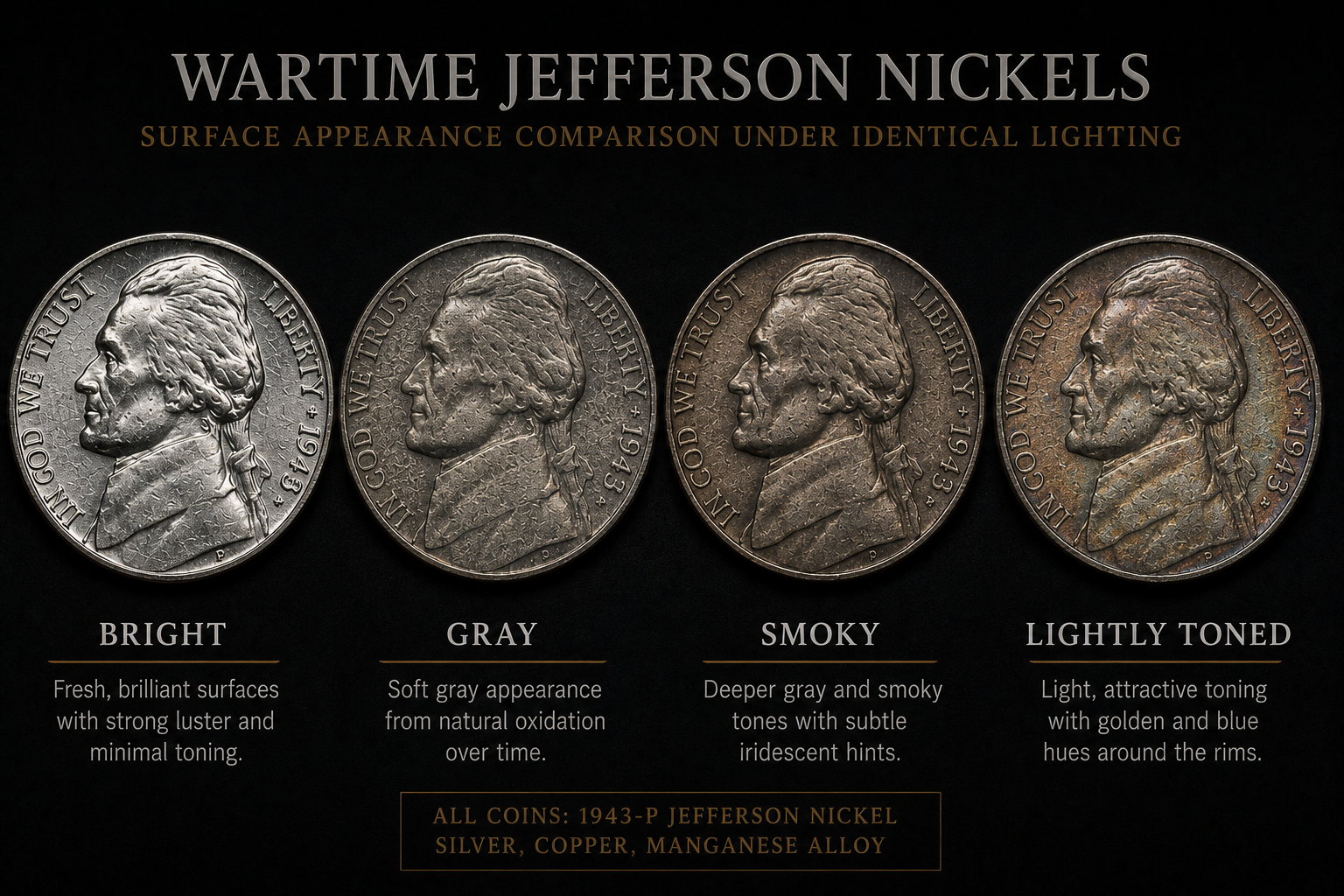
The same wartime alloy can develop very different appearances depending on decades of environmental exposure.
Why Storage Conditions Matter So Much
Storage is one of the biggest reasons wartime nickels age differently.
A coin stored in a dry album may age slowly and evenly. A coin left in a humid drawer may darken faster. A coin kept in an old paper envelope may develop a different surface tone from one stored loose in a jar.
The metal mixture is the same, but the environment is not.
This is why collectors should be careful when comparing wartime nickels only by appearance. A darker coin is not automatically more unusual, and a brighter coin is not automatically better preserved.
Each surface is the result of a long environmental history.
Air, Humidity, And Temperature
Air exposure, humidity, and temperature all influence how wartime nickels age.
Air allows slow chemical reactions to develop on the surface. Humidity can speed up certain reactions, especially when a coin has been stored in poor conditions. Temperature changes can also affect how quickly surfaces react over time.
This is why two wartime nickels can look completely different even if they were struck in the same year.
One coin may have spent decades in a stable, dry place. Another may have moved through pockets, boxes, basements, and humid rooms before ending up in a collection.
The second coin carries more environmental history on its surface.
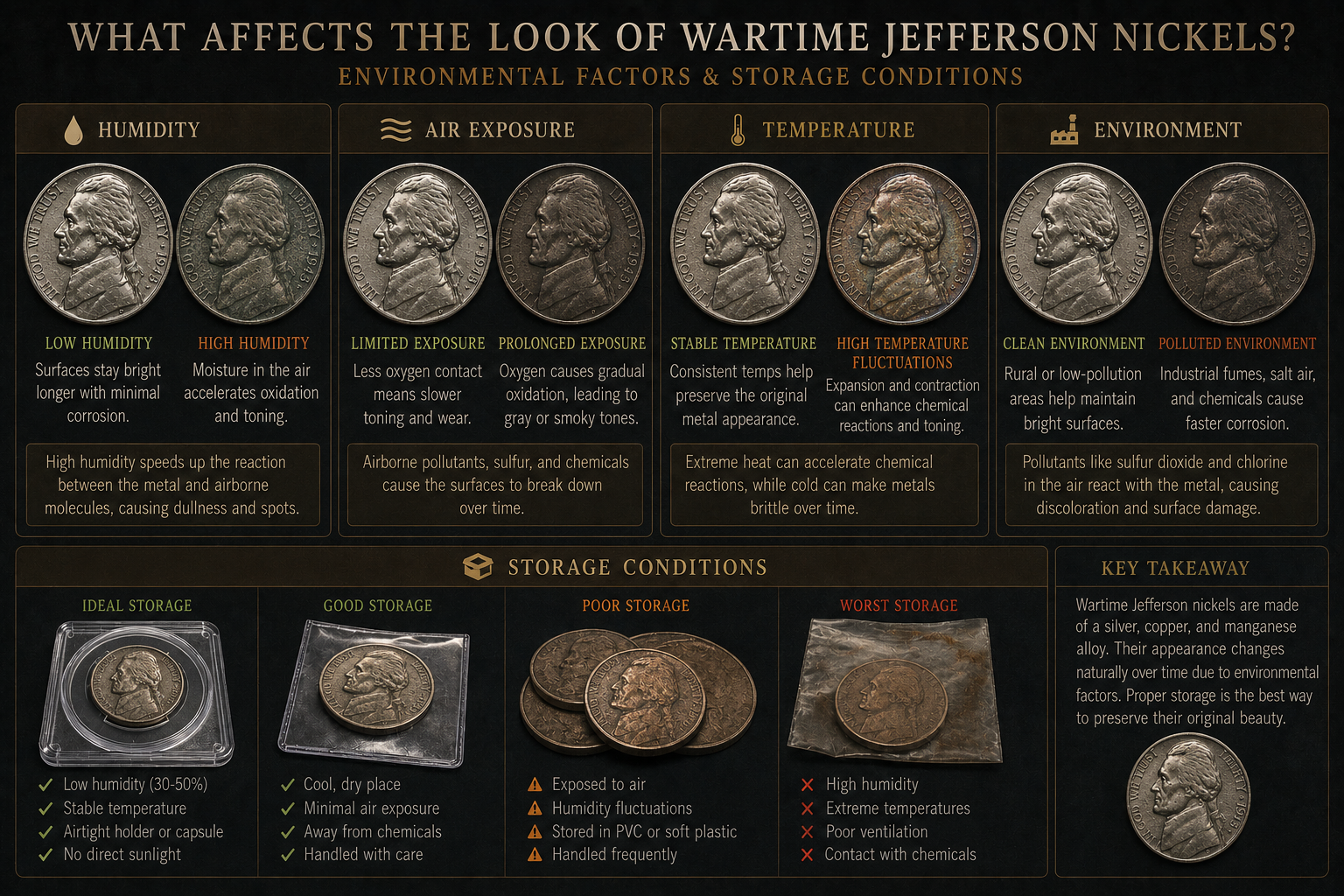
Storage conditions play an important role in how wartime nickel surfaces change over time.
Natural Aging Versus Damage
One of the most important distinctions is the difference between natural aging and damage.
Natural aging usually develops gradually. It may appear as gray toning, soft darkening, or subtle surface changes that feel connected to the metal itself.
Damage often looks harsher.
Scratches, cleaning marks, corrosion, stains, and unnatural brightness can suggest that something more aggressive happened to the coin.
This matters because people often assume any dark wartime nickel is damaged.
That is not always true.
A gray surface may simply be the result of the wartime alloy aging naturally. At the same time, not every dark coin should be treated as naturally toned. The surface still needs to be examined carefully.
The safest way to think about wartime nickels is simple: color tells part of the story, but it does not tell the whole story.
Why No Two Wartime Nickels Age Exactly The Same
No two coins live the same life.
That is the heart of the entire question.
Even if two wartime nickels were struck in the same year, at the same Mint, and with the same alloy, their paths after production could be completely different.
One may have circulated heavily during the 1940s and 1950s.
Another may have been saved almost immediately.
One may have been kept in a dry cabinet.
Another may have spent decades in a humid container.
Those different paths create different surfaces.
This is why wartime nickels often feel like individual historical objects rather than identical products from the same series.
Each one carries its own record of time.
Reality Check
Not every dark or gray wartime nickel is naturally toned, and not every bright wartime nickel has been cleaned. Appearance alone should never be the only basis for judging a coin.
The best approach is to consider the date, mint mark, surface texture, color pattern, and overall condition together. Wartime nickels age differently because of their unusual alloy, but each coin still needs to be examined as an individual object.
Related HistoraCoin Stories
Final Verdict
Wartime nickels age so differently because they were made from an unusual alloy and then exposed to completely different environments over many decades.
Silver, copper, and manganese each influenced the surface in its own way. Air, humidity, storage materials, and handling added even more variation. That is why one wartime nickel may look bright while another from the same period appears gray or smoky.
The difference is not always damage.
Often, it is simply history showing on the surface.
Every wartime Jefferson nickel carries a small record of World War II, metal conservation, circulation, storage, and time. That is what makes the series so visually interesting today.
FAQ
| Question | Answer |
|---|---|
| Why do wartime nickels age differently? | They age differently because their silver, copper, and manganese alloy reacts to time and environment in ways ordinary nickel compositions do not. |
| Why do some wartime nickels turn gray? | Gray surfaces often develop from natural toning as the alloy reacts with air, humidity, and storage materials over decades. |
| Does gray color mean a wartime nickel is damaged? | No. Gray color can be natural toning, but the full surface should be examined before judging the coin. |
| Why can two wartime nickels from the same year look different? | They may have experienced different circulation, storage, humidity, and environmental exposure after leaving the Mint. |
| What metal affects wartime nickel aging the most? | All three metals matter. Silver, copper, and manganese each contribute to the coin’s long-term surface behavior. |
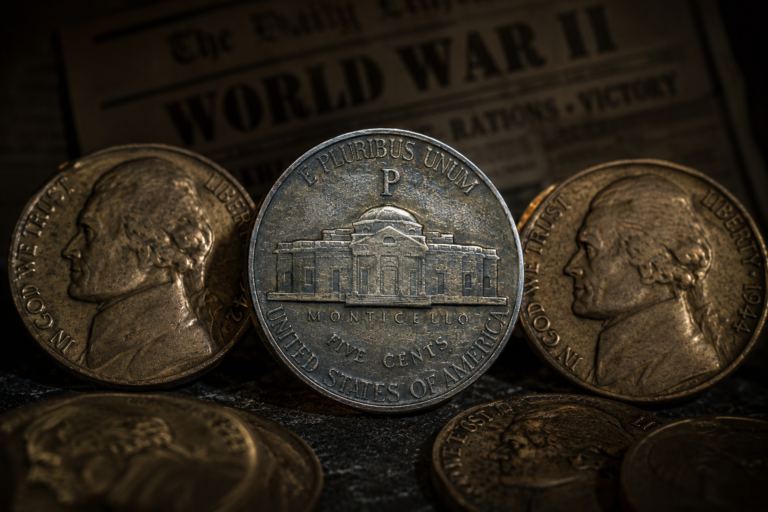
| How can you identify a wartime nickel? | Look for the 1942 to 1945 dates and the large mint mark above Monticello on the reverse side. |